Loading [Contrib]/a11y/accessibility-menu.js
Coates, D., Lewis, S., & Burge-Ferrow, G. (2025). The relationship between interoception and experiences of stress, trauma, and mental illness: A scoping review. Psychotherapy and Counselling Journal of Australia. https:/​/​doi.org/​10.59158/​001c.146359
Download all (1)

Abstract

Introduction
Interoception—the process of sensing, interpreting, and integrating internal bodily signals—plays a critical role in emotional regulation, behaviour, and wellbeing. In counselling and psychotherapy contexts, impaired interoception is increasingly recognised as associated with how clients experience and respond to stress, trauma, and mental illness. This scoping review aimed to explore the relationship between interoception and these psychological conditions and to determine whether they are associated with heightened (hyper) or reduced (hypo) interoceptive sensitivity.
Method
A scoping review methodology was used, involving a comprehensive search of four major databases—MEDLINE (Ovid), PsycINFO (Ovid), Embase (Ovid), and CINAHL (EBSCO)—for peer-reviewed articles published between 2014 and October 2024. The screening process included title and abstract screening followed by full text review. Data were synthesised narratively.
Results
A total of 48 studies were included, covering trauma (n = 17), mental health conditions (n = 14), eating disorders (n = 10), and stress-related physical health issues (n = 7). Most studies reported impaired interoception across these conditions. Reduced awareness and interpretation of bodily signals (hypo-sensitivity) were more commonly reported than heightened sensitivity, although variability existed across conditions.
Conclusion
Findings support the relevance of interoception and its relationship to wellbeing in counselling and psychotherapy. In particular, findings suggest that trauma, especially interpersonal trauma, may be associated with clients’ tendencies to avoid bodily awareness, potentially as a protective strategy, and this may co-occur with increased external vigilance. These insights underscore the value of trauma-informed and body-oriented therapeutic approaches. Supporting clients in safely reconnecting with their bodily experiences may enhance emotional regulation and facilitate psychological healing in counselling and psychotherapy settings.

Interoception—the process of detecting, interpreting, and integrating internal bodily signals—has gained increasing attention in recent decades for its role in human behaviour, emotional processing, and self-regulation (Farb & Segal, 2024; Leech et al., 2024; Lima-Araujo et al., 2022; Machorrinho et al., 2023; Price et al., 2023). Interoceptive signals include sensations such as hunger, thirst, breath, heart rate, and temperature, and also involve the conscious recognition of these signals and what they signify about emotional or physical states. Interoception supports homeostasis and adaptive responses to both internal and external stressors (Khalsa et al., 2018; Leech et al., 2024; Machorrinho et al., 2023).

Two key dimensions of interoception are widely recognised: interoceptive awareness (IAw) and interoceptive accuracy (IAc; Garfinkel et al., 2015; Vig et al., 2022). IAw refers to a person’s conscious awareness of internal sensations and the associated emotional meanings, typically measured through self-report. IAc, by contrast, reflects the objective ability to detect internal cues, such as heartbeats or breath rate, and is measured using physiological tasks.

In addition to these behavioural and self-report measures, neuroimaging methods—particularly functional magnetic resonance imaging (fMRI)—have provided insights into the neural substrates of interoception. Neuroimaging studies show that the insula plays a central role, with the anterior insula linked to emotional regulation and the posterior insula responsive to pain, cardiac signals, and visceral sensations (Harricharan et al., 2017). Other involved brain regions include the bilateral amygdala, dorsal anterior cingulate cortex, thalamus, and parahippocampus (Nicholson et al., 2016; Scalabrini et al., 2024).

Disruptions to interoception—whether under-sensitivity (hypo) or over-sensitivity (hyper)—can impair emotional self-awareness and regulation, both of which are essential to counselling and therapeutic practice (Farb & Segal, 2024; Leech et al., 2024; Ogden et al., 2006; Price & Hooven, 2018). Hypo-sensitivity may reduce a person’s ability to detect internal cues of distress or arousal, making it harder to regulate or even recognise emotion (Reinhardt et al., 2020; van der Kolk, 2014). Hyper-sensitivity, conversely, can lead to overwhelm and difficulty calming down. Both forms of interoceptive dysfunction contribute to poor mental health outcomes and are often seen in clients experiencing stress, trauma, or emotional dysregulation (Farb & Segal, 2024; Ogden et al., 2006; Price & Hooven, 2018).

While it is increasingly understood that interoceptive disruptions are linked with mental illness and trauma, the specific patterns—such as whether they present as hyper- or hypo-sensitivity—are less well defined. The aim of this scoping review was to explore the relationship between interoception and experiences of stress, trauma, and mental illness and to determine whether they are associated with heightened (hyper) or reduced (hypo) interoceptive sensitivity.

To support clinical practice, particularly in counselling and psychotherapy, we adopted a transdisciplinary approach that spanned psychology, neuroscience, occupational therapy, and medicine. This review extends prior research focused on specific diagnoses such as post-traumatic stress disorder (PTSD; Leech et al., 2024), obsessive-compulsive disorder (OCD; Bragdon et al., 2021), and eating disorders (Cobbaert et al., 2024; Klabunde et al., 2017; Lucherini Angeletti et al., 2022). By taking a broader lens, we aimed to inform practitioners working with clients affected by a range of trauma and stress-related conditions, providing insights into how interoceptive disruption can shape both symptom presentation and treatment responsiveness.

Method

A scoping review was conducted using the framework outlined by Arksey and O’Malley (2005). The purpose of a scoping review is to map the literature related to a broad research question or topic, providing an overview of the nature of the evidence and identifying gaps in the research. Although a scoping review is less detailed than a traditional systematic review, it covers a broader conceptual range and allows for the inclusion of diverse studies from various fields and methodologies (Arksey & O’Malley, 2005; Davis et al., 2009; Levac et al., 2010; Peters et al., 2015). The review was conducted in accordance with the PRISMA-ScR guidelines for reporting on systematic scoping reviews (Tricco et al., 2018).

Search Strategy and Data Sources

A systematic search of the literature was conducted to identify relevant studies published in the last 10 years, from between 2014 and October 2024. The following databases were searched: MEDLINE (Ovid), PsycINFO (Ovid), Embase (Ovid), and CINAHL (EBSCO).

The search strategy was designed in MEDLINE (Ovid) using Medical Subject Headings (MeSH) terms and keywords in combination with Boolean operators (OR, AND). MeSH terms interoception, stress disorders/traumatic, adverse childhood experiences, and psychotherapy were used, as well as keywords for the concepts of interoception and trauma. The search strategy was then translated for use in the other databases using the Polyglot Search Translator (Clark et al., 2020).

Two further searches to capture additional concepts identified as relevant to interoception (first: sensory modulation, integration, or regulation, and second: occupational therapy) were also conducted in the same databases. The search strategies for the MEDLINE database are provided in Appendix A.

Study Screening and Selection

References identified via database searches were exported to EndNote bibliographic management software (v.20, Clarivate Analytics, PA, USA) and then uploaded into Covidence (Veritas Health Innovation, Melbourne, Australia) where duplicates were removed. A two-phased process for screening was used: screening by title and abstract, followed by a full text screening. Each article was reviewed against the inclusion and exclusion criteria outlined in Table 1. Reasons for excluding studies at full text screening were documented.

Table 1.Inclusion and Exclusion Criteria
Variable Inclusion Exclusion
Study type Primary studies
Meta-analyses
Systematic reviews
Non-empirical studies such as protocols, editorials, commentaries
Animal studies
Case studies
Effectiveness studies that assess interoceptive functioning as an intervention outcome (considered in a separate review currently underway)
Study aim/ Population To assess the relationship between interoception and stress, trauma, and mental illness Studies that assess the relationship between interoception and conditions that cannot be conceptualised as mental health, trauma, or stress related (for example, multiple sclerosis)
Publication type Peer-reviewed journal articles Dissertations, conference papers, books, or book chapters
Publication language English Other than English
Full text All full text records Publications available as abstract only
Time frame Publications from 2014 to present Publications older than 2014

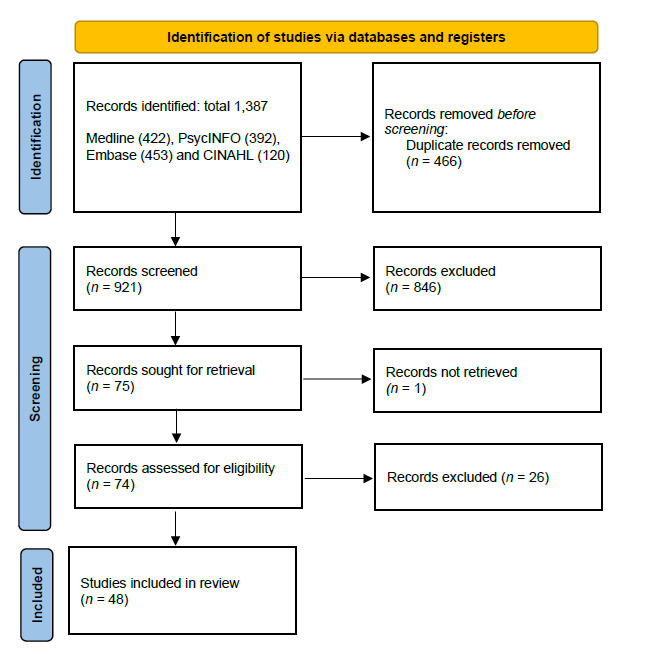
In the first instance, two researchers (SL and GB) undertook dual blind title and abstract screening and any conflicts were resolved with the project lead (DC). Dual screening continued until clarity around inclusion and exclusion was established, and the research team demonstrated confidence and consistency in decision-making. A total of 195 articles were dual screened, before moving to single screening. From this point, only studies where the researcher had some doubt around inclusion were discussed by the entire team. The screening process is summarised in Figure 1.

Data Charting

High-level data from all studies identified for inclusion were extracted using a standardised form administered in Word (DC). The study information extracted included: publication year, study aim, study design, sample/population/participant group, measurement of interoception, and results. The data were synthesised narratively, and relevant information was summarised and presented in tables. A systematic assessment of study quality was not conducted; the primary goal of a scoping review is to map the breadth and depth of available literature on a topic, and this is not considered essential (Gough et al., 2012; Tricco et al., 2018).

Results

Forty-eight studies were included in the review. As outlined in the PRISMA flowchart in Figure 1, the screening process included the review of 1,387 abstracts and 74 full text reviews. Of the 48 studies included, 17 studies regarded trauma, 14 mental health, 10 eating disorders and issues around body image, and seven physical health conditions associated with stress. A narrative description of each study is provided below, and a table of included studies is provided in Appendix B.
A diagram of a flowchart AI-generated content may be incorrect.
Figure 1.PRISMA Flowchart

Studies conceptualised and defined interoception in different and inconsistent ways. While the most common dimensions of interoception measured were IAw and IAc, some studies referred to interoception in a more general sense, sometimes called interoceptive sensitivity, or used broader terms such as body awareness or body dissociation in reference to interoception. For clarity, when reporting study findings, we have used the terms adopted by the authors, and included the specific measures used in the table of included studies (Appendix B). In addition, the range of measures used to test interoception, and a description of these measures is outlined in Table 2. Neuroimaging studies mostly study interoception through measurement of the insula.

Table 2.Measures of Interoception
Measure Description
Bespoke questions developed by researchers Bespoke questions developed by researchers.
Body Perception Questionnaire–Short Form, Body Awareness Subscale (BPQ) A 26-item subscale of items assessing subjective awareness of one’s own body processes. Participants rate their level of awareness of bodily sensations and processes in most situations on a 5-point Likert scale (Never–Always). An example item is: “Swallowing frequently”.
Body Self Questionnaire The questionnaire contains 90 statements referring to the functions performed by the body self (experiencing and interpreting sensations and regulation) as well as to the acceptance of one’s body (the subscale “Emotional Attitude Towards the Body”) and the situations in which the body self manifests (the subscales “Comfort in the Situations of Physical Proximity” and “Protecting the Body”).
Breath-hold challenge Participants are instructed to take a deep breath and, once they have inhaled fully, to hold their breath for as long as they can tolerate.
Cold-pressor challenge Participants are instructed to immerse their dominant hand in a circulating pool of water cooled to 0–6 degrees Celsius and to keep their hand submerged for as long as they can tolerate.
Eating Disorder
Inventory-3, Interoceptive Deficits Subscale
The Interoceptive Deficits Subscale consists of nine items regarding confusion in accurately identifying and responding to emotional states. It includes a cluster of items labelled “fear of affect”, which reflects distress experienced when emotions become overwhelming or uncontrollable, and contrasts with an “affective confusion” cluster that points to challenges in accurately recognising emotional states.
emBODY tool A topographical self-report in which participants colour the body areas where they experience different emotions.
Heartbeat evoked potentials (HEPs) HEP is the measurement of the cortical processing of the heartbeat–that is, a measure of brain activity patterns contributing to the regulation of the heart rate across the cardiac cycle. The HEP is consistently associated with interoceptive accuracy.
Heartbeat perception task A heartbeat perception task is an experimental procedure used to assess an individual’s ability to perceive their own heartbeat. There are two types of heartbeat perception tasks: heartbeat detection tasks or heartbeat discrimination tasks (outlined below).
Heartbeat detection task (also called heartbeat counting task, heartbeat tracking) Participants are asked to estimate or count the number of heartbeats they perceive in a given period of time (e.g., 30 seconds or 1 minute), without taking their pulse or using any external devices. The perceived number of heartbeats and accurate number of heartbeats (measured objectively) are compared.
Heartbeat discrimination task Participants estimate the frequency of their heart rate by comparing it to tones that vary in speed, either faster or slower, across several trials (e.g., 25). About half of the tones are presented in sync with the heartbeat, while the other half are delayed. At the end of each trial, participants can be asked to signal their confidence in the accuracy of their response on a visual analogue scale ranging from “Complete guess/No heartbeat awareness” to “Complete confidence/Full perception of heartbeat”.
Multidimensional Assessment of Interoceptive Awareness Questionnaire (MAIA) MAIA is a self-report questionnaire assessing seven interoception dimensions: “Noticing”, “Not-distracting”, “Not-worrying”, “Attention Regulation”, “Emotional Awareness”, “Self-regulation”, and “Trusting”. Participants are asked to rate the frequency of each item in their daily life on a 6-point Likert scale (Never–Always).
Neuroimaging Neuroimaging can map brain regions associated with interoception, in particular the insula. The entire insula is considered key to interoception. The anterior insula is involved in emotional regulation, while the posterior insula is more focused on internal physiological processes, such as responses to pain, cardiac signals, and visceral sensations.
The Interoceptive-Exteroceptive Attention task (the IN-OUT task) This psychological task is designed to assess the ability to focus attention on both internal (interoceptive) and external (exteroceptive) stimuli. This task is used to explore how individuals process and attend to signals from their body and the external environment. It typically involves alternating between focusing on interoceptive and exteroceptive cues.
Respiratory resistance sensitivity task This physiological task is designed to assess a person’s sensitivity to changes in respiratory resistance, which is the difficulty encountered while breathing due to factors like airflow restriction, airway obstruction, or external pressure. The task typically involves manipulating the airflow or breathing conditions in a controlled environment to observe how a person perceives or reacts to changes in respiratory resistance. Participants may be asked to breathe through a device that varies the airflow resistance (e.g., a resistive loading apparatus) while their respiratory resistance is systematically altered. The task can include the introduction of resistive loads (e.g., using a mask or device that restricts airflow) and then measuring the sensitivity to these changes.
Rubber Hand Illusion (RHI) This experiment is used to study body ownership and interoception, inducing the illusion that a rubber hand is part of one’s own body. Three specific domains are evaluated, namely proprioceptive drift, perceived ownership, and motor control. The RHI offers insights into how individuals perceive their bodies in space and serves as a tool to investigate interoceptive awareness, particularly the ability to integrate sensory feedback from the body. In the experiment, the participant sits with one hand hidden from view (usually placed under a table or inside a specially constructed black box), while a rubber hand is placed in front of them. The experimenter then brushes both the rubber hand and the participant’s hidden hand synchronously with identical soft paintbrushes. After a brief period, participants may begin to feel the illusion that the rubber hand is part of their own body, experiencing sensations as though it were their own. Following the experiment, participants complete a nine-item questionnaire assessing their subjective experience.
Scale of Body Connection Scale of Body Connection is a self-report Likert scale that measures body awareness and bodily dissociation. The scale typically consists of a set of statements or items designed to assess various aspects of body awareness and connection. Respondents rate each item based on their experience or perception, using a Likert scale (e.g., from “Strongly Agree” to “Strongly Disagree”).
Self Awareness Questionnaire This questionnaire includes a 35-item Likert scale to assess an individual’s level of self-awareness, with a focus on their ability to recognise and reflect on internal states.
Smoking Abstinence Expectancies Questionnaire A scale designed to assess an individual’s beliefs and expectations regarding the outcomes of abstaining from smoking, which includes a subscale specific to somatic symptoms. It indirectly measures aspects of interoceptive awareness, particularly assessing an individual’s expectancies related to physical sensations that accompany smoking cessation.
Toronto Alexithymia Scale (TAS-20) This self-report questionnaire consists of 20 questions relating to the following three subscales: “Difficulty in verbalising emotions”, “Difficulty in identifying emotions”, and “Operative style of thinking”. In alexithymia, internal experience is believed to be minimised, and attention focused externally—an effect that some authors have attributed to altered interoception.
Visceral Interoceptive Attention task (VIA) with rating of stimulus intensity This task is designed to assess a person’s ability to attend to and perceive visceral (internal body) signals, such as those associated with hunger, digestion, and gastrointestinal discomfort. Participants are presented with three conditions, each cued by a visually displayed word with a 10-second duration: (1) “Heart”, which cues attention to heartbeat sensations; (2) “Stomach”, which cues attention to stomach sensations; and (3) “Target”, which cues attention to external changes in word colour at varying intensities. Participants are asked to rate the intensity of the stimuli, with ratings ranging from 0 (“no sensation”) to 6 (“extreme sensation”).
Water load test A test used to assess how well individuals perceive internal bodily signals related to hydration, fluid balance, and thirst. The test involves having participants consume a specific volume of water and then assessing their ability to detect and respond to the internal sensations (like the feeling of fullness or discomfort) that arise from the increase in stomach volume. After consuming the water, participants may be asked to rate the intensity of the sensations they feel.

Trauma

Of the 17 studies regarding trauma, the populations studied were: people who had experienced childhood trauma (n = 5) (Lloyd et al., 2021; Schaan et al., 2019; Schmitz et al., 2023; Schulz et al., 2022; Zdankiewicz-Ścigala et al., 2018), relational trauma (broadly) (n = 1) (Scalabrini et al., 2024), intimate partner violence (n = 2) (Machorrinho et al., 2022, 2023), sexual violence (n = 2) (Poppa et al., 2019; Reinhardt et al., 2020), and PTSD (n = 7) (Beydoun & Mehling, 2023; Farris et al., 2015; Harricharan et al., 2017; Leech et al., 2024; Nicholson et al., 2016; Reuveni et al., 2018; Schmitz, Müller, et al., 2021). A further study was concerned with both childhood trauma and borderline personality disorder (Schmitz, Bertsch, et al., 2021) and is reported under mental health. Most of these studies found a relationship between trauma and reduced interoception, reporting reduced body awareness and ability to interpret bodily sensations (hypo-sensitivity).

Childhood Trauma

The five studies that investigated the relationship between interoception and childhood trauma consistently reported a relationship between childhood trauma and interoception (Lloyd et al., 2021; Schaan et al., 2019; Schmitz et al., 2023; Schulz et al., 2022; Zdankiewicz-Ścigala et al., 2018). Schaan et al. (2019) investigated the effects of childhood trauma on 66 young adults’ IAc, using a heartbeat perception task, electrocardiogram (ECG), and salivary cortisol test conducted during a cold-pressor challenge (details of all measures are outlined in Table 2). This study found a significant association between childhood trauma and IAc, especially following the stressor: the more childhood trauma participants reported, the harder it was for them to perceive their heartbeat after the stressor.

Schulz et al. (2022) investigated the effect of a stressor that activated the body’s “fight or flight” response (sympatho-adreno-medullary axis activation) on IAc using the heartbeat counting task. A total sample of 114 healthy participants with and without adverse childhood experiences (ACE) as well as unmedicated depressive patients with and without ACE were tested after drinking yohimbine (an alpha 2-adrenergic antagonist that activates the fight-flight response) and a placebo. IAc decreased after yohimbine in the healthy group with ACE, but remained unchanged in all other groups. This indicates that suppressed processing of physical sensations in stressful situations (decreased IAc) may represent an adaptive response to adverse childhood experiences.

Schmitz et al. (2023) investigated the mediating role of interoception between early trauma and emotional dysregulation and mental health impacts. Based on a sample of 166 individuals with varying levels of traumatic childhood experiences and mental health impacts, the study found that body dissociation, but not other interoceptive measures, was an important feature linking traumatic childhood experiences to current emotional dysregulation. The authors proposed that a habitual avoidance or disregard of internal bodily experiences, along with a sense of detachment from one’s own body, may reflect a focus on external stimuli as a protective strategy stemming from a history of childhood trauma.

Lloyd et al. (2021) investigated interoception in 98 adults with childhood trauma, with or without alexithymia in adulthood. Alexithymia is a subclinical condition characterised by difficulty in identifying, interpreting, and describing emotions, both in the self and others. This study confirmed the relationship between childhood maltreatment and alexithymia symptoms, and found that difficulty identifying and labelling emotions may arise, in part, from an altered perception of somatic activation and interoception. This indicates that when interoception is affected, the subjective experience of emotions, and the sensations proposed to underpin them, may also be altered significantly.

Zdankiewicz-Ścigala et al. (2018) assessed the relationship between early childhood trauma, alexithymia, and dissociation in 31 women and 25 men. This study found that alexithymia and trauma, in particular emotional neglect and emotional abuse, are significant predictors of impaired interoception. The authors concluded that traumatic experiences in early childhood become the basis for fostering permanent defence mechanisms: alexithymia and dissociation from internal experiences.

Relational Trauma—Intimate Partner Violence and Sexual Violence

Five studies investigated the relationship between interoception and relational trauma, not specific to childhood trauma (Machorrinho et al., 2022, 2023; Poppa et al., 2019; Reinhardt et al., 2020; Scalabrini et al., 2024).

A meta-analysis by Scalabrini et al. (2024) compared the impact of traumatic experiences like natural catastrophes versus relational traumatic experiences (e.g., sexual/physical abuse, interpersonal partner violence) on the development of the interoceptive self and its related brain networks. While both forms of PTSD were associated with abnormal responses of subcortical limbic and interoceptive self-areas, comparison showed nonrelational versus relational traumatic experiences might differently affect the self-organisation of brain topography in response to emotional stimuli. The most recurrent finding among individuals with relational trauma was an increased activity of the insula, which is a key hub for emotional awareness and associated with interoception.

Two studies regarded intimate partner violence (IPV). Machorrinho et al. (2022) examined the association between interoception, body ownership, bodily dissociation, and mental health of 38 female victim-survivors of IPV. The study found that female victim-survivors of IPV experience a high prevalence of anxiety, PTSD, and depression, with these mental health symptoms being mediated by a diminished sense of body ownership and interoception. Interoceptive self-regulation and interoceptive trust (that is, the ability to regulate distress by focusing on body sensations and perceiving one’s body as safe) were linked to fewer mental health symptoms, while bodily dissociation was associated with a higher prevalence of such symptoms. The authors concluded that the tendency to distract from bodily sensations may serve as a coping mechanism, with increased bodily dissociation potentially acting as a risk factor for the development of mental health issues. A second study by Machorrinho et al. (2023), which compared 47 victim-survivors of IPV to 44 non-victim-survivors on a range of interoceptive measures, found that victim-survivors of IPV reported stronger experiences of body disownment and dissociation, although no differences in IAw and interoceptive cardiac accuracy were found.

Reinhardt et al. (2020) investigated the relationship between sexual trauma, PTSD symptoms, dissociation, and interoception in 200 female survivors of sexual trauma. This study found that interoception was negatively associated with PTSD symptoms; as IAc increased, PTSD decreased.

A neuroimaging study by Poppa et al. (2019) examined interoception-linked differences in brain networks in 43 women with a history of relational trauma and substance use disorders, 14 of whom had a diagnosis of PTSD and 29 without PTSD. Participants underwent the IN-OUT task (see Table 2) while undergoing an fMRI scan, with the magnitude of insula response during this task reflective of the quality of internal focus. This study found that there was a cumulative association between sexual trauma exposure and orbitofrontal network strength (networks associated with interoception) during interoception, independently from PTSD status.

Post-Traumatic Stress Disorder (PTSD)

Seven studies investigated the relationship between interoception and PTSD broadly (Beydoun & Mehling, 2023; Farris et al., 2015; Harricharan et al., 2017; Leech et al., 2024; Nicholson et al., 2016; Reuveni et al., 2018; Schmitz, Müller, et al., 2021). A scoping review by Leech et al. (2024) investigated the relationship between IAw and PTSD. Based on 43 included studies, this review concluded that the relationship between decreased IAw and PTSD is well established, and that key to this relationship is the role of IAw in an individual’s ability to regulate their emotions.

Schmitz, Müller, et al. (2021) investigated the cortical representation of cardiac interoceptive signals, called heartbeat evoked potential (HEP), in 24 patients with PTSD. This study found no significant difference in patients with PTSD (n = 24) compared to healthy controls (n = 31), although HEPs of patients with PTSD were descriptively higher.

Beydoun & Mehling (2023) assessed the relationship between trauma centrality (type and number of traumas), IAw, and PTSD symptomology in 554 participants residing in Lebanon. This study found that participants who had high levels of IAw tended to have lower symptoms of PTSD, and participants with high levels of trauma had greater symptoms of PTSD.

Farris et al. (2015) measured the relationship between PTSD symptom severity, anxiety sensitivity, and interoceptive threat-related smoking abstinence expectancies in 122 treatment-seeking daily smokers. Anxiety sensitivity was defined as the tendency to catastrophise and misinterpret the meaning of anxiety-relevant interoceptive sensations. This study found that PTSD symptom severity was positively associated with anxiety sensitivity and smokers’ interoceptive threat-related expectations about the harmful consequences and somatic symptoms from smoking abstinence. Sensitivity to interoceptive signals and associated fears are important variables in PTSD and in the maintenance/relapse of smoking.

A neuroimaging study by Reuveni et al. (2018) compared positron emission tomography (PET) and magnetic resonance imaging (MRI) scans of 12 patients with PTSD and 15 healthy controls for differences in the benzodiazepine (BZD) receptor binding potential, which includes insular regions that support interoception and autonomic arousal. This study found that patients with PTSD exhibited increased BZD binding in the mid-insular area implicated in interoception.

A neuroimaging study by Nicholson et al. (2016) compared fMRI data of 61 patients with PTSD (17 with dissociation and 44 without) and 40 matched healthy controls to investigate the functional connectivity between insular subregions (anterior, mid, and posterior) and the bilateral amygdala. This study found that both PTSD groups were characterised by aberrant arousal patterns as compared to healthy controls, but displayed opposite arousal/interoceptive symptoms. Patients with PTSD without dissociation displayed exacerbated arousal and monitoring of internal bodily states, whereas patients with PTSD and dissociation displayed attenuated arousal/interoception.

A neuroimaging study by Harricharan et al. (2017) compared fMRI data of 60 patients with PTSD, 41 with PTSD and dissociation (dissociative subtype), and 40 healthy controls to examine vestibular nuclei functional connectivity. The vestibular system integrates multisensory information to monitor one’s bodily orientation in space and is influenced by IAw. This study found reduced vestibular functional connectivity with the posterior insula in patients with PTSD compared to healthy controls. This suggests a weakened IAw and a diminished sense of bodily orientation, which may impair the multisensory integration of vestibular signals crucial for understanding one’s relationship with the environment.

Mental Health

Of the 14 studies regarding mental health, the populations studied were: people with psychiatric conditions more generally (n = 2; Millon & Shors, 2021; Nord et al., 2021), psychosis (n = 1; Damiani et al., 2024), depersonalisation-derealisation disorder (n = 1; Schulz et al., 2015), dissociation (n = 1; Schäflein et al., 2018), previous suicide attempts (n = 1; Deville et al., 2020), depression (n = 2; Dunne et al., 2021; Eggart et al., 2019), anxiety and depression (n = 1; Ironside et al., 2023), anxiety (n = 1; Garfinkel et al., 2016), obsessive-compulsive disorder (OCD; n = 1; Bragdon et al., 2021), and borderline personality disorder (BPD; n = 3) (Flasbeck et al., 2020; Muller et al., 2015; Schmitz, Bertsch, et al., 2021). Similar to the studies specific to trauma, most of these studies reported that psychiatric conditions are associated with reduced interoception.

In relation to psychiatric conditions more generally, a meta-analysis of neuroimaging studies by Nord et al. (2021) identified 33 studies, which included 610 healthy controls and 626 patients with schizophrenia, bipolar or unipolar depression, PTSD, anxiety, eating disorders, or substance use disorders. This study found disrupted interoceptive processing in the left dorsal mid-insula in psychiatric patients compared to healthy controls.

Millon and Shors (2021) assessed the relationship between mental health and IAw and IAc in 35 women using a heartbeat tracking task and MAIA-2, a self-report questionnaire assessing seven interoception dimensions (see Table 2). Women who reported greater numbers of symptoms related to mental health reported decreased ability to sense and trust bodily sensations and regulate thoughts and feelings related to these sensations.

Damiani et al. (2024) investigated the relationship between interoceptive and exteroceptive functioning in 72 patients with psychosis compared to 210 healthy controls. This study found that psychosis was associated with interoceptive and exteroceptive abnormalities; in particular, the relationship between interoceptive and exteroceptive functioning was impaired.

Schulz et al. (2015) compared IAc in 23 patients with depersonalisation-derealisation disorder to that of 24 healthy controls using HEP amplitudes during a heartbeat perception task. Although absolute HEP amplitudes did not differ between groups, healthy controls exhibited higher HEPs during the heartbeat perception task compared to the rest, while no such effect was observed in patients with depersonalisation-derealisation disorder. These findings may indicate that patients with depersonalisation-derealisation disorder have difficulty effectively focusing their attention on interoceptive signals.

Schäflein et al. (2018) assessed the IAc of 18 patients with dissociative disorders compared to 18 healthy controls using MAIA and heartbeat detection at baseline and after exposing them to their own faces in a mirror. Patients with dissociative disorders showed a considerable deficit in IAc compared to controls. The results support the idea that patients with high dissociation are more likely to disregard bodily signals.

A neuroimaging study by Deville et al. (2020) assessed interoceptive functioning of 34 individuals with a history of attempted suicide in comparison to 68 without such a history using fMRI of the insular cortex during a heartbeat perception task, breath-hold challenge, and cold-pressor challenge. Participants who had attempted suicide tolerated the breath-hold and cold-pressor challenges for significantly longer and exhibited lower accuracy in heartbeat perception compared to non-attempters. These differences were reflected in reduced activation of the mid/posterior insula during attention to heartbeat sensations. This indicates that people who have attempted suicide exhibit an “interoceptive numbing” characterised by increased tolerance for aversive sensations and decreased awareness of non-aversive sensations. This interoceptive numbing was associated with less activity in the insular cortex.

Three studies investigated the relationship between interoception and depression. A review by Eggart et al. (2019) analysed findings from six studies that reported on IAc using heartbeat perception tasks. The findings show that depression is associated with interoceptive deficits, in particular for moderately depressed individuals. While moderately depressed individuals are poor heartbeat perceivers compared with healthy adults, there is uncertainty about whether this is true for severely depressed individuals.

Dunne et al. (2021) investigated the relationship between depression and interoception in 281 patients using MAIA. This study showed a strong relationship between depression and body trusting, indicating that lack of body trust appears important for understanding how individuals with depression interpret or respond to interoceptive stimuli.

Ironside et al. (2023) investigated reactivity to an aversive interoceptive experience of 104 individuals with comorbid depression and anxiety disorders compared to 52 individuals with depression only, using the breath-hold and cold-pressor challenges, and heartbeat perception and interoceptive attention tasks. The comorbid depression and anxiety group showed significantly greater self-reported fear of suffocation during breath holding and reduced cold pain tolerance signified by hand removal during immersion. This indicates that individuals with comorbid anxiety and depression have an exaggerated response to aversive interoceptive signals and increased threat sensitivity compared to those with non-anxious depression.

Garfinkel et al. (2016) assessed the relationship between anxiety and cardiac and respiratory interoception in 42 healthy volunteers. Poor respiratory accuracy was associated with heightened anxiety score, while good metacognitive awareness for cardiac interoception was associated with reduced anxiety.

A review by Bragdon et al. (2021), specific to obsessive-compulsive disorder (OCD), identified six studies that examined IAc and/or IAw. This review found that the subjective experience of internal bodily sensations in OCD appears to be atypical. Neuroimaging investigations suggest that interoception is related to core features of OCD, particularly sensory phenomena and disgust.

Three studies investigated the relationship between interoception and borderline personality disorder (BPD). Flasbeck et al. (2020) assessed the association of clinical correlates of poor IAw (i.e., alexithymia and dissociation) with electrophysiological markers of interoception (HEP, heart rate variability, and autonomic nervous system [ANS] functioning) in 20 people with BPD compared to 20 healthy controls. This study found that individuals with BPD had higher HEP amplitudes and greater ANS activity compared to healthy controls. These findings support the notion that challenges in emotional awareness in BPD are mirrored in changes in interoceptive markers.

Schmitz, Bertsch, et al. (2021) investigated body connection and body awareness, and their association with traumatic childhood experiences, in 112 women with BPD, compared to 96 healthy controls. Individuals with BPD reported significantly lower body awareness and significantly higher body dissociation. Body dissociation was positively associated with traumatic childhood experiences and emotional dysregulation. Additionally, body dissociation mediated the positive relationship between traumatic childhood experiences and impaired emotional regulation in the BPD group.

A neuroimaging study by Muller et al. (2015) investigated IAc in 34 medication-free patients with BPD, and 17 medication-free patients with BPD in remission, compared to 31 healthy controls, using HEPs. Patients with BPD exhibited significantly lower mean HEP amplitudes compared to controls, while the mean HEP amplitudes of patients with BPD in remission were intermediate between those of the two groups. HEP amplitudes were negatively correlated with emotional dysregulation and positively associated with grey matter volume in core interoceptive regions, such as the left anterior insula and bilateral dorsal anterior cingulate cortex. These findings suggest deficits in interoceptive processes in patients with BPD, with less pronounced deficits observed in those in remission.

Eating Disorders and Issues Around Body Image

Of the 14 studies regarding eating disorders (EDs) and issues around body image, the populations studied were: people with EDs generally (n = 4) (Brown et al., 2017; Cobbaert et al., 2024; Lucherini Angeletti et al., 2024; Monteleone et al., 2019), anorexia nervosa (AN) (n = 3) (Ehrlich et al., 2015; Lucherini Angeletti et al., 2022; Pollatos et al., 2016), bulimia nervosa (BN) (n = 2) (Chester et al., 2024; Klabunde et al., 2017), and issues around body image (n = 1) (Todd et al., 2020). Studies regarding EDs and body image were grouped together based on established theoretical and clinical links between EDs and body image disturbances.

Again, most of these studies show a relationship between EDs and reduced interoception.

Four studies regarded EDs generally. A review and meta-analysis by Cobbaert et al. (2024) investigated the relationship between ED diagnosis and interoception in 17 included studies. People with EDs reported significantly poorer interoception compared to healthy controls, with people with BN experiencing more severe interoceptive difficulties relative to those with AN or binge eating disorder.

Monteleone et al. (2019) studied the role of IAw in understanding the relationship between childhood maltreatment and EDs in 228 people with EDs (94 with AN restricting [ANR] type and 134 with binge-purging [BP] symptoms). All types of child maltreatment were connected to the ED psychopathology through emotional abuse, and this relationship was mediated by IAw for both groups. IAw plays a central role in the complex interactions between child maltreatment, in particular emotional abuse, and the core symptoms of EDs.

Brown et al. (2017) also explored the relationship between EDs and IAw with 376 adult and adolescent patients with EDs using the MAIA. This study found that individuals who were distracted from uncomfortable body sensations had a low ability to regulate distress by attending to their bodily signals and those who trusted their bodies the least had the most severe ED symptoms.

Lucherini Angeletti et al. (2024) investigated the role of interoceptive deficits in Non-Suicidal Self-Injury in 130 patients with AN and BN (using the nine-item Interoceptive Deficits subscale of the Eating Disorder Inventory-3). This study found that insecure attachment and various forms of traumatic childhood experiences significantly exacerbated interoceptive deficits, which in turn are associated with Non-Suicidal Self-Injury behaviours through the increase in levels of dissociation and emotional dysregulation.

Three studies were specific to AN. Pollatos et al. (2016) investigated IAc in 15 patients with AN compared to 15 healthy controls using the heartbeat perception task. IAc was reduced in patients with AN compared to controls.

A review of neuroimaging studies by Lucherini Angeletti et al. (2022) investigating the relationship between AN and deficits in the interoceptive processing regions of the brain identified two studies that specifically investigated interoception in patients with AN. This review found that regions closely related to the processing of the self, in particular the regions associated with interoceptive processing, are altered in patients with AN. Findings suggest that AN is associated with a lack of integration of information concerning how one’s own body is perceived and experienced in the self. Interoceptive deficits may lead to high levels of distrust towards their own body and predispose patients with AN to greater top-down cognitive (mental) rigidity, in order to control their body.

A neuroimaging study by Ehrlich et al. (2015) compared resting state fMRIs of 35 unmedicated female patients with acute AN and 35 closely matched healthy controls. Results suggest decreased connectivity in a thalamo-insular subnetwork in patients with AN. This network is believed to be crucial for the propagation of sensations that alert the organism to urgent homeostatic imbalances and pain—a process that is known to be severely disturbed in AN. In people with AN, a lack of, or erroneous, interoceptive feedback might contribute to the striking discrepancy between their actual and perceived internal body state.

Two studies were specific to BN. A review by Klabunde et al. (2017) examined the relationship between BN and interoceptive processing and included 41 studies. The review identified evidence of abnormal brain function, structure, and connectivity within the interoceptive neural network, along with disturbances in gastric and pain processing. It concluded that deficits in interoceptive sensory processing may directly contribute to, and help explain, a range of symptoms in individuals with BN. These findings suggest a potential neurobiological basis for global interoceptive sensory processing deficits in BN, which may persist even after recovery.

Chester et al. (2024) tested an “interoceptive inference” model for understanding BN that proposes that BN persists because individuals under-rely on information from bodily signals and over-rely on preexisting expectations (“prior beliefs”). Compared to healthy controls (n = 31), individuals with BN (n = 30) reported lower trust in sensory information and stronger beliefs that once upset, there is little they can do to self-regulate except for eating. These findings suggest that during periods of physiological arousal, insufficient attention to sensory information and an overreliance on prior beliefs hinder effective self-regulation.

Todd et al. (2020) assessed the relationship between gastric interoception (the processing of sensory stimuli originating in the gut) and body image in 91 adults in the United Kingdom and 100 in Malaysia using the water load task. This study found a significant association between facets of gastric interoception and positive body image. This indicates that increasing awareness of satiation-related stimuli could promote body appreciation.

Physical Health Conditions Associated with Stress

Of the seven studies that regarded other stress-related disorders, the populations studied were: people with functional neurological disorder (n = 2) (Pick et al., 2020; Williams et al., 2021), fibromyalgia (n = 3) (Martinez et al., 2018; Rost et al., 2017; Valenzuela-Moguillansky et al., 2017), inflammatory bowel disease (IBD) (n = 1) (Atanasova et al., 2021), and irritable bowel syndrome (IBS) (n = 1) (Longarzo et al., 2017). Fibromyalgia (Martinez et al., 2018; Rost et al., 2017; Valenzuela-Moguillansky et al., 2017), IBD (Atanasova et al., 2021), and IBS (Longarzo et al., 2017) were more strongly associated with increased interoception or a heightened sensitivity to bodily sensations, whereas functional neurological disorder (FND) is associated with dissociation or a decreased sensitivity (Pick et al., 2020).

In relation to FND, Pick et al. (2020) examined susceptibility to dissociation and the impact of dissociation on interoceptive processing in adults with FND (n = 19) and healthy controls (n = 20) before and after a validated dissociation induction procedure (mirror-gazing, where participants sit quietly and gaze into the mirror for 10 min). Individuals with FND experienced greater susceptibility to dissociation, metacognitive deficits, and impaired IAc after acute dissociation compared with controls. There was no significant between-group difference in IAc at baseline; however, the FND group displayed reduced IAc post-induction relative to controls. FND was associated with lower scores on the “Not-Distracting” and “Trusting” subscales of the MAIA, suggesting a greater tendency towards distracting from or avoiding aversive bodily experiences, alongside a reduced subjective experience of the body as safe, predictable, and trustworthy.

Williams et al. (2021) assessed interoceptive sensitivity using the heartbeat detection task in 26 patients with FND at baseline and following stress induction compared to 27 healthy controls. This study found deficits in emotional processing and lower IAc in the patient group at baseline and following stress induction.

Three studies were concerned with fibromyalgia. Valenzuela-Moguillansky et al. (2017) investigated interoceptive aspects of body awareness in 30 women with fibromyalgia compared to 29 healthy controls. The MAIA total score did not differ between the fibromyalgia and control groups. However, scores for “Noticing” were higher in the fibromyalgia group, indicating that patients are more aware of both comfortable and uncomfortable body sensations compared to controls. Additionally, “Trusting” scores were lower among patients with fibromyalgia. These results suggest that although fibromyalgia patients have heightened awareness of body sensations, they struggle to use this awareness to regulate distress.

Martinez et al. (2018) evaluated body awareness in 14 women with fibromyalgia compared to 13 healthy controls using the Rubber Hand Illusion (body ownership) and the Body Perception Questionnaire to measure IAw. Patients scored significantly higher across all three domains evaluated in the Rubber Hand Illusion paradigm, namely proprioceptive drift and perceived ownership and motor control over the rubber hand. Patients also had significantly higher scores in all subscales of the Body Perception Questionnaire, including stress responses, autonomic nervous system reactivity, and stress style, indicating increased IAw.

Rost et al. (2017) assessed IAc in 47 patients with fibromyalgia compared to 45 healthy controls using the heartbeat tracking task. Patients reported higher body vigilance than controls, but there were no group differences in IAc.

Atanasova et al. (2021) investigated the associations between interoception and emotional processing in 34 patients with IBD in clinical remission compared to 35 healthy controls, while taking ACE into account. Patients with IBD reported increased awareness of the link between bodily sensations and emotional states, while also displaying a stronger tendency to distract themselves from unpleasant sensations. ACE affect the association between interoception and emotional processing.

A neuroimaging study by Longarzo et al. (2017) investigated functional alteration of brain areas involved in interoception, for example, the insula, in 19 patients with IBS. Results show an “abnormal network synchrony” reflecting functional alteration among brain areas related to interoception.

Discussion

This scoping review confirms a consistent association between trauma, stress, and mental health conditions and disruptions in interoceptive functioning. Across a range of study designs—including meta-analyses and systematic reviews—evidence indicates that interoceptive impairment is a common feature across diverse clinical presentations (Bragdon et al., 2021; Leech et al., 2024; Nord et al., 2021; Scalabrini et al., 2024).

The majority of studies reviewed showed that these impairments typically manifest as reduced body awareness and difficulty interpreting internal sensations (hypo-sensitivity), although some variability exists. This trend was particularly strong in mental health conditions such as PTSD, depression, anxiety, and eating disorders, and is reflected in both self-report and neuroimaging data (Beydoun & Mehling, 2023; Harricharan et al., 2017; Leech et al., 2024; Schmitz et al., 2023).

Relational forms of trauma—such as childhood abuse, intimate partner violence, and sexual assault—were especially associated with interoceptive hypo-sensitivity, often coupled with body disownment or dissociation (Lloyd et al., 2021; Lucherini Angeletti et al., 2024; Schmitz, Bertsch, et al., 2021; Schmitz et al., 2023; Zdankiewicz-Ścigala et al., 2018). This may reflect a protective or adaptive response, where survivors shift attention away from bodily sensations associated with threat, pain, or vulnerability, and redirect focus externally as a form of hypervigilance (Flasbeck et al., 2020; Schaan et al., 2019; Schulz et al., 2022).

PTSD presentations also varied depending on symptom profile. While most individuals with PTSD displayed decreased interoceptive functioning, those without dissociation sometimes showed hyper-sensitivity—a heightened awareness of bodily signals often experienced as intrusive or distressing (Farris et al., 2015; Nicholson et al., 2016).

Mental health conditions more broadly, especially those involving dissociation, suicidality, or emotional dysregulation, were similarly characterised by reduced interoception (Deville et al., 2020; Millon & Shors, 2021). This is particularly relevant in counselling and psychotherapy contexts, where poor awareness of internal states can interfere with emotion recognition, therapeutic engagement, and capacity for regulation (Reinhardt et al., 2020).

Eating disorders consistently showed impaired interoceptive functioning, especially among individuals with a history of childhood trauma or emotional neglect (Lucherini Angeletti et al., 2024; Monteleone et al., 2019). Clients with more severe symptoms often reported both greater dissociation and reduced body trust (Brown et al., 2017; Chester et al., 2024; Lucherini Angeletti et al., 2022), highlighting a key area of focus for therapeutic work.

In contrast to the general trend of hypo-sensitivity, some physical health conditions such as fibromyalgia, IBS, and IBD were associated with hyper-sensitivity (Atanasova et al., 2021; Longarzo et al., 2017; Martinez et al., 2018; Rost et al., 2017; Valenzuela-Moguillansky et al., 2017). However, even in these populations, increased interoceptive awareness did not necessarily translate to better regulation.

From a trauma-informed perspective, these findings make intuitive sense. Initially, trauma may lead to hyper-responsivity to internal states, but over time, the nervous system may adapt by dampening awareness as a form of self-protection—resulting in chronic under-responsiveness or detachment from bodily cues (Boulet et al., 2022; Price & Hooven, 2018; van der Kolk, 2014). Given the high prevalence of trauma histories among individuals with mental health issues (Schmitz et al., 2023; Scott et al., 2023), this framework has broad relevance across counselling and psychotherapy contexts.

Importantly, several studies highlighted the mediating role of body trust. A lack of trust in internal sensations was strongly associated with poorer mental health outcomes, particularly in depression, eating disorders, and functional neurological disorders (Pick et al., 2020; Valenzuela-Moguillansky et al., 2017). Trauma appears to undermine not only awareness of internal signals, but also confidence in the safety or reliability of these signals.

Reduced interoception—whether due to low awareness or mistrust—undermines self-regulation, a core focus in counselling and therapeutic practice. Without an ability to detect, interpret, or trust bodily cues, it becomes difficult for clients to identify emotions, respond to stressors, or use coping strategies effectively (Reinhardt et al., 2020).

Clinical Implications for Counselling and Psychotherapy Practice

Counsellors and psychotherapists can support clients in improving interoceptive functioning through the following strategies:

Psychoeducation: Explain interoception in clear, accessible language. Link bodily sensations to emotional states and explore how trauma may disrupt this link.

Assessment: Use tools like the Multidimensional Assessment of Interoceptive Awareness (MAIA) to identify specific interoceptive difficulties and track progress (Mehling et al., 2018).

Body Awareness Practices: Incorporate mindfulness, body scans, yoga, or somatic check-ins to help clients recognise and label internal sensations (Ali et al., 2023; Ardi et al., 2021; Bryan et al., 2022; Casals-Gutierrez & Abbey, 2020).

Emotional Regulation Skills: Help clients connect sensations to emotions and develop personalised regulation strategies that promote safety and calm (Mahler, 2015).

These strategies are especially relevant for trauma survivors, for whom reconnecting with the body can support emotional resilience and healing (Ogden et al., 2006; Price & Hooven, 2018).

While the strategies outlined above can support interoceptive functioning, it is essential to adapt these approaches sensitively for trauma survivors, First Nations peoples, and individuals from culturally and linguistically diverse (CALD) backgrounds. For some clients, reconnecting with the body may evoke distress or conflict with cultural norms around bodily awareness and expression. Practitioners should approach these interventions with cultural humility, seek supervision or consultation where needed, and co-create strategies that align with the client’s values, safety needs, and lived experience. Further research is needed to explore how interoceptive interventions can be adapted for use with First Nations peoples and CALD communities. Understanding how cultural frameworks shape bodily awareness and emotional expression will be critical to ensuring that interoception-based practices are safe, respectful, and effective across diverse populations.

Limitations

This review has several limitations. The search was limited to selected databases and search terms, and grey literature was not included. Some primary studies may have been double-counted if included in both individual analysis and prior reviews. Additionally, no formal quality appraisal of included studies was conducted, consistent with the scoping review methodology. Another limitation concerns the inconsistent definitions and measurements of interoception across studies, which complicates direct comparisons. Further research is needed to refine the conceptualisation and operationalisation of interoceptive domains. Finally, this review did not include analysis of cultural or country-level differences in interoception. The decision to exclude these variables was based on the scope of the review, which focused on clinical presentations rather than sociocultural factors. While cultural influences on interoception are an important area of inquiry, they were beyond the aims of this review. This limits the generalisability of findings across cultural contexts, and future research could usefully explore how interoceptive processes vary across populations and settings.

Conclusion

This review highlights a consistent relationship between trauma, stress-related conditions, and impaired interoception. Most mental health conditions and experiences of relational trauma are associated with reduced interoceptive sensitivity and trust, with significant implications for emotional regulation, and counselling and psychotherapy outcomes. A trauma-informed lens helps make sense of these findings: avoiding or disconnecting from the body can be a protective strategy, but one that undermines self-awareness and coping. Helping clients rebuild awareness and trust in their bodily sensations may be a critical step towards recovery. While initial clinical directions are offered here, further research is needed to determine which interventions most effectively improve interoceptive functioning, and in turn, mental health outcomes.

References

Ali, M., Oble, M. J. P., Sonia, S. N., George, S., Shahi, S. R., Ali, Z., Abaza, A., Jamil, A., Gutlapalli, S. D., & Khan, S. (2023). A systematic review of quantitative and qualitative results of randomized controlled trials assessing the effect of yoga in adult women with post-traumatic stress disorder: What is known so far. Cureus, 15(10), Article e47765. https:/​/​doi.org/​10.7759/​cureus.47765
Google Scholar
Ardi, Z., Golland, Y., Shafir, R., Sheppes, G., & Levit-Binnun, N. (2021). The effects of mindfulness-based stress reduction on the association between autonomic interoceptive signals and emotion regulation selection. Psychosomatic Medicine, 83(8), 852–862. https:/​/​doi.org/​10.1097/​PSY.0000000000000994
Google Scholar
Arksey, H., & O’Malley, L. (2005). Scoping studies: Towards a methodological framework. International Journal of Social Research Methodology: Theory & Practice, 8(1), 19–32. https:/​/​doi.org/​10.1080/​1364557032000119616
Google Scholar
Atanasova, K., Lotter, T., Reindl, W., & Lis, S. (2021). Multidimensional assessment of interoceptive abilities, emotion processing and the role of early life stress in inflammatory bowel diseases. Frontiers in Psychiatry, 12, Article 680878. https:/​/​doi.org/​10.3389/​fpsyt.2021.680878
Google Scholar
Beydoun, H., & Mehling, W. (2023). Traumatic experiences in Lebanon: PTSD, associated identity and interoception. European Journal of Trauma & Dissociation, 7(4), Article 100344. https:/​/​doi.org/​10.1016/​j.ejtd.2023.100344
Google Scholar
Boulet, C., Lopez-Castroman, J., Mouchabac, S., Olié, E., Courtet, P., Thouvenot, E., Abbar, M., & Conejero, I. (2022). Stress response in dissociation and conversion disorders: A systematic review. Neuroscience & Biobehavioral Reviews, 132, 957–967. https:/​/​doi.org/​10.1016/​j.neubiorev.2021.10.049
Google Scholar
Bragdon, L. B., Eng, G. K., Belanger, A., Collins, K. A., & Stern, E. R. (2021). Interoception and obsessive-compulsive disorder: A review of current evidence and future directions. Frontiers in Psychiatry, 12, Article 686482. https:/​/​doi.org/​10.3389/​fpsyt.2021.686482
Google Scholar
Brown, T. A., Berner, L. A., Jones, M. D., Reilly, E. E., Cusack, A., Anderson, L. K., Kaye, W. H., & Wierenga, C. E. (2017). Psychometric evaluation and norms for the Multidimensional Assessment of Interoceptive Awareness (MAIA) in a clinical eating disorders sample. European Eating Disorders Review, 25(5), 411–416. https:/​/​doi.org/​10.1002/​erv.2532
Google Scholar
Bryan, M. A., Mallik, D., Cochran, G., & Lundahl, B. (2022). Mindfulness and savoring: A commentary on savoring strategies and their implications for addiction treatment. Substance Use & Misuse, 57(5), 822–826. https:/​/​doi.org/​10.1080/​10826084.2022.2046090
Google Scholar
Casals-Gutierrez, S., & Abbey, H. (2020). Interoception, mindfulness and touch: A meta-review of functional MRI studies. International Journal of Osteopathic Medicine, 35, 22–33. https:/​/​doi.org/​10.1016/​j.ijosm.2019.10.006
Google Scholar
Chester, M. A., Viranda, T., Kaye, W. H., & Berner, L. A. (2024). Evaluating the predictions of an interoceptive inference model of bulimia nervosa. Journal of Eating Disorders, 12(1), Article 57. https:/​/​doi.org/​10.1186/​s40337-024-01010-2
Google Scholar
Clark, J. M., Sanders, S., Carter, M., Honeyman, D., Cleo, G., Auld, Y., Booth, D., Condron, P., Dalais, C., Bateup, S., Linthwaite, B., May, N., Munn, J., Ramsay, L., Rickett, K., Rutter, C., Smith, A., Sondergeld, P., Wallin, M., … Beller, E. (2020). Improving the translation of search strategies using the Polyglot Search Translator: A randomized controlled trial. Journal of the Medical Library Association, 108(2), 195–207. https:/​/​doi.org/​10.5195/​jmla.2020.834
Google Scholar
Cobbaert, L., Hay, P., Mitchell, P. B., Roza, S. J., & Perkes, I. (2024). Sensory processing across eating disorders: A systematic review and meta-analysis of self-report inventories. The International Journal of Eating Disorders, 57(7), 1465–1488. https:/​/​doi.org/​10.1002/​eat.24184
Google Scholar
Damiani, S., Silva, A., Donadeo, A., Giovannelli, M. E., Pavone, F., Farinella, E., Rocchetti, M., Politi, P., & Fusar-Poli, P. (2024). Self-reported interoception and exteroception are atypical and excessively coupled in psychosis compared to healthy controls. European Archives of Psychiatry and Clinical Neuroscience, 274(6), 1461–1471. https:/​/​doi.org/​10.1007/​s00406-023-01728-1
Google Scholar
Davis, K., Drey, N., & Gould, D. (2009). What are scoping studies? A review of nursing literature. International Journal of Nursing Studies, 46, 1386–1400. https:/​/​doi.org/​10.1016/​j.ijnurstu.2009.02.010
Google Scholar
Deville, D. C., Kuplicki, R., Stewart, J. L., Paulus, M. P., Khalsa, S. S., Aupperle, R. L., Bodurka, J., Cha, Y. H., Feinstein, J., Savitz, J. B., & Victor, T. A. (2020). Diminished responses to bodily threat and blunted interoception in suicide attempters. eLife, 9, Article e51593. https:/​/​doi.org/​10.7554/​eLife.51593
Google Scholar
Dunne, J., Flores, M., Gawande, R., & Schuman-Olivier, Z. (2021). Losing trust in body sensations: Interoceptive awareness and depression symptom severity among primary care patients. Journal of Affective Disorders, 282, 1210–1219. https:/​/​doi.org/​10.1016/​j.jad.2020.12.092
Google Scholar
Eggart, M., Lange, A., Binser, M. J., Queri, S., & Muller-Oerlinghausen, B. (2019). Major depressive disorder is associated with impaired interoceptive accuracy: A systematic review. Brain Sciences, 9(6), Article 131. https:/​/​doi.org/​10.3390/​brainsci9060131
Google Scholar
Ehrlich, S., Lord, A. R., Geisler, D., Borchardt, V., Boehm, I., Seidel, M., Ritschel, F., Schulze, A., King, J. A., Weidner, K., Roessner, V., & Walter, M. (2015). Reduced functional connectivity in the thalamo-insular subnetwork in patients with acute anorexia nervosa. Human Brain Mapping, 36(5), 1772–1781. https:/​/​doi.org/​10.1002/​hbm.22736
Google Scholar
Farb, N., & Segal, Z. (2024). Better in every sense: How the new science of sensation can help you reclaim your life. Little, Brown Spark.
Google Scholar
Farris, S. G., Paulus, D. J., Gonzalez, A., Mahaffey, B. L., Bromet, E. J., Luft, B. J., Kotov, R., & Zvolensky, M. J. (2015). Anxiety sensitivity mediates the association between post-traumatic stress symptom severity and interoceptive threat-related smoking abstinence expectancies among World Trade Center disaster-exposed smokers. Addictive Behaviors, 51, 204–210. https:/​/​doi.org/​10.1016/​j.addbeh.2015.07.031
Google Scholar
Flasbeck, V., Popkirov, S., Ebert, A., & Brune, M. (2020). Altered interoception in patients with borderline personality disorder: A study using heartbeat-evoked potentials. Borderline Personality Disorder and Emotion Dysregulation, 7, Article 24. https:/​/​doi.org/​10.1186/​s40479-020-00139-1
Google Scholar
Garfinkel, S. N., Manassei, M. F., Hamilton-Fletcher, G., In den Bosch, Y., Critchley, H. D., & Engels, M. (2016). Interoceptive dimensions across cardiac and respiratory axes. Philosophical Transactions of the Royal Society B: Biological Sciences, 371, Article 20160014. https:/​/​doi.org/​10.1098/​rstb.2016.0014
Google Scholar
Garfinkel, S. N., Seth, A. K., Barrett, A. B., Suzuki, K., & Critchley, H. D. (2015). Knowing your own heart: Distinguishing interoceptive accuracy from interoceptive awareness. Biological Psychology, 104, 65–74. https:/​/​doi.org/​10.1016/​j.biopsycho.2014.11.004
Google Scholar
Gough, D., Thomas, J., & Oliver, S. (2012). Clarifying differences between review designs and methods. Systematic Reviews, 1, Article 28. https:/​/​doi.org/​10.1186/​2046-4053-1-28
Google Scholar
Harricharan, S., Nicholson, A. A., Densmore, M., Theberge, J., McKinnon, M. C., Neufeld, R. W. J., & Lanius, R. A. (2017). Sensory overload and imbalance: Resting-state vestibular connectivity in PTSD and its dissociative subtype. Neuropsychologia, 106, 169–178. https:/​/​doi.org/​10.1016/​j.neuropsychologia.2017.09.010
Google Scholar
Ironside, M., DeVille, D. C., Kuplicki, R. T., Burrows, K. P., Smith, R., Teed, A. R., Paulus, M. P., & Khalsa, S. S. (2023). The unique face of comorbid anxiety and depression: Increased interoceptive fearfulness and reactivity. Frontiers in Behavioral Neuroscience, 16, Article 1083357. https:/​/​doi.org/​10.3389/​fnbeh.2022.1083357
Google Scholar
Khalsa, S. S., Adolphs, R., Cameron, O. G., Critchley, H. D., Davenport, P. W., Feinstein, J. S., Feusner, J. D., Garfinkel, S. N., Lane, R. D., Mehling, W. E., Meuret, A. E., Nemeroff, C. B., Oppenheimer, S., Petzchner, F. H., Pollatos, O., Rhudy, J. L., Schramm, L. P., Kyle Simmons, W., Stein, M. B., … Zucker, N. (2018). Interoception and mental health: A roadmap. Biological Psychiatry: Cognitive Neuroscience and Neuroimaging, 3(6), 501–513. https:/​/​doi.org/​10.1016/​j.bpsc.2017.12.004
Google Scholar
Klabunde, M., Collado, D., & Bohon, C. (2017). An interoceptive model of bulimia nervosa: A neurobiological systematic review. Journal of Psychiatric Research, 94, 36–46. https:/​/​doi.org/​10.1016/​j.jpsychires.2017.06.009
Google Scholar
Leech, K., Stapleton, P., & Patching, A. (2024). A roadmap to understanding interoceptive awareness and post-traumatic stress disorder: A scoping review. Frontiers in Psychiatry, 15, Article 1355442. https:/​/​doi.org/​10.3389/​fpsyt.2024.1355442
Google Scholar
Levac, D., Colquhoun, H., & O’Brien, K. (2010). Scoping studies: Advancing the methodology. Implementation Science, 5, Article 69. https:/​/​doi.org/​10.1186/​1748-5908-5-69
Google Scholar
Lima-Araujo, G. L. d., de Sousa Júnior, G. M., Mendes, T., Demarzo, M., Farb, N., Barros de Araujo, D., & de Sousa, M. B. C. (2022). The impact of a brief mindfulness training on interoception: A randomized controlled trial. PLOS ONE, 17(9), Article e0273864. https:/​/​doi.org/​10.1371/​journal.pone.0273864
Google Scholar
Lloyd, C. S., Stafford, E., McKinnon, M. C., Rabellino, D., D’Andrea, W., Densmore, M., Thome, J., Neufeld, R. W. J., & Lanius, R. A. (2021). Mapping alexithymia: Level of emotional awareness differentiates emotion-specific somatosensory maps. Child Abuse & Neglect, 113, Article 104919. https:/​/​doi.org/​10.1016/​j.chiabu.2020.104919
Google Scholar
Longarzo, M., Quarantelli, M., Aiello, M., Romano, M., Del Prete, A., Cimminiello, C., Cocozza, S., Olivo, G., Loguercio, C., Trojano, L., & Grossi, D. (2017). The influence of interoceptive awareness on functional connectivity in patients with irritable bowel syndrome. Brain Imaging and Behavior, 11(4), 1117–1128. https:/​/​doi.org/​10.1007/​s11682-016-9595-5
Google Scholar
Lucherini Angeletti, L., Cassioli, E., Tarchi, L., Dani, C., Faldi, M., Martini, R., Ricca, V., Castellini, G., & Rossi, E. (2024). From early relational experiences to non-suicidal self-injury in anorexia and bulimia nervosa: A structural equation model unraveling the role of impairments in interoception. Eating and Weight Disorders, 29, Article 22. https:/​/​doi.org/​10.1007/​s40519-024-01651-x
Google Scholar
Lucherini Angeletti, L., Innocenti, M., Felciai, F., Ruggeri, E., Cassioli, E., Rossi, E., Rotella, F., Castellini, G., Stanghellini, G., Ricca, V., & Northoff, G. (2022). Anorexia nervosa as a disorder of the subcortical-cortical interoceptive-self. Eating and Weight Disorders, 27, 3063–3081. https:/​/​doi.org/​10.1007/​s40519-022-01510-7
Google Scholar
Machorrinho, J., Veiga, G., Santos, G., & Marmeleira, J. (2022). Embodiment-related risk factors for posttraumatic stress, anxiety and depression in female victims of intimate partner violence. Journal of Trauma & Dissociation, 23(3), 212–228. https:/​/​doi.org/​10.1080/​15299732.2021.1989109
Google Scholar
Machorrinho, J., Veiga, G., Santos, G., & Marmeleira, J. (2023). Battered body, battered self: A cross-sectional study of the embodiment-related impairments of female victims of intimate partner violence. Journal of Aggression, Maltreatment & Trauma, 32(11), 1589–1603. https:/​/​doi.org/​10.1080/​10926771.2023.2178989
Google Scholar
Mahler, K. (2015). Interoception: The eighth sensory system: Practical solutions for improving self-regulation, self-awareness, and social understanding. AAPC Publishing.
Google Scholar
Martinez, E., Aira, Z., Buesa, I., Aizpurua, I., Rada, D., & Azkue, J. J. (2018). Embodied pain in fibromyalgia: Disturbed somatorepresentations and increased plasticity of the body schema. PLOS ONE, 13(4), Article e0194534. https:/​/​doi.org/​10.1371/​journal.pone.0194534
Google Scholar
Mehling, W. E., Acree, M., Stewart, A., Silas, J., & Jones, A. (2018). The Multidimensional Assessment of Interoceptive Awareness, Version 2 (MAIA-2). PLOS ONE, 13(12), Article e0208034. https:/​/​doi.org/​10.1371/​journal.pone.0208034
Google Scholar
Millon, E. M., & Shors, T. J. (2021). How mental health relates to everyday stress, rumination, trauma and interoception in women living with HIV: A factor analytic study. Learning and Motivation, 73, Article 101680. https:/​/​doi.org/​10.1016/​j.lmot.2020.101680
Google Scholar
Monteleone, A. M., Cascino, G., Pellegrino, F., Ruzzi, V., Patriciello, G., Marone, L., De Felice, G., Monteleone, P., & Maj, M. (2019). The association between childhood maltreatment and eating disorder psychopathology: A mixed-model investigation. European Psychiatry, 61, 111–118. https:/​/​doi.org/​10.1016/​j.eurpsy.2019.08.002
Google Scholar
Muller, L. E., Schulz, A., Andermann, M., Gabel, A., Gescher, D. M., Spohn, A., Herpertz, S. C., & Bertsch, K. (2015). Cortical representation of afferent bodily signals in borderline personality disorder: Neural correlates and relationship to emotional dysregulation. JAMA Psychiatry, 72(11), 1077–1086. https:/​/​doi.org/​10.1001/​jamapsychiatry.2015.1252
Google Scholar
Nicholson, A. A., Sapru, I., Densmore, M., Frewen, P. A., Neufeld, R. W. J., Theberge, J., McKinnon, M. C., & Lanius, R. A. (2016). Unique insula subregion resting-state functional connectivity with amygdala complexes in posttraumatic stress disorder and its dissociative subtype. Psychiatry Research: Neuroimaging, 250, 61–72. https:/​/​doi.org/​10.1016/​j.pscychresns.2016.02.002
Google Scholar
Nord, C. L., Lawson, R. P., & Dalgleish, T. (2021). Disrupted dorsal mid-insula activation during interoception across psychiatric disorders. The American Journal of Psychiatry, 178(8), 761–770. https:/​/​doi.org/​10.1176/​appi.ajp.2020.20091340
Google Scholar
Ogden, P., Pain, C., & Fisher, J. (2006). A sensorimotor approach to the treatment of trauma and dissociation. Psychiatric Clinics of North America, 29(1), 263–279. https:/​/​doi.org/​10.1016/​j.psc.2005.10.012
Google Scholar
Peters, M., Godfrey, C., McInerney, P., Parker, D., & Soares, C. (2015). Guidance for conducting systematic scoping reviews. International Journal of Evidence-Based Healthcare, 13(3), 141–146. https:/​/​doi.org/​10.1097/​xeb.0000000000000050
Google Scholar
Pick, S., Rojas-Aguiluz, M., Butler, M., Mulrenan, H., Nicholson, T. R., & Goldstein, L. H. (2020). Dissociation and interoception in functional neurological disorder. Cognitive Neuropsychiatry, 25(4), 294–311. https:/​/​doi.org/​10.1080/​13546805.2020.1791061
Google Scholar
Pollatos, O., Herbert, B. M., Berberich, G., Zaudig, M., Krauseneck, T., & Tsakiris, M. (2016). Atypical self-focus effect on interoceptive accuracy in anorexia nervosa. Frontiers in Human Neuroscience, 10, Article 484. https:/​/​doi.org/​10.3389/​fnhum.2016.00484
Google Scholar
Poppa, T., Droutman, V., Amaro, H., Black, D., Arnaudova, I., & Monterosso, J. (2019). Sexual trauma history is associated with reduced orbitofrontal network strength in substance-dependent women. NeuroImage: Clinical, 24, Article 101973. https:/​/​doi.org/​10.1016/​j.nicl.2019.101973
Google Scholar
Price, C. J., & Hooven, C. (2018). Interoceptive awareness skills for emotion regulation: Theory and approach of mindful awareness in body-oriented therapy (MABT). Frontiers in Psychology, 9, Article 798. https:/​/​doi.org/​10.3389/​fpsyg.2018.00798
Google Scholar
Price, C. J., Sevinc, G., & Farb, N. A. S. (2023). Within-person modulation of neural networks following interoceptive awareness training through mindful awareness in body-oriented therapy (MABT): A pilot study. Brain Sciences, 13(10), Article 1396. https:/​/​doi.org/​10.3390/​brainsci13101396
Google Scholar
Reinhardt, K. M., Zerubavel, N., Young, A. S., Gallo, M., Ramakrishnan, N., Henry, A., & Zucker, N. L. (2020). A multi-method assessment of interoception among sexual trauma survivors. Physiology & Behavior, 226, Article 113108. https:/​/​doi.org/​10.1016/​j.physbeh.2020.113108
Google Scholar
Reuveni, I., Nugent, A. C., Gill, J., Vythilingam, M., Carlson, P. J., Lerner, A., Neumeister, A., Charney, D. S., Drevets, W. C., & Bonne, O. (2018). Altered cerebral benzodiazepine receptor binding in post-traumatic stress disorder. Translational Psychiatry, 8, Article 206. https:/​/​doi.org/​10.1038/​s41398-018-0257-9
Google Scholar
Rost, S., Van Ryckeghem, D. M. L., Schulz, A., Crombez, G., & Vögele, C. (2017). Generalized hypervigilance in fibromyalgia: Normal interoceptive accuracy, but reduced self-regulatory capacity. Journal of Psychosomatic Research, 93, 48–54. https:/​/​doi.org/​10.1016/​j.jpsychores.2016.12.003
Google Scholar
Scalabrini, A., Cavicchioli, M., Benedetti, F., Mucci, C., & Northoff, G. (2024). The nested hierarchical model of self and its non-relational vs relational posttraumatic manifestation: An fMRI meta-analysis of emotional processing. Molecular Psychiatry, 29, 2859–2872. https:/​/​doi.org/​10.1038/​s41380-024-02520-w
Google Scholar
Schaan, V. K., Schulz, A., Rubel, J. A., Bernstein, M., Domes, G., Schachinger, H., & Vögele, C. (2019). Childhood trauma affects stress-related interoceptive accuracy. Frontiers in Psychiatry, 10, Article 750. https:/​/​doi.org/​10.3389/​fpsyt.2019.00750
Google Scholar
Schäflein, E., Sattel, H. C., Pollatos, O., & Sack, M. (2018). Disconnected–impaired interoceptive accuracy and its association with self-perception and cardiac vagal tone in patients with dissociative disorder. Frontiers in Psychology, 9, Article 897. https:/​/​doi.org/​10.3389/​fpsyg.2018.00897
Google Scholar
Schmitz, M., Back, S. N., Seitz, K. I., Harbrecht, N. K., Streckert, L., Schulz, A., Herpertz, S. C., & Bertsch, K. (2023). The impact of traumatic childhood experiences on interoception: Disregarding one’s own body. Borderline Personality Disorder and Emotion Dysregulation, 10, Article 5. https:/​/​doi.org/​10.1186/​s40479-023-00212-5
Google Scholar
Schmitz, M., Bertsch, K., Loffler, A., Steinmann, S., Herpertz, S. C., & Bekrater-Bodmann, R. (2021). Body connection mediates the relationship between traumatic childhood experiences and impaired emotion regulation in borderline personality disorder. Borderline Personality Disorder and Emotion Dysregulation, 8, Article 17. https:/​/​doi.org/​10.1186/​s40479-021-00157-7
Google Scholar
Schmitz, M., Müller, L. E., Seitz, K. I., Schulz, A., Steinmann, S., Herpertz, S. C., & Bertsch, K. (2021). Heartbeat evoked potentials in patients with post-traumatic stress disorder: An unaltered neurobiological regulation system? European Journal of Psychotraumatology, 12(1), Article 1987686. https:/​/​doi.org/​10.1080/​20008198.2021.1987686
Google Scholar
Schulz, A., Deuter, C. E., Breden, I.-H., Vögele, C., Wingenfeld, K., Otte, C., & Kuehl, L. K. (2022). Noradrenergic activation induced by yohimbine decreases interoceptive accuracy in healthy individuals with childhood adversity. Development and Psychopathology, 34(3), 1013–1024. https:/​/​doi.org/​10.1017/​S0954579420001613
Google Scholar
Schulz, A., Koster, S., Beutel, M. E., Schächinger, H., Vögele, C., Rost, S., Rauh, M., & Michal, M. (2015). Altered patterns of heartbeat-evoked potentials in depersonalization/derealization disorder: Neurophysiological evidence for impaired cortical representation of bodily signals. Psychosomatic Medicine, 77(5), 506–516. https:/​/​doi.org/​10.1097/​PSY.0000000000000195
Google Scholar
Scott, J. G., Malacova, E., Mathews, B., Haslam, D. M., Pacella, R., Higgins, D. J., Meinck, F., Dunne, M. P., Finkelhor, D., Erskine, H. E., Lawrence, D. M., & Thomas, H. J. (2023). The association between child maltreatment and mental disorders in the Australian Child Maltreatment Study. The Medical Journal of Australia, 218(Suppl 6), S26–S33. https:/​/​doi.org/​10.5694/​mja2.51870
Google Scholar
Todd, J., Aspell, J. E., Barron, D., Toh, E. K. L., Zahari, H. S., Mohd. Khatib, N. A., Laughton, R., & Swami, V. (2020). Greater gastric interoception is associated with more positive body image: Evidence from adults in Malaysia and the United Kingdom. Body Image, 34, 101–111. https:/​/​doi.org/​10.1016/​j.bodyim.2020.05.011
Google Scholar
Tricco, A. C., Lillie, E., Zarin, W., O’Brien, K. K., Colquhoun, H., Levac, D., Moher, D., Peters, M. D. J., Horsley, T., Weeks, L., Hempel, S., Akl, E. A., Chang, C., McGowan, J., Stewart, L., Hartling, L., Aldcroft, A., Wilson, M. G., Garritty, C., … Straus, S. E. (2018). PRISMA extension for scoping reviews (PRISMA-ScR): Checklist and explanation. Annals of Internal Medicine, 169(7), 467–473. https:/​/​doi.org/​10.7326/​M18-0850
Google Scholar
Valenzuela-Moguillansky, C., Reyes-Reyes, A., & Gaete, M. I. (2017). Exteroceptive and interoceptive body-self awareness in fibromyalgia patients. Frontiers in Human Neuroscience, 11, Article 117. https:/​/​doi.org/​10.3389/​fnhum.2017.00117
Google Scholar
van der Kolk, B. (2014). The body keeps the score: Brain, mind, and body in the healing of trauma. Penguin.
Google Scholar
Vig, L., Köteles, F., & Ferentzi, E. (2022). Questionnaires of interoception do not assess the same construct. PLOS ONE, 17(8), Article e0273299. https:/​/​doi.org/​10.1371/​journal.pone.0273299
Google Scholar
Williams, I. A., Reuber, M., & Levita, L. (2021). Interoception and stress in patients with functional neurological symptom disorder. Cognitive Neuropsychiatry, 26(2), 75–94. https:/​/​doi.org/​10.1080/​13546805.2020.1865895
Google Scholar
Zdankiewicz-Ścigala, E., Odachowska, E., & Tworek, B. (2018). Early childhood trauma, alexithymia, dissociation and the power of the body self. Psychiatria & Psychologia Kliniczna, 18(3), 255–270. https:/​/​doi.org/​10.15557/​PiPK.2018.0032
Google Scholar

Appendices

Appendix A

Main Search Strategy for MEDLINE (Ovid)

1    Interoception/

2    interoception.ab,kw,ti.

3    interoceptive.ab,kw,ti.

4    1 or 2 or 3

5    exp Psychotherapy/mt, tu [Methods, Therapeutic Use]

6    exp Mind-Body Therapies/

7    MABT.ab,kw,ti.

8    (body adj2 therapy).ab,kw,ti.

9    5 or 6 or 7 or 8

10    exp Stress Disorders, Traumatic/

11    exp Adverse Childhood Experiences/

12    trauma*.ab,kw,ti.

13    10 or 11 or 12

14    4 and 9

15    4 and 13

16    4 and 9 and 13

17    14 or 15

18    limit 17 to (english language and yr=“2014-Current”)

Additional Search Strategy (Interoception and Sensory Modulation, Integration or Regulation) for MEDLINE (Ovid)

1    Interoception/

2    interoception.ti.

3    interoceptive.ti.

4    1 or 2 or 3

5    (sensory and (modulation or integration or interpret* or processing or profile or regulation or diet or capacity or threshold)).ab,ti.

6    sensory-based intervention*.ab,ti.

7    internal body state.ab,ti.

8    5 or 6 or 7

9    4 and 8

10    limit 9 to (english language and yr=“2014-Current”)

Additional Search Strategy (Interoception and Occupational Therapy) for MEDLINE (Ovid)

1    Occupational Therapy/

2    occupational therap*.ab,ti.

3    1 or 2

4    Interoception/

5    interoception.ab,ti.

6    interoceptive.ab,ti.

7    4 or 5 or 6

8    3 and 7

9    limit 8 to (English language and yr=“2014-Current”)

Appendix B

Included Studies Table

Author/s (year)
Topic/population
Study aim Method and participants
Measure of interoception
Other key measures
Summary of main findings
Childhood Trauma
Schaan et al. (2019)
Childhood trauma
To investigate the effects of childhood trauma on young adults’ IAc 66 young adults
Heartbeat perception task, ECG, salivary cortisol test conducted during cold-pressor challenge
Childhood Trauma Questionnaire
Following the stressor, childhood trauma was associated with lower IAc. However, this stress-related effect did not extend to heart rate or cortisol levels, as neither showed a relationship with IAc.
Schulz et al. (2022)
Childhood trauma
To investigate the effect of acute stress on IAc in participants with and without ACE A total sample of 114 HC with and without ACE as well as unmedicated depressive patients with and without ACE were tested after yohimbine (an alpha 2-adrenergic antagonist that activates the sympatho-adreno-medullary [SAM] axis) and placebo
Heartbeat counting task (to measure IAc)
The rise in both systolic and diastolic blood pressure following yohimbine administration confirmed effective activation of the SAM axis
A reduction in IAc following yohimbine administration was observed only in the healthy participants with a history of ACE, while IAc levels stayed stable across all other groups.
Schmitz et al. (2023)
Childhood trauma
To investigate the mediating role of interoception between early trauma and emotional dysregulation and mental health impacts 166 individuals with varying levels of traumatic childhood experiences and mental health impacts
MAIA, heartbeat counting task, Scale of Body Connection
Childhood Trauma Questionnaire
Among the interoceptive measures, only body dissociation was significantly lower in individuals with a current mental disorder. It was also the sole measure that showed a significant association with traumatic childhood experiences and difficulties in emotional regulation, as well as the only significant mediator linking childhood trauma to emotional dysregulation across all groups.
Lloyd et al. (2021)
Childhood trauma
To investigate emotion-specific topographies including IAw among individuals exposed to childhood maltreatment or neglect with or without alexithymia in adulthood 98 adults with exposure to childhood maltreatment or neglect, with absent (n = 51) or probable (n = 46) alexithymia in adulthood
The emBODY tool, TAS-20
Childhood Trauma Questionnaire
Results confirmed the relationship between childhood maltreatment and the development of alexithymia symptoms. The probable alexithymia group reported a muted, diffuse, and undifferentiated pattern of emotion-specific bodily sensation, whereas the non-alexithymia group reported a more distinct and localised pattern. The lack of somatosensory specificity observed here is consistent with the notion of altered interoception in alexithymia.
Zdankiewicz-Ścigala et al. (2018)
Childhood trauma
To assess the relationship between early childhood trauma, alexithymia, and dissociation with the power of the body self (interoception) 56 persons: 31 women and 25 men
TAS-20, Body Self Questionnaire
Trauma, alexithymia, and dissociation emerged as significant predictors of interoceptive capacity, often referred to as the strength of the body self. Emotional neglect and emotional abuse, in particular, had a notably strong influence.
Relational Trauma–Intimate Partner Violence and Sexual Violence
Scalabrini et al. (2024)
Relational trauma
To compare the impact of non-relational traumatic experiences like natural catastrophes versus relational traumatic experiences (e.g., sexual/physical abuse, IPV) on the development of the interoceptive self and its related brain networks Researchers conducted a meta-analytic review of task-dependent fMRI studies (i.e., emotional processing task) among patients with PTSD due to non-relational (PTSD-NR) and relational (PTSD-R) traumatic experiences. Studies were reviewed for impacts on the interoceptive self and its related brain networks. The interoceptive self has been related to the bilateral insula, dorsal anterior cingulate cortex (dACC), thalamus, and para-hippocampus activities The analysis revealed common abnormal responses in subcortical limbic and interoceptive self-regulation areas across both forms of PTSD. Comparison showed that PTSD-NR is characterised by significantly higher activation in the anterior cingulate and medial frontal gyrus compared to PTSD-R. In contrast, PTSD-R exhibited heightened responses in specific frontal regions (e.g., supplementary motor area), as well as in subcortical limbic areas and the insula, when compared to PTSD-NR.
Machorrinho et al. (2022)
IPV
To examine the association between interoception, motor imagery, body ownership, and bodily dissociation and mental health of female victim-survivors of IPV 38 female victim-survivors of IPV
MAIA, Rubber Hand Illusion (body ownership), Scale of Body Connection (bodily dissociation)
Measures of PTSD, anxiety and depression, and abilities of Movement Imagery (Movement Imagery Questionnaire-3)
IPV victim-survivors showed a weak sense of body ownership, weak IAc levels, low scores of interoceptive not-distracting, high abilities to note physical sensations, and increased awareness of the relationship between those sensations and the respective emotional states. PTSD, anxiety, and depression were significantly correlated with interoceptive self-regulation, interoceptive trusting, and bodily dissociation. Interoceptive self-regulation was moderately related to fewer symptoms of PTSD and depression. Interoceptive trusting was strongly associated with fewer symptoms of both PTSD and depression, and moderately associated with fewer symptoms of anxiety.
Machorrinho et al. (2023)
IPV
To assess the levels of interoception, body ownership, and bodily dissociation between female victim-survivors of IPV and non-victim-survivors 47 female victim-survivors of IPV living in shelters and 44 non-victim-survivors living in the community
Heartbeat Counting Task, MAIA, Rubber Hand Illusion (body ownership), Scale of Body Connection (body dissociation)
Even after accounting for PTSD and depression, individuals who had experienced IPV reported significantly higher levels of body disownment (p = .025) and bodily dissociation (p < .001) compared to those without such experiences.
Reinhardt et al. (2020)
Sexual violence
To assess the association between sexual trauma, PTSD symptoms, dissociation, and interoception 200 female sexual trauma survivors
Heartbeat perception task, self-report perception of sensitivity to interoceptive sensations, “Body Awareness” subscale of the Body Perception Questionnaire Short Form
IAc was negatively associated with PTSD symptoms—as IAc increased, PTSD decreased. Dissociation predicted higher PTSD symptoms. IAc explained significant variance in PTSD but IAw did not. IAc and IAw were not associated with each other.
Poppa et al. (2019)
PTSD and sexual violence
To examine interoception-linked differences in brain networks in women with SUDs and varying histories of trauma exposure, some of whom have a current PTSD diagnosis 43 women in residential treatment for SUDs, 14 with PTSD and 29 without PTSD
Interoceptive-Exteroceptive Attention task (the IN-OUT task) while undergoing an fMRI scan—the magnitude of insula response during this task tracks the quality of internal focus
Life Stressors Checklist–Revised, Post-Traumatic Stress Disorder Symptoms Scale
In the PTSD subgroup, there was reduced functional connectivity of an orbitofrontal network with the insula, somatosensory, and cognitive control regions during an interoceptive task in which participants attended to sensations of breathing. Group differences in network functional connectivity were specific to task-modulated networks associated with interoception, and not those associated with exteroception. Orbitofrontal network strength during interoception was inversely associated with sexual violence exposure over-and-above the contribution of PTSD status alone.
Post-Traumatic Stress Disorder (PTSD)
Leech et al. (2024)
PTSD
To review the evidence in relation to the relationship between IAw and PTSD Scoping review, search conducted in 2022, 43 articles included Numerous studies supported a link between IAw and PTSD, with a central theme being IAw’s role in emotional regulation. Among the various findings, its connection to the ability to manage emotions consistently emerged as the most prominent and compelling.
Schmitz, Müller, et al. (2021)
PTSD
To examine how cardiac interoceptive signals are represented in the cortex of individuals with PTSD and to explore their associations with early life maltreatment, trait dissociation, and difficulties in emotional regulation 24 medication-free patients with PTSD were compared to 31 HC
5-min resting ECG with parallel ECG, HEP amplitudes, bespoke self-report questionnaires
No significant differences in mean HEP amplitudes were observed between PTSD patients and HC, although PTSD patients exhibited higher HEP amplitudes on average. Additionally, no significant associations were found between mean HEP amplitudes and early life maltreatment, trait dissociation, or emotional dysregulation within either group.
Beydoun & Mehling (2023)
PTSD
To assess the relationship between trauma centrality (type and number of traumas), IAw, and PTSD symptomology 554 participants residing in Lebanon for the previous 3 years
MAIA-2
Post-Traumatic Stress Disorder Checklist (PCL-5), Centrality of Events Scale (CES), the Trauma History Screen (THS)
When controlling for the number and type of traumas, trauma centrality was shown to be a positive significant predictor of PTSD symptomology, while IAw was a negative significant predictor of PTSD.
Farris et al. (2015)
PTSD
To measure the relationship between PTSD symptom severity, anxiety sensitivity, and interoceptive threat-related smoking abstinence expectancies 122 treatment-seeking daily smokers who were exposed to the World Trade Centre disaster on September 11, 2001
PTSD measures, Anxiety Sensitivity Index, and the Smoking Abstinence Expectancies Questionnaire (SAEQ) to measure the interoceptive threat-related smoking abstinence expectancies: harmful consequences and somatic symptoms
The severity of PTSD symptoms was positively correlated with interoceptive threat-related smoking abstinence expectancies, including expectations of harmful consequences and somatic symptoms. Anxiety sensitivity mediated the relationship between PTSD symptom severity and these expectancies related to the harmful effects and bodily symptoms of smoking abstinence.
Reuveni et al. (2018)
PTSD
To compare BZD receptor binding potential between PTSD patients and HC. Central BZD receptor system in PTSD is implicated in insular regions, which are involved in interoception and autonomic arousal 12 medication-free participants with a current diagnosis of PTSD and 15 matched HC underwent PET and structural MRI scans In PTSD patients, abnormal BZD receptor binding potential was observed in the mid-insular region. When compared to HC, PTSD patients showed increased BZD binding in the caudal anterior cingulate cortex and precuneus. Additionally, the severity of PTSD symptoms was positively correlated with BZD binding in the left mid and anterior insular cortices.
Nicholson et al. (2016)
PTSD
To identify patterns of neural connectivity associated with unique symptoms of arousal/interoception, emotional processing, and awareness of bodily states, in PTSD (non-dissociative, PTSD-DS) and its dissociative subtype (PTSD+DS) Resting-state fMRI was conducted with (n = 61) PTSD patients (n = 44 PTSD-DS; n = 17 PTSD+DS) and (n = 40) age-matched HC to examine insular subregion (anterior, mid, and posterior) functional connectivity with the bilateral amygdala Both PTSD groups had aberrant arousal patterns but displayed opposite arousal/interoceptive symptoms. PTSD patients without dissociation displayed exacerbated arousal and monitoring of internal bodily states, whereas PTSD patients with dissociation displayed attenuated arousal/interoception.
When compared to controls, the PTSD-DS group displayed increased insula connectivity (bilateral anterior, bilateral mid, and left posterior) to basolateral amygdala clusters in both hemispheres, and the PTSD+DS group displayed increased insula connectivity (bilateral anterior, left mid, and left posterior) to the left basolateral amygdala complex.
Harricharan et al. (2017)
PTSD
To examine functional connectivity of the vestibular system in PTSD and its dissociative subtype. The vestibular system integrates multisensory information to monitor one’s bodily orientation in space and is influenced by IAw Resting-state fMRI data to examine vestibular nuclei functional connectivity differences among 60 patients with PTSD, 41 with PTSD dissociative subtype (PTSD +DS, n = 41), and 40 HC PTSD patients exhibited reduced vestibular functional connectivity with the posterior insula compared to HC. This suggests a diminished IAw, which may hinder individuals’ ability to attune to their surroundings and contribute to hypervigilance symptoms as they continuously assess their safety. These findings indicate that altered multisensory integration in PTSD may disrupt the complex relationship between one’s environment, IAw, and bodily self-consciousness.
Mental Health
Nord et al. (2021)
Psychiatric disorders (general)
To identify brain regions showing convergent disrupted activation during interoception in individuals with psychiatric disorders Meta-analysis of neuroimaging studies comparing patients with psychiatric disorders with HC
33 studies were extracted, which included 610 control subjects and 626 patients with schizophrenia, bipolar or unipolar depression, post-traumatic stress disorder, anxiety, eating disorders, or substance use disorders
Disrupted activation was specifically observed in the left dorsal mid-insula. Studies contributing to this cluster included patients with bipolar disorder, anxiety, major depression, anorexia, and schizophrenia. The study used task probes such as pain, hunger, and interoceptive attention to assess brain activity.
Millon & Shors (2021)
Psychiatric disorders (general)
To assess the relationship between mental health and IAw and IAc 35 women with HIV and varying levels of mental health symptoms
MAIA-2 (IAw), heartbeat tracking task while recording ECG (IAc)
Questionnaires related to depression, anxiety, trauma, and perceived stress
Mental health factor scores were inversely related to overall IAw (r = -0.40, p < 0.05), and two subscales: self regulation (r = -0.50, p < 0.01) and trusting one’s body (r = -0.46, p < 0.01). The general mental health factor did not relate to actual IAc, as measured with a heartbeat tracking task. The two measures of interoception were not related within individuals.
Damiani et al. (2024)
Psychosis
To investigate the relationship between interoceptive and exteroceptive functioning and psychosis 72 patients with psychosis (PSY) were compared to 210 HC
MAIA
Adolescent-Adult Sensory Profile (exteroceptive functioning)
Interoception and exteroception were atypical and excessively coupled in psychosis compared to HC. Compared to HC, PSY showed increased mean scores in four MAIA and two AASP domains.
Schulz et al. (2015)
DPD
To compare IAc in patients with DPD with HC 23 patients with DPD and 24 HC
HEP amplitudes were assessed during rest and while performing a heartbeat perception task (i.e., while focusing on cardiac signals)
Absolute HEP amplitudes did not differ between groups. Nevertheless, HC showed higher HEPs during the heartbeat perception task than during rest, whereas no such effect was found in patients with DPD.
Altered cortical representation originating from the cardiovascular system in patients with DPD may be associated with higher sympathetic tone.
Schäflein et al. (2018)
Dissociation
To explore IAc of patients with dissociative disorders as well as the impact of facial mirror-confrontation on IAc 18 patients with dissociative disorders and 18 HC
MAIA and heartbeat detection were measured at baseline and after confrontations in which participants were exposed to their own faces in a mirror for 2 min, with each exposure paired with either a negative or positive cognition. During the experiment, cardiac vagal tone was assessed to evaluate the regulation of the cardiac system under parasympathetic control
At baseline, patients performed significantly worse than HC on the heartbeat detection task. They showed no significant improvement in interoceptive IAc following facial mirror confrontation. Within the patient group, higher cardiac vagal tone was linked to better performance in heartbeat detection.
Deville et al. (2020)
Suicidality
To assess interoceptive functioning of individuals with a history of attempted suicide 34 individuals with a history of suicide attempts were compared to 68 individuals without
fMRI of insular cortex during heartbeat perception task, breath-hold challenge, and cold-pressor challenge
Individuals with a history of suicide attempts tolerated the breath-hold and cold-pressor tasks for significantly longer and demonstrated lower accuracy in heartbeat perception compared to individuals without. These differences were reflected in reduced activation of the mid/posterior insula when attending to heartbeat sensations. This indicates that people who have survived a suicide attempt have blunted interoception.
Eggart et al. (2019)
Depression
To review the evidence in relation to IAc in major depressive disorder Systematic review, search conducted in 2017
Six studies included that measured IAc using heartbeat perception task, using either heartbeat tracking or the heartbeat discrimination task
The main findings suggest that moderately depressed individuals exhibit the largest interoceptive deficits as compared with healthy adults. While moderately depressed individuals are poor heartbeat perceivers compared with healthy adults, there is uncertainty about whether this is true for severely depressed individuals.
Dunne et al. (2021)
Depression
To investigate the relationship between interoceptive dysfunction and depression 281 primary care patients
MAIA
PROMIS depression scale
Moderate to severe depression was negatively associated with body trusting (p < .001), body listening (p < .01), noticing (p < .01), emotional awareness (p < .01), and self-regulation (p < .05). Mild depression was negatively associated with body trusting (p < .01). After adjusting for multiple comparisons, the associations between MAIA body trusting and both mild and moderate/severe depression remained significant.
Ironside et al. (2023)
Anxiety and depression
To test the hypothesis that individuals with comorbid anxiety and depression would exhibit heightened fearful reactivity to an aversive interoceptive experience compared to individuals with depression alone 104 individuals with comorbid depression and anxiety disorders (Dep+Anx) matched with 52 individuals with depression-only (Dep)
Breath-hold and cold-pressor challenges, heartbeat perception, and interoceptive attention tasks consisting of the visceral interoceptive attention (VIA) task
The Dep+Anx group showed significantly greater self-reported fear of suffocation during breath holding (Wilcoxon r = 0.23) and reduced cold pain tolerance (R2
= 0.027) signified by hand removal during immersion. Individuals with comorbid anxiety and depression have an exaggerated response to aversive interoceptive signals and increased threat sensitivity compared to those with non-anxious depression.
Garfinkel et al. (2016)
Anxiety
To assess the relationship between anxiety symptoms and cardiac and respiratory interoception 42 otherwise HC, some with anxiety symptoms
Heartbeat discrimination task
Respiratory resistance sensitivity task
The State portion of the Spielberger State-Trait Anxiety Inventory
Specific interoceptive measures were found to predict anxiety symptoms. Poor respiratory accuracy was linked to higher anxiety scores, while better metacognitive awareness of cardiac interoception was associated with lower anxiety levels.
Bragdon et al. (2021)
OCD
To review the evidence in relation to processing of internal bodily sensations in patients with OCD Review study
Systematic search conducted in 2021, identifying 6 studies of which 4 examined IAc and 2 investigated IAw
Investigations in OCD utilising objective measures of interoception are limited and results mixed. For example, IAc has been examined in 2 studies using the heartbeat detection task with mixed results–one study reported increased accuracy in OCD patients compared to controls when counting heartbeats, whereas another found decreased accuracy.
The subjective experience of internal bodily sensations in OCD appears to be atypical. Neuroimaging investigations suggest that interoception is related to core features of OCD, particularly sensory phenomena and disgust.
Flasbeck et al. (2020)
BPD
To explore the relationship between clinical factors contributing to poor IAw, such as alexithymia and dissociation, in BPD, and electrophysiological markers of interoception like HEP, as well as its association with childhood trauma. A secondary goal was to examine correlations between HEP and stress-related physiological measures 20 people with BPD and 20 HC
HEP with electrocardiographic correlates of autonomic nervous system (ANS) functioning (heart rate variability)
TAS-20, Dissociative Experiences Scale and borderline symptom severity
Individuals with BPD showed higher HEP amplitudes over frontal electrodes and increased ANS activity compared to HC. Across all groups, HEP amplitudes were linked to parasympathetic activity and correlated with alexithymia. Heart rate variability was associated with the severity of borderline symptoms and experiences of childhood trauma. These findings suggest that challenges in emotional awareness in BPD are reflected in altered interoceptive markers.
Schmitz, Bertsch, et al. (2021)
Childhood trauma and BPD
To investigate body connection and body awareness in BPD and the association with traumatic childhood experiences 112 adult female individuals with BPD and 96 healthy female controls
The Scale of Body Connection (as a proxy for interoception)
Measures of BPD symptomatology, childhood trauma, impaired emotional regulation
Individuals with BPD reported significantly lower levels of body awareness and significantly higher levels of body dissociation. Body dissociation, traumatic childhood experiences, and emotional dysregulation were all significantly positively correlated. Notably, body dissociation, but not body awareness, fully mediated the positive relationship between traumatic childhood experiences and impaired emotional regulation in the BPD group.
Müller et al. (2015)
BPD
To investigate IAc in BPD and its associations with emotional dysregulation 34 medication-free patients with BPD, 31 HC, and 17 medication-free patients with BPD in remission
HEP assessed using 5-min resting-state electroencephalograms and parallel ECGs, MRI scans used to measure neural correlates of disturbed body awareness
Core BPD symptoms, history of childhood traumatisation, psychiatric disorders
Patients with BPD exhibited significantly reduced mean HEP amplitudes compared to HC, while the mean HEP amplitudes of patients with BPD in remission were intermediate between those of the two groups. HEP amplitudes were negatively correlated with emotional dysregulation and positively associated with grey matter volume in the left anterior insula and the bilateral dorsal anterior cingulate cortex, both of which are key regions involved in interoception.
Eating Disorders and Issues Around Body Image
Cobbaert et al. (2024)
EDs
To investigate the relationship between ED diagnosis and interoception Systematic review and meta-analysis, 17 included studies People with EDs reported significantly poorer interoception compared to HC, with people with BN experiencing more severe interoceptive difficulties relative to those with AN or binge eating disorder.
Monteleone et al. (2019)
EDs
To explore the psychological pathways through which childhood maltreatment impacts EDs, including the role of IAw 228 people with EDs, comprising 94 with AN restricting (ANR) type and 134 with binge-purging (BP) symptoms
IAw was measured by one of the subscales of the EDI-2
Eating Disorder Inventory-2 (EDI-2), the State-Trait Anxiety Inventory, the Childhood Trauma Questionnaire
IAw plays a central role in the complex interactions between child maltreatment—in particular, emotional abuse—and ED core symptoms. All types of child maltreatment were connected to the ED psychopathology through emotional abuse. In the ANR group, IAw was included in the shortest path between emotional abuse and drive to thinness and mediated this relationship. In the BP group, the shortest routes between child maltreatment and ED core symptoms included both ineffectiveness and IAw.
Brown et al. (2017)
EDs
To investigate altered IAw in EDs 376 adult and adolescent ED patients
MAIA
“Not Distracting”, “Self-regulation”, “Body Listening”, and “Trusting” were most strongly associated with ED symptoms.
Lucherini Angeletti et al. (2024)
AN and BN
To elucidate the role of impairments in interoception in the non-suicidal self-injury phenomenon in AN and BN 130 patients with AN and BN
9-item “Interoceptive deficits” subscale of the Eating Disorder Inventory-3
Measures to assess the intensity of non-suicidal self-injury behaviours, insecure attachment, traumatic childhood experiences, emotional dysregulation, and dissociative symptoms
Impairments in interoception acted as crucial mediators between early negative relational experiences and factors that contribute to non-suicidal self-injury in AN and BN, particularly emotional dysregulation and dissociation.
Pollatos et al. (2016)
AN
To examine IAc in AN 15 patients with AN and 15 HC
Heartbeat perception task under two conditions, either enhancing (“Self”) or decreasing (“Other”) self-focused attention
Body dissatisfaction was assessed by a subscale of the Eating Disorder Inventory-2
IAc remained reduced in AN as compared to HC; patients with AN scored higher in IAc when watching others’ faces as compared to their own faces.
Lucherini Angeletti et al. (2022)
AN
To investigate whether AN is associated with neural deficits in the interoceptive-processing regions Review of fMRI studies in AN; two studies specifically investigated interoception in patients with AN Compared to what is seen in whole-brain resting state activity, most of the altered regions observed at rest in patients with AN are neural regions closely related to the processing of the self, in particular the regions associated with interoceptive processing. Findings suggest that AN involves a lack of integration of information concerning how one’s own body is perceived and experienced in the self.
Ehrlich et al. (2015)
AN
To investigate neural underpinnings of AN 35 unmedicated female patients with acute AN and 35 closely matched HC
Resting state fMRIs to compare brain function in both groups
Group comparison revealed a subnetwork of connections with decreased connectivity in the patient group, including the amygdala, thalamus, fusiform gyrus, putamen, and the posterior insula as the central hub, including decreased connectivity in a thalamo-insular subnetwork in patients with AN. This network is believed to be crucial for the propagation of sensations that alert the organism to urgent imbalances and pain.
Klabunde et al. (2017)
BN
To examine the relationship between BN and interoceptive processing Systematic review, 41 articles The review identified evidence of abnormal brain function, structure, and connectivity within the interoceptive neural network, as well as disturbances in gastric and pain processing.
Chester et al. (2024)
BN
To test whether BN is linked to under-reliance on bodily signals regarding sensory experience (“low sensory precision”) and/or over-reliance on pre-existing beliefs (“excessively precise priors”), which may result in inaccurate perception 30 women with BN and 31 matched controls
MAIA, including its “Trusting” subscale which assessed participants’ trust in the reliability of their body signals
Beliefs about how to regulate high negative affect were evaluated using the emotion regulation strategies subscale of the Difficulties in Emotion Regulation Scale (DERS)
The Eating Disorder Examination measured frequencies of BN symptoms
Compared with HC, the BN group reported lower trust in sensory information and stronger beliefs that once upset, eating is the only way to self-regulate. These beliefs were interconnected and associated with lower body trust. Additionally, beliefs about the uncontrollability of emotions were linked to more frequent subjective binge-eating episodes. The findings support the idea that low trust in sensory information (“sensory precision”) may lead to an overreliance on maladaptive “prior beliefs” regarding the impact of eating on negative emotions.
Todd et al. (2020)
Body image
To assess the relationship between gastric interoception (the processing of sensory stimuli originating in the gut) and body image 91 adults in the United Kingdom and 100 in Malaysia
Water load task and assessment of subjective sensations associated with water load task using bespoke questionnaire
10-item Body Appreciation Scale-2
A greater change in the intensity of self-reported water load task-related sensations was associated with significantly higher body appreciation.
Physical Health Conditions Associated with Stress
Pick et al. (2020)
FND
To examine susceptibility to dissociation and the impact of dissociation on interoceptive processing in individuals with FND 19 adults with FND compared to 20 HC
MAIA and a modified heartbeat tracking task measured IAc and awareness (confidence) before and after a validated dissociation induction procedure (mirror-gazing, where participants sit quietly and gaze into the mirror for 10 min)
Clinician Administered Dissociative States Scale immediately before and after the induction procedure
The FND group displayed elevated dissociation at baseline (p = 0.001, r = 0.528) compared to controls which increased following dissociation induction (p < 0.001, r = 0.663). IAc did not differ between groups at baseline (p = 0.967, r = 0.009); however, the FND group had lower accuracy scores post-induction (p = 0.021, r = 0.379). A negative correlation (trend) between change scores for dissociation and IAc was noted (p = 0.057, r = -0.411). FND was associated with lower scores on the “Not-Distracting” and “Trusting” subscales of the MAIA.
Williams et al. (2021)
FND
To assess IAc in patients with FND at baseline and following stress induction 26 patients with FND and 27 HC
Heartbeat detection task pre- and post-stress induction with the cold-pressor test
Questionnaires assessing anxiety (GAD-7), depressive symptomology (PHQ-9), and emotional processing (EPS-25)
Patients’ IAc was lower than that of HC pre-and post-stress induction.
Valenzuela-Moguillansky et al. (2017)
Fibromyalgia
To examine interoceptive aspects of body awareness in women with fibromyalgia 30 women with fibromyalgia and 29 HC
Heartbeat detection task, MAIA
Patients with fibromyalgia displayed a greater tendency to notice bodily sensations but had reduced body confidence. The MAIA total score did not differ between the fibromyalgia and control groups. However, scores for “Noticing” were higher in the fibromyalgia group, indicating that these patients are more aware of uncomfortable, comfortable, and neutral body sensations than controls. Additionally, “Trusting” scores were lower in the fibromyalgia group. There was no difference in IAc (heartbeat detection) between groups.
Martinez et al. (2018)
Fibromyalgia
To evaluate various aspects of body awareness in women with fibromyalgia 14 women with fibromyalgia and 13 HC
The Rubber Hand Illusion (body ownership) and the Body Perception Questionnaire to measure IAw
Patients showed higher scores, with large or very large effect sizes, in all three domains of the Rubber Hand Illusion paradigm: proprioceptive drift, perceived ownership, and motor control over the rubber hand. Furthermore, fibromyalgia patients had significantly higher scores across all subscales of the body awareness scale, including stress responses, autonomic nervous system reactivity, and stress coping style.
Rost et al. (2017)
Fibromyalgia
To assess IAc in fibromyalgia patients 47 fibromyalgia patients and 45 HC
Heartbeat tracking task, heart rate variability
Body Vigilance Scale, Depression Anxiety Stress Scales, Pain Catastrophizing Scale
Patients with fibromyalgia reported higher body vigilance than HC, but there were no group differences in IAc.
Atanasova et al. (2021)
IBD
To investigate the associations between the different dimensions of interoception and emotional processing in IBD while taking ACE into account 35 patients with IBD in clinical remission and 35 HC
Heartbeat tracking task (IAc), MAIA
Emotional processing was assessed through an experimental task in which participants rated how they personally experienced the valence and arousal of positive, neutral, and negative visual stimuli
Measurement of ACE
Individuals with IBD did not show differences in their basic perception of internal bodily signals, but rather in how they interpreted these sensations as being related to emotional experiences. Compared to HC, IBD patients showed notable differences in emotional awareness and in their tendency to avoid unpleasant bodily sensations through distraction. They were more attuned to the relationship between physical feelings and emotional states, yet also more inclined to divert their attention away from discomfort. Greater emotional awareness was associated with stronger perceived intensity and arousal in response to negative stimuli. This relationship was influenced by the extent of ACE, with more severe trauma amplifying the link between emotional awareness and the emotional impact of these stimuli.
Longarzo et al. (2017)
IBS
To investigate functional alteration of brain areas involved in interoception (e.g., the insula) in patients with IBS 19 patients with IBS
Resting-state fMRI to search for alteration of functional connectivity within the network involved in self-bodily consciousness
IAw was assessed by the Self Awareness Questionnaire
A battery of questionnaires assessing gastrointestinal symptoms, attitudes associated with hypochondriasis, anxiety, and depression symptoms
Results show an “abnormal network synchrony” reflecting functional alteration. There was a significant and positive correlation between interoception and connectivity between the left anterior ventral insula and two clusters located in the supramarginal gyrus bilaterally. Further, hypochondriac trait was found to be correlated with IAw suggesting that excessive attention to one’s own internal signals is accompanied by a preoccupation with one’s own health.

Note. Studies are listed in the order they are presented in the paper. ACE = adverse childhood experiences; AN = anorexia nervosa; BN = bulimia nervosa; BPD = borderline personality disorder; BZD = benzodiazepine; DPD = depersonalisation-derealisation disorder; EDs = eating disorders; ECG = electrocardiogram; FND = functional neurological disorder; fMRI = functional magnetic resonance imaging; HC = healthy controls; HEP = heartbeat evoked potential; IAw = interoceptive awareness; IAc = interoceptive accuracy; IBD = inflammatory bowel disease; IBS = irritable bowel syndrome; IPV = intimate partner violence; MAIA = Multidimensional Assessment of Interoceptive Awareness Questionnaire; MRI = magnetic resonance imaging; OCD = obsessive-compulsive disorder; PET = positron emission tomography; PTSD = post-traumatic stress disorder; SUDs = substance use disorders; TAS-20 = Toronto Alexithymia Scale