
Acknowledgement
We acknowledge and extend our gratitude to the Traditional Custodians of the land on which we live and work, home to the Cammeraygal people of the Eora Nation, who, in harmony with the rhythms of land and seas, protect this place. We pay our respects to Elders past, present, and emerging and honour the long history of cultural, caring, and healing practices that have taken place on this land for millennia and continue today.
An Elder once explained to me that an Acknowledgement of Country is a tradition that has been around for thousands of lifetimes. When you entered a place that was not your own, you would talk to Country, you would talk to Mother Earth. You would place your hand on the ground and introduce yourself to her. You would tell her what your purpose was, why you were there. You would promise to leave her once you had fulfilled your purpose, leaving nothing behind in your wake. In a modern context, I like to think of this as a moment of mindfulness, being mindful of why you are in each moment. Country always listens, and we owe it to her and her custodians to leave nothing behind but our footsteps. (Brittanie Shipway, Gumbaynggirr woman, writer, and performer, personal communication, October 2025)
Introduction
This article presents two case studies that illustrate the use of creative experiential processes to support adaptive posttraumatic growth (PTG) in the aftermath of suicide bereavement and childhood sexual abuse (Tedeschi et al., 2018). PTG theory affirms people’s capacity to learn and grow from extremely adverse events that perturb their assumptive world and sense of self (Tedeschi et al., 2018). Although different in aetiology, suicide bereavement and childhood sexual abuse share similar grief and loss themes of trauma; betrayed trust; guilt; blame; anger; shame; secrecy; confusion; and disruption to the sense of self, relationships, and the ability to construct an adaptive post-trauma life narrative (Jordan, 2020; Neimeyer & Sands, 2021; Ridge, 2009). Many research studies support the benefits of crisis counselling, short-term therapy, and group support in the immediate and mid-term aftermath of a traumatic event (Griffin et al., 2022; Jordan, 2020; O’Connell et al., 2023). However, the complexity and significance of adaptive ongoing and evolving PTG processes in the years following a trauma are nuanced and can be difficult to identify and express through language.
As the immediacy of the trauma event fades, some of those who have been affected experience a perceived lack of understanding by others, which can cause further distress, withdrawal, and an increased risk of depression and suicidality (Jordan, 2011, 2020). Significantly, research has confirmed the benefits of creative experiential therapy (CET), which employs multimodal verbal and non-verbal sensory, embodied processes to assist adaptive narrative post-trauma reconstruction (Malchiodi, 2020; Ogden et al., 2006; van der Kolk, 2014). In addition to the use of CET, Tedeschi et al. (2018) strongly advocated the need for and benefits of long term PTG clinical counselling and programs to assist adaptive complex PTG reconstruction processes. In this context, opportunities for disclosure, re-examining core beliefs, event centrality, and cultural issues are variables to consider in supporting PTG (Taku et al., 2020).
The case studies conducted for the current research explored the potential benefits of using verbal and non-verbal sensory, embodied CET to facilitate evolving PTG themes reflecting adaptive re-engagement in life (Haeyen & Wanten, 2024; Keisari et al., 2023; Malchiodi, 2020). The group case study was structured around a creative experiential process termed the object poem (Sands, in press), and the individual case study used a range of psychodrama dramatic interventions (Fisher, 2020; Moreno, 1985). This article thus provides information on theoretical context, method, and materials, and qualitative data on verbal and visual insights into practice facilitation and outcomes.
Posttraumatic Growth
Over many years, Calhoun and Tedeschi (2006, 2012) have researched the process and outcomes of PTG following traumatic experiences. PTG can be defined as the capacity for people to learn and grow from extremely adverse events (Tedeschi et al., 2018). It involves positive psychological changes, initiated in the aftermath of highly challenging life events that assault one’s core beliefs and assumptive world. Research has found that suffering, grief, and loss can be woven together in healing ways to nurture post-loss change and growth (Tedeschi & Calhoun, 2008). PTG is not a static process but ongoing; PTG themes evolve over time as people change and grow. During this process, meaning reconstruction is integral to PTG development. Narrative reconstruction processes organise and sequence events, memories, and information in new ways to support emerging re-imagined life narratives (Neimeyer et al., 2006; Neimeyer & Burke, 2015; Neimeyer & Rynearson, 2022).
A traumatic experience can be likened to a watershed that divides life into before and after the event, leaving those struggling in the aftermath to reshape their sense of self and their assumptive world (Janoff-Bullman, 1989; Renzenbrink, 2021). Significantly, the more extensive the disruption to previously held life narratives and the cognitive engagement and rumination provoked, the greater the possibility of adaptive PTG (Calhoun & Tedeschi, 2006; Taku et al., 2020). The experience of PTG has been described as transformative, shifting previously held values and beliefs about life in ways that create new adaptive understanding and perspectives (Sands & Tennant, 2010; Tedeschi & Calhoun, 2004). The resulting cluster of positive changes is a complex combination of cognitive, emotional, and social processes (Tedeschi et al., 2018). Tedeschi et al. (2018) have advocated the development of PTG counselling and programs to support this process. Both case studies reported in this article sought to facilitate PTG themes in the following areas: (a) personal strength, resilience, and a change in perception of self; (b) broadened life goals, new possibilities, and valuing of life; and (c) a shift in one’s beliefs, world view, spiritual beliefs, and connection with something greater than oneself (Calhoun & Tedeschi, 2006; Tedeschi et al., 2018).
The group case study was developed for participants bereaved by suicide; therefore, PTG themes were considered within the context of the complex relational challenges and disruption to the sense of self set out in the Walking in the Shoes section of the tripartite model of suicide bereavement (TMSB; McGann et al., 2021; Neimeyer & Sands, 2011, 2021). The TMSB notes the central function for those bereaved by suicide of constructing a healing adaptive relationship with oneself, the deceased loved one, and others (Sands et al., 2011). The group case study implemented creative processes to support TMSB adaptive relational changes with the self and significantly with the deceased. The relationship with the deceased is also termed the continuing bond (Klass et al., 1996). Burke and Rynearson (2022) stressed that the ability to construct a nurturing connection with the deceased loved one’s “presence within absence” is central to restorative adaptive grieving.
Creative Experiential Therapy
CET has been described as a therapeutic approach that emphasises “more than verbal” and utilises expressive arts, play, movement, writing, nature, and other embodied methods to facilitate exploratory meaning-making. Working with conscious and non-conscious patterns of knowing and being, CET emphasises collaborative processes to engage people in multisensory experiences to foster healing, self-expression, emotional regulation, and strengthened relationships (Psychotherapy and Counselling Federation of Australia, 2022). Psychodrama is a CET that emphasises healing through enactment, performance, role-play, mirroring, and inner voice doubling, using coloured fabrics, art supplies, guided imagery and somatic expression (Keisari et al., 2023; Moreno, 1985). Neimeyer and Rynearson (2022) examined the narrative quest for meaning reconstruction after tragic loss and the benefit of creative symbolic performance of stories of relationships with the deceased to assist integrative restoration. Study findings support the effectiveness of multimodal CET interventions in addressing trauma (Morison et al., 2022) and improving resilience, self-esteem, and positive mental health (Haeyen & Wanten, 2024). Malchiodi (2020) has stressed the benefits of using CET to support the expression of feelings, perceptions, and experiences in the aftermath of trauma, while Ducel (2024) has reviewed positively the transformative impact of creative expression on mental, emotional, and physical health.
For those bereaved by suicide and those affected by childhood sexual abuse, the challenge of constructing adaptive post-trauma life narratives can be compounded by difficulties in the verbal expression of deeply embodied sensory experiences (Ogden et al., 2006; van der Kolk, 2014). In this context, research has substantiated that multimodal, creative experiential sensory and non-verbal therapies are beneficial in working with embodied sensory experiences to support post-trauma narrative reconstruction (P. A. Levine, 2010, 2015; P. A. Levine & Macnaughton, 2004; Malchiodi, 2020). The concept of poiesis (S. K. Levine, 1997, 2014) further supports CET intervention, advocating that meaning emerges through an act of expression by creating, making, and bringing into existence something new through our imagination and our artistic and intellectual efforts.
Suicide Bereavement: Group Case Study
In the wake of suicide loss, those bereaved can find themselves in a place of deep despair and trauma, disengaged from efforts to envisage any kind of life different from the hopes, dreams, and expectations that formed their assumptive world prior to the death (Jordan, 2011, 2020; Neimeyer & Sands, 2021). Creegan et al. (2024) undertook a secondary data analysis of a national survey exploring PTG for those bereaved by suicide and found that with care and support those affected can find meaning in their loss and experience. Taku et al. (2020) stressed the importance of facilitating PTG of opportunities post-trauma to re-examine core beliefs, rumination, disclosures, and cultural differences. Ongoing and important adaptive PTG processes in the years after trauma are nuanced, complex, and often difficult to identify. Language and multimodal sensory and embodied CET can be beneficial in addressing these issues. Those who have experienced traumatic suicide loss may present in counselling with a range of concerns and a potential increased risk of depression and suicidality (Jordan, 2020). In this context, CET can assist meaning-making by drawing on a range of sensory, embodied, and creative non-verbal processes to support PTG (Malchiodi, 2020; Sands, 2021). The following excerpt (Sands, 2012) provides the reader with insight into the experience of traumatic loss of a loved one to suicide:
It was Christmas, the family waited for the arrival of the son for the family lunch. They were worried as he had previously tried to kill himself, setting himself on fire with burns to over 60% of his body. Dad went to his son’s new apartment with dread in his heart and used his key to unlock the door, and found him. The shock and horror were overwhelming; he clutched his son’s cold body and wailed his name over and over. The paramedics worked as he stood helpless, sobbing and praying, barely able to breathe. He knew before they told him that his son was gone. With his hands over his face, he recalled his wife’s heart-wrenching screams and collapse.
Their son’s long struggle was over, but for the father, mother, and sister they were left amongst the wreckage of their family and all that had happened to their beautiful child. Amongst the trauma, the burns to his body and his final actions they were left to find a way to continue living. (Sands, 2012, pp. 77–78)
This excerpt illustrates the distress of the death story and back story that can wash over years, as interpersonal relationships and the ability to find meaning in life suffer, attended by the risk of increased depression and suicidality (Jordan, 2020). Neimeyer and Sands (2015) have advocated safe protocols that contain the trauma and violence of pre-death and post-death story debriefing for those bereaved by suicide.
Object Poem
The object poem is central to the group case study; therefore, information and research exploring the use of objects in clinical practice are briefly reviewed here. The object poem (Sands, 2024; in press) is a three-dimensional, mixed-media assemblage artwork that engages multiple senses and brings together previously unrelated objects to create a dream-like narrative vision that mirrors the internal world of the creator and emerging reconstructed life narratives. The process was inspired by Andre Breton (1896–1966), poet, artist, philosopher, and founder of the surrealist art movement. Breton was influenced by Sigmund Freud’s ideas (Morris, 2024) and created poème objet artworks that juxtaposed text, poetry, and objects in thought-provoking compositions to elucidate the interior world of dreams and the unconscious. The shadowed terrain, loss of hope, and despair evoked by these artworks could be likened to the bleak, dark, shattered world experienced in the aftermath of suicide loss. One example is the composition by Breton’s (1935) Poème Objet. This artwork is comprised of an egg, a photograph, and the words “I see/I imagine”. The simplicity of the composition was possibly intended to reflect the fragility of life for men returning after the trauma and slaughter of World War I to a world forever changed. As World War II erupted, Breton (1941) captured a shattered world with another composition entitled Poème Objet composed of boxing gloves, a wooden face, an empty keyhole in the forehead, and a darkened oil lamp. The text reads: “These wastelands and the moon, I wander in the house of my heart, defeated by the shadow”.
The object poem sits within the context of a number of studies that have explored the use of objects in clinical settings. The literature distinguishes between types of objects: found, natural, discarded, broken, linking objects, personal possessions, and made objects, such as those used in sand play therapy (Wong, 2021). The term “object therapy” was used to describe a method implemented in a beneficial hospital-based study that employed objects and achieved positive outcomes (Chatterjee & Noble, 2009). Furthermore, Camic (2010) and Camic et al. (2011) conducted a grounded theory analysis and subsequently an embedded case study design; findings from both studies supported object use in clinical practice. In addition, Brooker’s (2010) study explored the efficacy of found objects in facilitating engagement and the therapeutic process in art therapy.
Object art therapy has been employed in diverse ways in trauma treatment to assist meaning integration and reconstruction in the aftermath of trauma (Bat Or & Megides, 2016). A study by Romano et al. (2011) used objects in the recovery process after a severe mental health episode with significant outcomes. While a clinical study by Hemler (2024) recorded positive results using object therapy for young adults struggling with mental illness, Wakenshaw’s (2020) research described the benefits of linking objects in adult bereavement drawing on Winnicott’s (1951) transitional object theory. Wong (2021) reviewed the benefits of object use in art therapy and suggested this style of intervention was particularly helpful in working with marginalised populations and clients who have experienced trauma.
Method and Materials
The group case study was held over one day in a country setting that provided a healing layer of containment for emotional, cognitive, and physical self-regulation and wellbeing. Garden room areas provided space for quiet reflection and ritual. The workshop was structured to create a sense of safety, trust, personal agency, respect, and choice in order to foster empowerment and resilience.
We appreciate and thank the study participants who self-selected to attend the group. Participants expressed that they would like their experiences to support others coping with the loss of a loved one to suicide. Eight adults participated in the study, all of whom were 2 to 7 years post the suicide death. The object poem is time-sensitive and is not recommended in early bereavement. All group participants had attended counselling prior to the group workshop and attended a post-workshop interview. Audio data were collected using computer recordings and visual data using photographs. Qualitative data were transcribed from verbal recordings, and analysis was undertaken to identify PTG and TMSB relational healing themes.
Ethical informed consent was obtained prior to the workshop (see Appendix). Consent included the use of de-identified verbal, written, and visual data. Identifying elements in all data collected were amended to meet requirements of de-identified data, and participants could leave the study at any time and withdraw permission for use of their data. In preparation for the workshop, a number of participants in counselling sessions created a resilience cloak (Sands, 2017), a CET intervention in which participants identify resources that nurture their resilience and represent these elements on a cloak-like garment (Sands, 2021). PTG has been linked positively with resilience development (Siyuan et al., 2025). Some participants also created a sensory portal (Sands, 2022), comprising sensory linking objects related to their loved one in a three-dimensional collage artwork designed to support the development of a nurturing, continuing bond.
The group study was structured around the object poem, although a range of CET processes was also used, including group sociometry, metaphoric storytelling, collaborative group discussion, writing, drawing, imagery, guided visualisation, breathwork, poetry writing, experiential enactment, music, ritual, and silence. Prior to creating the object poem, a guided visualisation enhanced relaxed, grounded embodiment; receptiveness; and soothing and calming self-regulation. Participants settled into their body and heart and imagined meeting with their wise self and higher power. The wise self is the part within them that has been with them through all the days of their life’s learning. The higher power is the part of themselves, both beyond and deeply within the self, that emanates love and holds them in the darkest of times (Schwartz, 2024). Participants considered what guidance and insight these two resourceful allies might impart at this moment in their life.
Participants selected a large, strong piece of cardboard to form the base for the object poem. A piece of coloured, textured material was placed over the cardboard to create the ground for the work. Then, participants selected objects they felt drawn to, seemingly random objects defying logic, yet for the participant, objects that became deeply imbued with a significance greater than the object itself. A range of textured, symbolic objects was provided, including small musical instruments, woodworking tools, devices, gadgets, candles, birds, animals, various figurines, keys, various timers, clocks, watches, bowls, babushkas, chess pieces, a compass, fossils, feathers, leaves, seedpods, shells, stones, crystals, puppets, visual images, word cards, books, music sheets, softly patterned pillows, and colourful silky and rough materials. The objects were not fixed to the cardboard.
Participants reflected and leaned into listening to their intuition as they shifted and re-positioned objects. The relationship of the objects to the bereaved person’s story of loss has a resonance that coheres in mysterious ways to create profound new meanings. Importantly, visual imagery, colour, sensory texture, and objects can come together to create a re-imagined narrative (Sands, in press). Participants were invited to write a short poem that expressed the feeling sense of their artwork, allowing their words to flow without worrying about notions of how to write a poem. Like the Rosetta Stone, the object poem artwork and poetry acted as a catalyst, decoding and bringing together symbolic and metaphoric texts, creating building blocks and chapters, as a dream-like, sensory, visual, reconstructed narrative emerged (Sands, in press).
After group sharing, the object poem was explored further through the psychodrama process of enactment. Through enactment, the object poem can become a powerful, living narrative performed by group participants. When enactments, group discussion, and sharing came to a natural close, participants were invited to photograph their object poem. Artworks were dismantled, like a Tibetan Buddhist sand mandala, a narrative vision caught in one moment in time. It was hoped that the object poem process and photographic image would prove a useful counselling resource to support participants as they continued to reconstruct meaning in their lives. The object poem can be recreated in the future by participants in the counselling room, adding different objects, reflecting shifts and changes in growth.
Practice Illustrations
The participant verbal and visual data presented below illustrate the emergence of PTG and TMSB themes; however, it is noted that the significance and complexity of the embedded layers in this seemingly simple process are difficult to convey without accompanying body language. Extracts are made available with participants’ permission (see Appendix). Analysis of data identified emerging PTG and TMSB themes. During the group process of sharing the object poems and subsequent enactments, participants leaned into listening and offered respectful, empathic witness and reflections on how participants’ intimate words and images touched them.
Creating a Safe Place to Grow
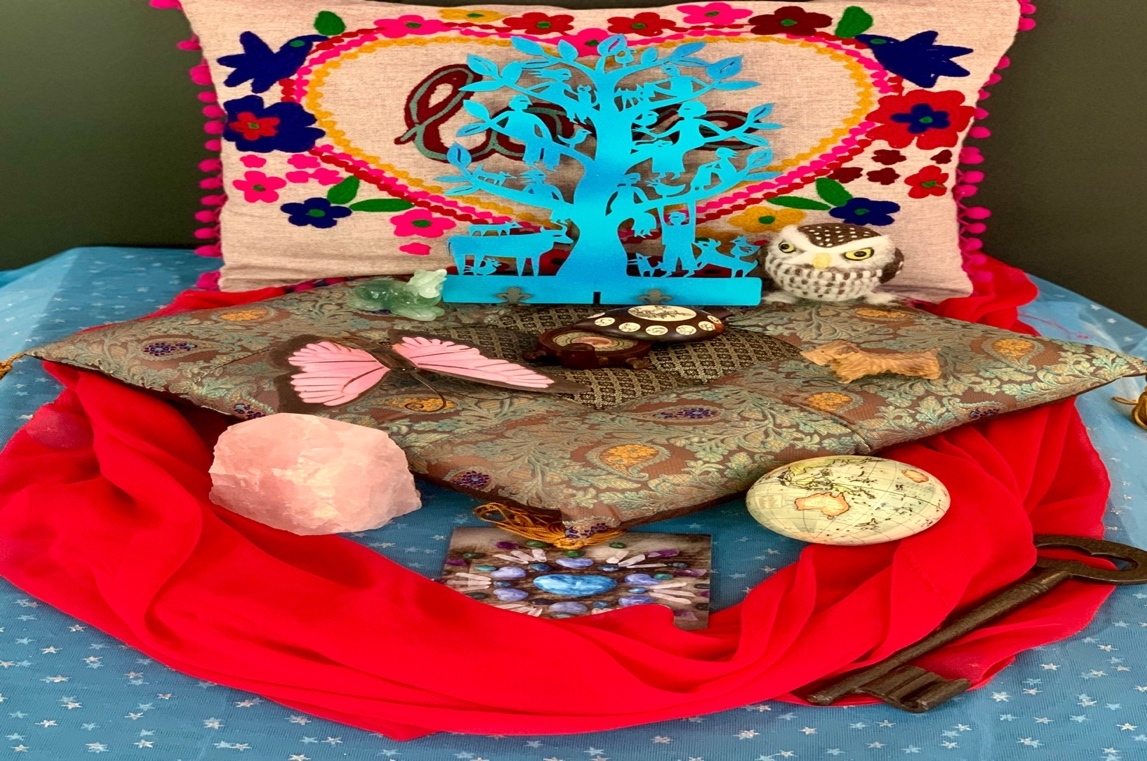
A bereaved mother explained her poem and artwork, entitled “Creating a Safe Place to Grow” (see Figure 1). The safe place she had created represented her home office, formerly her son’s bedroom, possibly a metaphor for her heart. She explained that this was a space where she “can be with her interior life”, and have the “freedom to remember the good and bad”. Her poem affirms these reflections: “It’s OK to heal, find my voice and his”. In her artwork, an embroidered heart pillow symbolised her higher power, while her poem expressed that her heart was a place of meeting with her son: “Together in my heart, memories, our voices”. In a quiet voice, she explained, “This room has held a lot of pain but … now the space feels like a big warm hug … there is a different feeling sense”. She turned and read from her poem: “Growing, finding comfort, we seek the future”. Tenderly holding a photo of her son to her heart, she said, “It’s been hard finding comfort rather than pain … this has helped”.
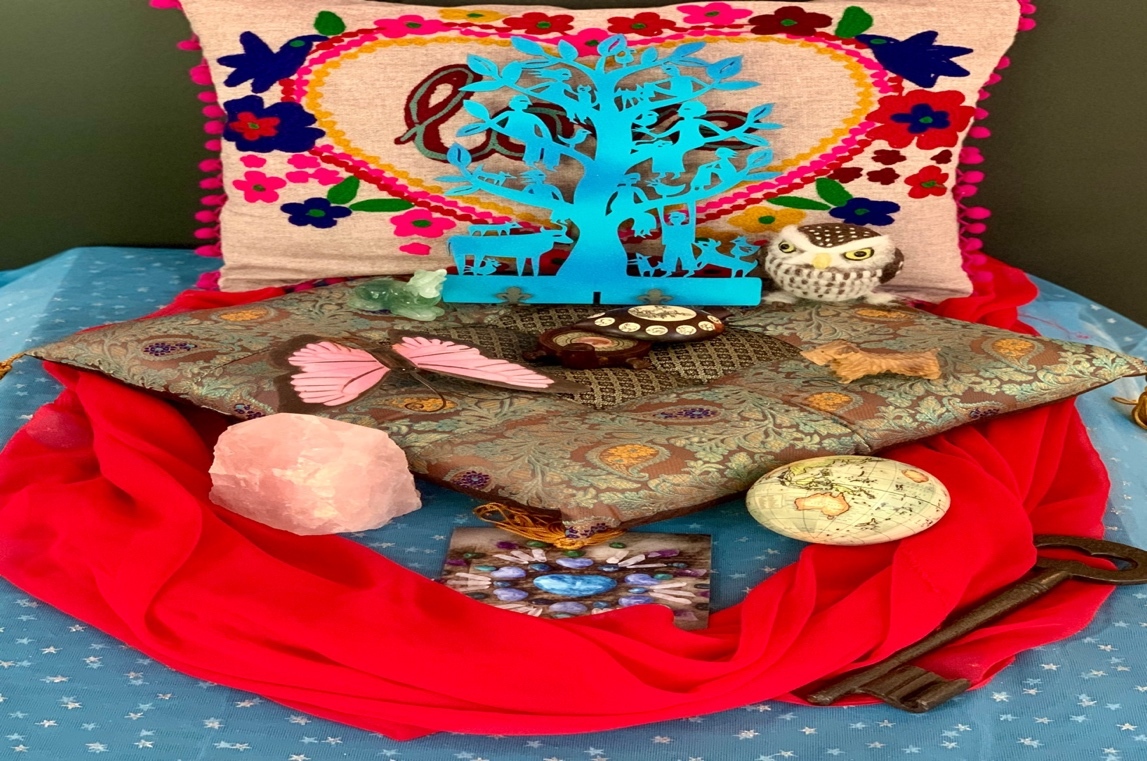
Several objects in this participant’s artwork provided layers of meaning: a key and a compass suggested unlocking a door and finding a new direction. A majestic butterfly traversed the object poem landscape, perhaps representing a new sense of freedom in the continuing bond with her son. The object poem was set out on swirling, deep blue material covered like the night sky with glittering silver stars. The participant added, “He loved looking at the stars”. Clasped in her hand was a beautifully written note: “Forever, with me in my heart”.
The participant’s poetry and visual imagery richly illustrated healing in the relationship between her son and herself: “It’s OK to heal now”. There was a poignant sense of TMSB themes of forgiveness for herself, the deceased, and others. Permission to heal came from her higher power. As PTG themes emerged in her reconstructed narrative, the participant told us she had created a place for her interior life, where she could find her voice and his voice, the good and the bad woven together. The room that had held so much pain had become a warm, enveloping hug, and her relationship with her son had shifted from one of pain to a re-imagined future woven into a nurturing relationship as they grew together. This vision offered an expanded life narrative and greater cherishing of life and relationship with herself and her son.
It Takes a Long Time to Rebuild Your Life
A bereaved wife sighed and repeated firmly, “It takes a long time to rebuild your life”. She moved her hands over the rippling aqua material: “This represents my commitment to myself, allowing myself to be softer, to trust, to let people in again”. She indicated a scroll tied with blue ribbon: “It’s about expanding my world, knowledge, personality … Feeding parts of myself that I’ve not allowed to be fed”. Objects were positioned on aqua material representing the ocean. She said, “The owl is my wise self—I feel and know that part of me. And my higher power is the Buddha”. A calm and serene Buddha carved from green stone looked over the ocean. She explained, “I’ve always had a deep faith, not religious, but a knowing that everything is going to be OK”. With a small smile, she added, touching her heart, “Maybe it’s my grandparents, guardian angels, guiding and holding me”. Regarding her artwork, she mused, “To see it as one whole and understand the elements I need in my life; water, faith, the head and heart space, music, dancing, singing again, embracing life”. She placed her hand against her heart: “I feel soothed; this helps me move forward, explain, grow, and shed parts of me”. With a smile, she regarded the group: “Other parts of me, like my sense of humour and fun, are slowly coming back to me”.
The visual image and the participant’s words were an ode to a healing relationship with self, illustrating a shift in perception of self, strength, and capabilities, and the need to shed parts of herself as she grew. There was a deep sense of how terribly long, hard, and heavy her grief journey had been, how impossible it had been to think about being gentle and nurturing to herself, and how she might begin to rebuild her life in the wake of the loss of her husband to suicide. As the participant reflected on her object poem she became aware that in the darkest times, she had felt a deep spiritual sense of being held by her higher power and her grandparents. Out of the long, cold hibernation, green PTG shoots of hope emerged as she discovered her strength and resilience, knowing that her life was to be cherished.
Sanctuary and Healing: Coming Home to Myself
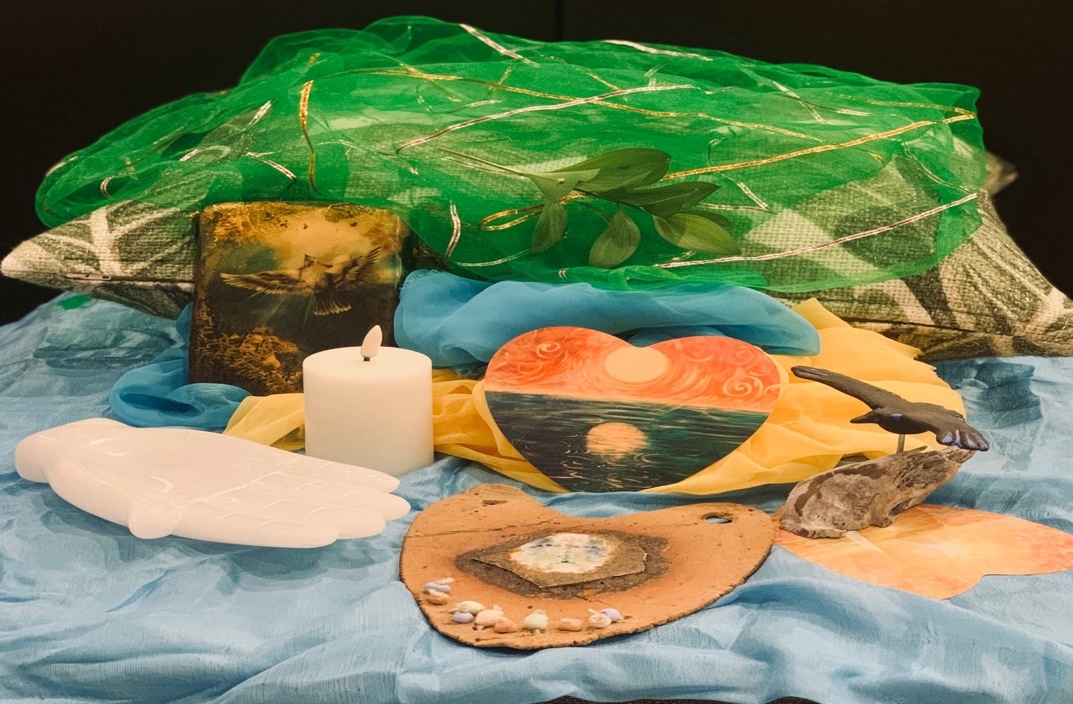
A bereaved mother softly explained that she had “felt gently held in this process, safe, a place of trust”; this was a gracious thank you for the empathic support of the group. Visually, her object poem was a glorious sunset image positioned among the swirling blues and greens of nature (see Figure 2). Next to a white candle was a pottery heart that was broken but repaired. The mother picked up a marble hand: “The open hand is my wise self, ‘I’m with you’, soothing, holding”. In her poem, this is captured in the line, “The hand that beholds”. Her poem also states that “mother nature beckons”. The mother explained, “My higher power is in nature”, and her relationship with her daughter was woven into the turning of the world, at sunset and twilight. Gentle tears fell as she added, “The heart symbol is the calm, sacred centre … I’ve always felt the light, a higher power, something I trust that draws me, grace, an invisible love within, a life force”.
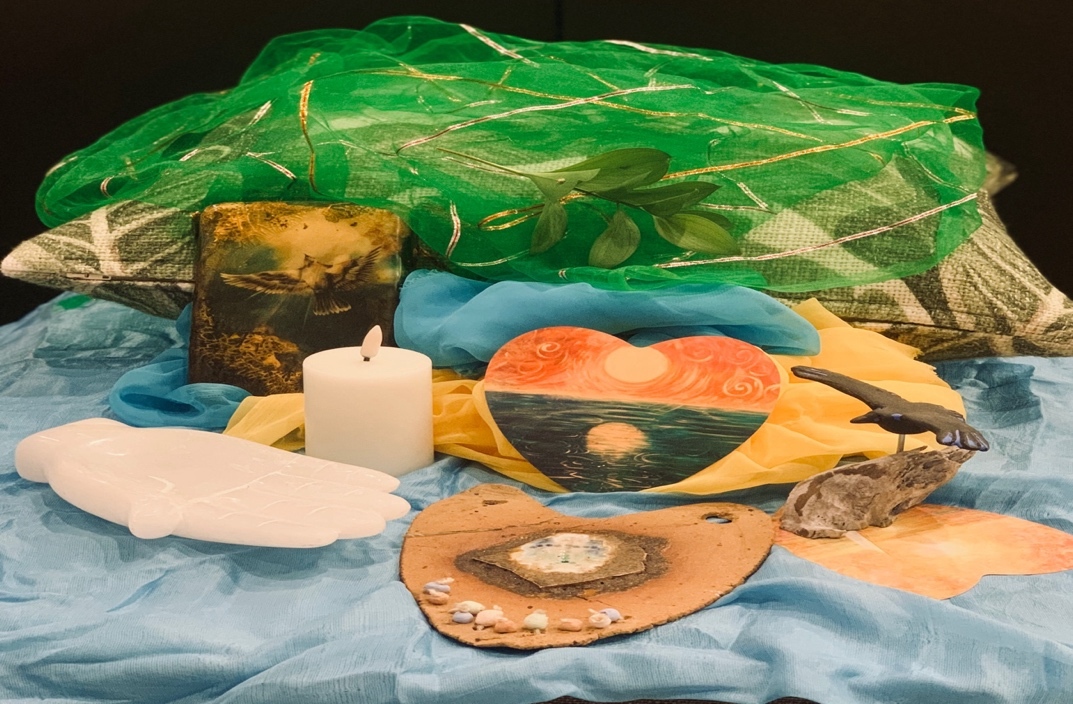
These thoughts were reflected in the bereaved mother’s poem: “Within her soul, all one, immersed/Into her radiant sacred centre”. The poetry enfolds a sanctuary and coming home to herself. Pausing, she then quietly explained, “This has helped me in the darkness at rock bottom, this presence, a knowing”. Following this intimate sharing, she again paused, then said, “There are many layers … the mystery, the eagle flight … All this parallels my grief journey, a deep feeling of hope, enlightenment, coming home to myself, and healing to carry forward into the world”.
The essence of the object poem was expressed in her poetry and artwork, entitled “Sanctuary and Healing: Coming Home to Myself”. The visual effect of the artwork created a feeling of deep calm and spirituality. It was suffused with light and the love that has held and comforted her as she has grieved deeply for her daughter. A sense of mystery and inner guidance was present in her object poem, which was imbued with hope and faith. TMSB themes were expressed in a deeply felt sense of grace, forgiveness, compassion, and understanding for herself, her daughter, and other loved ones. Her artwork and poetry created a beautiful reconstructed PTG story from her devastating loss.
Calm, Grounded Communication: A Connected Story Going Forward
A bereaved wife emphasised the significance of the title of her poem as she regarded her artwork assembled on pearlescent material. She explained the poem title states what she needed to create her object poem: “I needed a clear, connected story to tell myself. Once I had that, I was able to build what had been percolating inside me and populate my work with objects”. She shared her poem: “She’s there. I see her. Reawakening/Familiar and strong. I know her/But there’s distance to bridge, yet”. The group joined with her in the hope and excitement of rediscovering herself. She explained that her “wise self felt familiar, people say I’m like that; wise, balanced, calm. It felt meaningful for me; it endorses who I am”.
She picked up a small object, saying, “This dog is about wisdom … and this bear is me because after the horror and trauma, all that happened prior to and including his death, I’m stronger than I know, and I want to keep getting stronger”. This powerful statement was mirrored in her body language. In closing, she indicated an old leather-covered book: “My wise self nudges me, my life is rooted in learning, education and this fits with an idea I have for myself going forward”. She added that the mischievous puppet “is to remind me to play and have fun, it’s time”.
The participant’s poem and artwork provided her with insight into the PTG and TMSB themes of rediscovering herself, lost in the trauma and darkness of grief. Guided by her intuition and a knowing within, she created an object poem that expressed a calm, grounded narrative. Her object poem exuded a strong sense of finding herself and being seen, like the bear. The poem acknowledged her strength and ability to take care of herself and her children through all of the events prior to and including the death of her husband. Her wise self nudged her towards learning and education, a greater appreciation of life, play, fun, new possibilities, and enticing opportunities.
Discussion Outcomes
Participants were deeply touched by the experience of creating an object poem. Each artwork and poem provided a unique sensory narrative, a poetic, verbal, and visual feast of textures, colours, and symbolic objects expressing emerging PTG and confirming the value of CET in supporting this process (P. A. Levine, 2015; Malchiodi, 2020; Neimeyer & Rynearson, 2022). Importantly, the process captured the intimate essence of re-imagined life narratives created through the wisdom of weaving together the trauma, pain, and beauty of life (Tedeschi & Calhoun, 2008). Moreover, the emerging PTG themes are not static but part of a process that will continue to evolve and change as participants continue to grow. Participants’ verbal and visual expressions provided positive support for the emerging PTG themes of (a) personal strength, resilience, and a change in perception of self as strong and resourceful; (b) broadened life goals, new possibilities, and valuing of life; and (c) a shift in beliefs, world view, and spiritual beliefs, and connection with something greater than oneself (Calhoun & Tedeschi, 2006; Tedeschi et al., 2018). Data significantly identified the role of spiritual beliefs and the importance of connection with something greater than self, a higher power, nature, a belief system, or the cosmos.
Restorative relational TMSB healing themes related to the self, the deceased loved one, and others created a strong foundation for reimagining and reconstructing the future (McGann et al., 2021; Neimeyer & Sands, 2021). Restoration of the relationship with oneself, the deceased, and others is at the heart of suicide bereavement (Burke & Rynearson, 2022).
For participants, the object poem process facilitated adaptive evolving narrative reconstruction, providing support for grieving while nurturing engagement in living. Exploring PTG in the context of Buddhist beliefs, Tedeschi et al. (2018) noted the metaphor of the lotus flower. This symbol of peace and purity grows in the mud of polluted ponds. The metaphor has parallels for those bereaved by suicide who create from the trauma, pain, and devastation of suicide loss a valued life that encompasses peace, compassion, and wisdom.
Applications and Conclusion
The object poem can be modified for use with different counselling issues, including but not limited to grief and trauma. The process requires a trusting therapist–client relationship and is time-sensitive to the client’s grieving and the counselling process; the object poem would not be appropriate for use in early bereavement. The process can be used with individuals, couples, and family counselling. For instance, couples and families may like to create an object poem together, naming and providing context for object selection and meaning. The poem can be created by each member writing a line. The shared object poem process provides opportunities for understanding how family members are grieving in different ways. The intention of the object poem can also be adapted to align with the client’s presenting issue. When implementing the object poem, therapists should work holistically, provide information, ensure agency and choice throughout the process, and be supportive and sensitive to timing and the presenting client’s issue. It is important to be respectful and understand culture, ethnicity, beliefs, and values so the client feels safe and comfortable when engaging in CET.
Case study participant data highlighted the beneficial outcomes of long term counselling support that incorporates CET processes, such as creating the object poem, to facilitate PTG processes. Participant data provided insight into evolving adaptive and reconstructed life narratives and highlighted a strengthened sense of self, resilience, hope, and growth that are possible when people are provided with opportunities to express their inner lived experience through CET processes such as creation of the object poem. The importance of group collaboration in the processes described is significant. Given the case study limitations, it is hoped that the positive study outcomes identified may inform further research and the development of PTG counselling and programs. The value of the object poem process is in bringing sensory experiences into language and increasing awareness of inner experience in order to nurture a healing, reconstructed life narrative. The following individual case study drew on a range of creative psychodrama interventions implemented to facilitate and support PTG for an adult survivor of childhood sexual abuse.
Childhood Sexual Abuse: Individual Case Study
Traumatic abuse by a revered elder upon a child can cause near irreparable damage to the soul, the belief in self, and the hope that the world is a safe enough place (Walker et al., 2009). Sexual abuse by religious clergy on a child can be likened to a near-death experience (Isely et al., 2008; Sicilia et al., 2024). A secondary trauma occurs when the child is not supported or protected by their parents or guardians, who collude with the perpetrator by denying the evidence (Harper & Perkins, 2018).
Research suggests that multimodal, expressive, experiential therapies are more beneficial to the healing process than talk therapy alone (P. A. Levine, 2015; P. A. Levine & Macnaughton, 2004; van der Kolk, 2014; van der Kolk et al., 1996). Experiential embodied therapies help a client to work through the embedded layers of pain, hurt, and betrayal within the body, the mind, and the soul to support PTG (Tedeschi & Calhoun, 1995). Abuse in childhood can cause a rupture in the development of a coherent sense of trust in oneself and others. The injury is not only in the psyche but in the body and soul (Walker et al., 2009). How do we, as therapists, develop a “safe enough” relationship with the client to repair this schism and restore trust in the body and the mind? In this case study, psychodrama was used to help a person move through and beyond the trauma to PTG and a new sense of self and renewed hopefulness in their life.
Psychodrama
Psychodrama is an experiential therapy that works from the bottom up to explore a client’s story in action by following their movements and gestures while listening to the felt sense of experience in their body. As a multidimensional form of psychotherapy, psychodrama draws on a body of knowledge based on personality development, interpersonal, and group development theories. It was pioneered in the 1920s by Moreno, a Viennese psychiatrist, social scientist, and philosopher. Moreno (1985) described psychodrama as a science that explored truth through dramatic methods. As a social science, psychodrama does not view an individual in a vacuum. Rather, it views an individual as a member of their own social network and milieu. Psychodrama pioneered role theory, which is based on the philosophy that people’s behaviours and personality development are formed in relationship to the roles they develop in response to persons or experiences in their life.
Their life story becomes the narrative of how they construct and perceive the world. Psychodrama supports clients in telling their stories in action, enlisting props or puppets to reconstruct, repair, and create more positive relationships while gaining new perspectives on past events that continue to influence their lives (Keisari et al., 2023). Rather than simply examining the client’s pathologies, psychodrama focuses on which strengths and attributes are working for the client, how they can enlist the support of resources, and how to access more of their creative potential and spiritual beliefs or moral truths to foster PTG.
Robbing a child of their own sense of self and their faith and trust in themselves and others creates a profound loss within the body-mind that leaves a deep wound of bereavement (Guido, 2008; Sicilia et al., 2024). Sexual abuse of children by clergy who represent a spiritual authority is one of the harshest experiences a young person can endure (Pereda & Segura, 2021). This betrayal breaks a higher moral code, the belief that these caretakers are to be trusted and that they will protect you from such injuries. The perpetrator is attempting to steal the person’s innocence and force them to keep a secret. As therapists, we are challenged to help clients work through these embedded layers of pain, hurt, and betrayal within the body, the mind, and the soul.
Childhood sexual trauma by a known perpetrator who has groomed a child’s trust creates a deep psychic wound of guilt, shame, and powerlessness that remains deeply entrenched in the child’s psyche and physical body (Blakemore et al., 2017). Current clinical practices such as body-oriented, expressive arts, and somatic therapy have been quietly gaining evidence and momentum and seem to make intuitive sense for trauma survivors who live with intrinsic body memories of trauma. These methods seem particularly well suited for complex developmental trauma or posttraumatic stress disorder (Grabbe & Miller-Karas, 2017; van der Kolk, 2014). Working from these bottom-up approaches, we can assist in restoring a person’s faith in themselves, releasing dissociated shame and guilt, and unfreezing anger and rage from both the psyche and within the tissues where the physical experience of violation occurred. This allows the client to rebuild a bodily feeling of trust (Ridge, 2009).
Parents who deny or suppress the child’s reporting of the attacks abandon their child, who is then left to survive and manage their own physical, emotional, and spiritual pain. In this case, abuse by a religious clergy person causes seemingly irreparable damage to a child’s spiritual belief system and sense of safety in the world (Walker et al., 2009). Complex grief is an underlying emotional component that needs to be addressed to recover one’s life force and belief in oneself.
Trauma repair and healing have evolved over the past 40 years (van der Kolk, 2014). Thus, therapists are now better prepared with more resources and training behind them to work with the injuries of abuse, neglect, and complex developmental trauma. In this case study, psychodrama was used to help a person move through and beyond the trauma to a new sense of self and a renewed hopefulness in their life.
Psychodrama is an expressive art therapy using action interventions that deepen the therapeutic experience. Various techniques such as role reversal, mirroring, and inner voice “doubling” are combined with the use of coloured fabrics, art supplies, guided imagery, somatic expression, and mindful exploration within the body-mind.
When working with posttraumatic symptoms stemming from abuse and neglect, particularly sexual abuse in childhood, it is vital to develop a trusting enough relationship between client and therapist before any deep action interventions can be used effectively. Psychodrama supports a bottom-up approach to the repair of trauma. The purpose is developmental repair of relationships, working with both implicit and explicit messages in the body and the mind so that a person can recreate a more holistic embodied sense of healing.
Method and Materials
The client, who has given permission to be called Brendon, was a male in his early 60s who had engaged in numerous kinds of psychological therapy over the past 40 years, mostly talk therapy. He was married with four children and worked professionally. He came to the therapist seeking help for his lack of energy and despondency bordering on depression. He had lost his purpose to live; he was not suicidal but felt there was not much point to his life despite his deep love for his current family and their love for him. He revealed in the intake interview that he had experienced sexual abuse by a religious clergy member between the ages of 11 and 13 years.
Trauma can render any person speechless (Culp et al., 1987; van der Kolk, 2014). In this case, a young boy, Brendon, unsupported by his parents emotionally, found he could not speak openly about the sexual abuse. The conflict of exposing his perpetrator, a respected clergy member in his church, felt unsafe and confusing. In psychodrama, action methods using props such as coloured fabrics, dolls, objects, and cushions are often used by a therapist to help the client to create a scenario that brings their story to life with embodied expression. Preparing Brendon for this form of expression was assisted by using calming breath work and a guided journey into his body to help him to create a safe enough ground for his story to be told and witnessed. As the therapist listened and observed Brendon’s body responses and his nonverbal facial expressions, the therapist could then assist him to find sounds, words, and gestures to help open the doorway to the interior world of Brendon’s lived experience. Engaging the client’s whole-body awareness, beginning from a grounded intuitive space, enables the client to more fully integrate their insights. This paves the way for them to begin to make healthier changes in their actions in the world and within themselves.
Practice Illustration
The first two sessions focused on building rapport and trust. Using the principles of internal family systems (Schwartz, 2025) with Brendon was an important step in teaching him about the internal parts of himself. Brendon was good at helping others but not himself. His wounded child was an exile because of the burden of caring for his siblings and mother, where he had been raised in a depleted family of origin. His father had left, following a divorce, and remarried when Brendon was 10. Brendon took on the role of both rescuer and provider of love to his family. However, he could not receive much love for himself. He felt cut off from an interior relationship with himself because of a lack of trust in others. No one could penetrate his shell of protection. Brendon and the therapist worked to develop an internal dialogue and connection to a place in his body where he could feel some sensation, his heart. Somatically exploring and asking, “What does your heart need? What are you able to offer to yourself to receive?”, the therapist gently suggested “kindness, softness”. As he accepted this possibility of loving kindness for himself, a bridge of trust was built so he could experience a healthy embodied “true self”.
Finding Safety with a Resource
The next step was to find a resource for him to know that there had been someone in his life who had seen him and looked out for him. The therapist asked, “Who did you trust at age 10–13, who was kind and supportive to you?” He said it was his rugby coach, who had at least acknowledged him. An enactment was set up. Role reversal in psychodrama is a powerful tool, to assist the client to feel beyond their own experience and gain a new perspective and create new neurons of perception (Ridge, 2009). Brendon reversed roles to become the coach, embodying him, which brought into his felt awareness the sense of a stronger presence who believed in him. This helped him gain insight from another perspective. In the coach’s role, Brendon’s deep intuition revealed how the coach really cared for and looked after him, although the care was more implicit.
Building a Relationship with the Lost Part of Self: The Wounded Young Boy
Entering a regression to retrieve the lost parts of the young boy was crucial to repairing injuries to the self. The stepping stones for trust were now forming. It often takes several sessions of repairing the inner self to feel safe enough with a therapist to explore the wound of trauma and abuse. A body scan was used to explore what sensations were strongest within him. In this session, Brendon identified his generally reactive anger towards those who irritate him by their disrespectful behaviour towards him in particular.
This represented the layer of his protectors and firefighters (Schwartz, 2024) who currently kept him alive. The therapist said to him, “Your anger is valid, as it affirms you are worth being treated respectfully and it won’t tolerate you being mistreated.” The next question was, “Who is really angry?” This brought forth the young boy who was molested by the clergy member. The therapist asked, “Where do you sense this in your body?” His response was in his chest and throat. The therapist asked him to show this feeling with a movement. Next, the therapist asked, “Who knows about this boy’s anger?” Brendon answered, “The wise sage.” Brendon and the therapist pondered how the wise sage could support the body in expressing his anger. Brendon could now speak from each part and obtain the wisdom to support himself.
Confronting the Perpetrator: Rescuing the Child
When there is sufficient support and the client is grounded in a stronger sense of self, when he has encountered his inner child, and trust exists between therapist and client, it is time to confront the perpetrator. Centred in his heart with breath and relaxation imagery, Brendon created a circle of strength with coloured fabric to represent his most trusted, current family members, his inner courage, and his coach. The next step was to place his “wounded child self”, represented by a stuffed animal, in a safe place within the circle. Then the therapist asked Brendon’s current adult self to write a letter to the perpetrator to say everything he would like to say to him now. When he was finished, Brendon asked if he could also write something to his younger self.
Brendon then placed the clergy person so that he was separate from the inner circle outside on a chair marked with black scarves to describe his energy. Brendon stood and read his letter; the therapist stood behind him with their hand on his shoulder to support him physically. He gave back to the clergy person all the guilt, shame, and angry hurt he felt, picking up various coloured scarves to fling at the clergy chair. Afterwards, he spontaneously turned to his wounded child and read the letter to his younger self with deep emotion as soft tears flowed. It was a profound moment for Brendon as he reclaimed his spirit and life force. Later, he described feeling freed from the harm of the perpetrator as he reclaimed his own power and left the shame with the perpetrator.
Discussion Outcomes
In the following few sessions, Brendon noted that some subtle changes had occurred for him. He noticed he felt more confident and less prone to raging in traffic or being annoyed with difficult people at work. He was also more mindful about reducing his drinking, which had been his form of self-medication. Brendon had been able to drink up to 10 alcoholic drinks per night and still perform the next day. However, following these sessions, he had cut down to three or four drinks per day, and he abstained for three days a week from alcohol altogether. Weeks later, he noticed that he was now more considerate of himself when making decisions and his reactive anger with others was reduced as he was slowly retraining the voice of his inner critic.
Brendon instigated all this alone, without suggestions from the therapist. Viewing and feeling himself free of shame, he could now build a new relationship with himself. PTG themes emerged as hope was restored to his spirit and he felt a stronger commitment to self-care and a new commitment to find meaningful purpose in his life. Establishing healthier changes in diet and lifestyle signalled this development. Work will continue with Brendon to strengthen PTG themes and build confidence in himself so he can grow stronger in his resolve to move beyond this experience that has defined and coloured his life.
Applications and Conclusion
This sequence of techniques and interventions were prescriptive to a) building a trusting alliance with Brendon’s therapist, b) finding a healthier connection to his own body, c) discovering hidden support (his rugby coach), who was there for him at the time of the abuse, d) building a circle of strength, e), confronting the perpetrator, and finally f) rescuing his inner wounded child part. Each of these are explicit developmental steps (Hudgins, 2002) that are critical to creating enough safety for the final intervention of confronting the perpetrator and rescuing the wounded child.
The loss of faith or spirituality and the loss of trust in the self is a profound, complex grief experience. Therapies such as psychodrama, sensorimotor therapy, and expressive arts teach a variety of beneficial rituals for healing and repairing complex grief and bereavement as well as promoting PTG. These therapeutic methods are supported by Dayton’s drama therapy (1990), Hudgin’s therapeutic spiral model (2002), P. A. Levine’s (2003, 2010) sensory experiencing, Rothschild’s (2017) trauma treatment, and van der Kolk’s (2014) recommendation of yoga, theatre games, and mindfulness. Contraindications suggest that not all clients can work in action; they may feel shy or ungrounded by these action interventions. However, to reach the depths of the abuse that is embedded in the body-mind, talking may be insufficient to release the pain and suffering of these experiences. The relationship between client and therapist needs to be carefully woven and explored to build bridges of trust. Many researchers and therapists (Fisher, 2020; P. A. Levine, 2015; Ogden et al., 2006; Schwartz, 2024; van der Kolk et al., 2014) support the use of work with multimodal therapies for holistic PTG repair of trauma, abuse, and neglect. Talking and telling is only the beginning of releasing grief, loss, and pain from the whole person. Action methods combined with creative expressive arts restore the body, mind, and spirit with new healthier behaviours, paving the way to PTG and a renewed sense of one’s vital self.
Conclusion
The case studies presented have explored the use of CET to facilitate ongoing, evolving, long term PTG for those who have experienced the trauma of suicide loss and childhood sexual abuse. The sequelae of these traumatic events can present in similar grief and loss themes of trauma and disruption to the sense of self and relationships with others, and in challenges re-engaging meaningfully in life. The group case study for those bereaved by suicide implemented the object poem process to nurture PTG. The individual case study used creative psychodrama processes to support PTG and the restoration of self and soul, many years after childhood sexual abuse. Clinical practice verbal and visual data illustrations provided insight into the function and significance of PTG themes in reconstructing adaptive post-trauma life narratives and the benefits of implementing CET and psychodrama to support ongoing, evolving, adaptive, long term PTG processes.
Given the limitations of case studies generally, it is hoped the positive findings identified from the current case studies may inform knowledge and awareness by motivating further research into the benefits of ongoing long term PTG counselling and programs and the use of CET to support these processes. It is also hoped that this contribution—in a similar way to the folk tale “Stone Soup” described by Sands (2014), in which many people add small, often pain-saturated pieces of knowing into a large pot, which becomes, through the process of sharing, a nourishing and sustaining soup—will feed the heart and soul, encouraging hope and engagement in living for clinicians and those they seek to assist.