
Clinical supervision is a critical aspect of counselling practice, serving both protective and developmental functions. It promotes ethical practices and practitioner wellbeing while supporting the educational and mentoring needs of emerging therapists (Barletta, 2025).
Professional membership with peak Australian bodies, such as the Australian Counselling Association (ACA) and the Psychotherapy and Counselling Federation of Australia (PACFA), mandates supervision for registration and ongoing professional development (ACA, 2024; PACFA, 2023). While accredited training equips supervisors with foundational skills, the practice remains inherently complex due to challenges such as boundary tensions, power dynamics, and maintaining supervisory alliances (Corey et al., 2018; De Stefano et al., 2017).
Although international research offers theoretical and practical insights, there is a shortage of qualitative studies addressing Australian counselling supervision practices. This gap limits understanding of how supervisors navigate relational complexities, including boundary management, role clarity, and ethical dilemmas. Through the proposed research, we aim to explore these challenges through qualitative inquiry, focusing on the supervisory dyad and transparent practices like contracting. By examining the experiences of Australian counselling supervisors, we seek to contribute to professional rigour and recognition within the field, offering insights to enhance both supervisory practice and industry standards. Ethical and methodological considerations will underpin the research framework, ensuring its relevance and applicability.
Background
Supervision is a cornerstone of practice within the counselling profession, designed primarily to safeguard clients and enhance practitioner wellbeing. Beyond these foundational aims, supervision encompasses ethical monitoring, skill development, and the prevention of practitioner burnout and countertransference (Armstrong, 2025; Barletta, 2025). While theoretical approaches to supervision may align with specific counselling and psychotherapy modalities or follow generic models (e.g., developmental or social role frameworks), their shared focus lies in maintaining ethical and professional standards in practice (Beinart & Clohessy, 2017).
ACA and PACFA provide definitions that align supervision with developmental, ethical, and relational support goals. ACA delineates professional supervision into two categories: clinical supervision, which monitors practitioners’ capacities to manage their clients and workload, and broader professional supervision, encompassing reflective and developmental aims (ACA, 2024). In contrast, PACFA emphasises the relational aspect of supervision, underscoring collaboration and supervisee self-care as critical to achieving optimal client outcomes (PACFA, 2023).
Research identifies the strength of the supervisory alliance as a decisive factor in effective supervision, overshadowing the choice of supervision modality. Bordin’s (1979, 1983) conceptualisation of the working alliance consists of goals, tasks, and bonds, and remains central to understanding the relational dynamics in supervision (Watkins, 2014). Empirical studies affirm that a robust supervisory alliance correlates with supervisee satisfaction, self-disclosure, and enhanced self-efficacy (Park et al., 2019). However, methodological gaps, such as an overreliance on supervisee perspectives and correlational research, limit the scope of these findings (Watkins, 2014).
Qualitative studies expand on these relational dynamics. For instance, a New Zealand study found that while supervisees valued formal evaluation processes for accountability, they preferred approaches that maintained relational integrity and minimised power imbalances (Davys et al., 2017). Similarly, Grant et al. (2012) identified common supervisory challenges, including relational difficulties and supervisee competence issues, and categorised intervention strategies into relational, reflective, confrontative, and avoidant approaches.
The multifaceted roles of supervisors can range from educator and mentor to evaluator and often result in implicit and explicit boundary tensions (Barletta, 2025). These tensions necessitate deliberate and transparent navigation to preserve the supervisory relationship’s integrity (Corey et al., 2018; Herlihy & Corey, 2015). Boundaries in supervision also parallel those in therapeutic contexts, emphasising ethical decision-making, informed consent, and consultation to mitigate risks (McLeod, 2019).
Dual or multiple relationships, while sometimes unavoidable (e.g., in organisational contexts), pose unique ethical challenges. For example, internal supervision roles often prioritise managerial imperatives over individual supervisee needs, potentially diminishing the relational focus essential to effective supervision (Rankine, 2019). In training environments, educator-supervisors must balance evaluative responsibilities with relational support, with power dynamics further complicating these relationships. Student perceptions of boundary issues often hinge on their personal needs and fears of academic repercussions, whereas educators focus on maintaining ethical standards (Burns, 2020). Similarly, Gu et al. (2011) noted differing priorities among supervisors, supervisees, and students regarding confidentiality and role boundaries, reflecting the developmental asymmetries inherent in supervisory relationships.
Integrating personal and professional needs within clinical supervision is a nuanced process that carries significant implications for supervisees’ development. Effective supervision necessitates maintaining clear boundaries to distinguish it from personal therapy, ensuring the focus remains on professional growth rather than personal concerns (ACA, 2024; Corey et al., 2018). Despite the parallels between supervision and therapy, particularly their relational dynamics and reliance on personal self-awareness (Flückiger et al., 2012), supervision is fundamentally professional, not therapeutic. However, personal dynamics, if unaddressed, can lead to relational ruptures, burnout, and reduced effectiveness in the supervisory process (Aponte & Carlsen, 2009; Biggs et al., 2025).
Contemporary supervision models, such as the Person-of-the-Therapist Training (POTT) model, emphasise addressing supervisees’ personal dimensions, including awareness of supervisees’ emotional triggers in session (Aponte & Kissil, 2016), to enhance the therapeutic use of self and foster mutual compassion (Niño & Zeytinoglu-Saydam, 2020). Emphasising the value of humanity within professional relationships, POTT encourages supervisees to confront imperfections and develop resilience, thus improving empathy and connection with clients. However, challenges arise in balancing personal disclosures with professional boundaries, as supervisors juggle support and evaluation roles (Bernard et al., 2017).
Andolfi (2022) advocated for emotional resonance, urging therapists to authentically connect with clients while maintaining boundaries. He highlighted personal growth, emotional intelligence, and reflective practice as essential for therapists to become catalysts for change, viewing their development as a lifelong journey. Bowen and Satir (as cited in Aponte, 2022) repositioned the therapist’s use of self as a transformative tool, contingent on emotional self-awareness and regulation.
Cozolino’s (2017) emotional regulation supervision aligns with contemporary views emphasising self-awareness and wellbeing in therapists. This model helps therapists balance emotional engagement and detachment, maintaining empathy without being overwhelmed. It prioritises recognising and managing emotional responses, including countertransference, ensuring these reactions do not hinder objectivity. Supervisors serve as models for emotional regulation, fostering a supportive environment that mirrors the therapeutic alliance that therapists aim to build with clients. This approach integrates emotional regulation into broader therapeutic competencies, like empathy and systemic thinking.
Research reveals variability in supervisory approaches to personal disclosures. While some supervisors avoid personal content, others incorporate therapeutic methods when beneficial (Thériault & Gazzola, 2018). Effective supervision supports personal and professional growth but requires clear boundaries and, when necessary, referrals to personal therapy (Forshaw et al., 2019). Ultimately, supervision should provide clarity, guidance, and a safe space for exploration of the possibilities and challenges of the counselling role.
The supervisory relationship is further complicated by inherent power imbalances. Supervisors’ positional authority, derived from expertise, legitimacy, and role-based power, can both positively and negatively impact the relationship (Beinart & Clohessy, 2017; Elias, 2008). Research suggests that power dynamics influence supervisee engagement, disclosure, and trust, with misuses of power often leading to disengagement or superficial interactions (De Stefano et al., 2017). Conversely, supervisors who collaboratively empower supervisees foster trust and professional growth, illustrating the importance of relational transparency and mutual respect.
Trust is a pivotal element in supervision. Studies reveal that supportive and transparent supervisory relationships encourage supervisees to address errors and develop resilience (Egan et al., 2017). Conversely, a lack of trust or excessive focus on procedural compliance can suppress authentic engagement, increasing the risk of ethical issues and relational ruptures (Singh-Pillay & Cartwright, 2023). Supervisors’ reluctance to address challenging dynamics or provide critical feedback may stem from insecurities or a desire to preserve the supervisory alliance, further underscoring the need for robust training and support for supervisors (Knox, 2015).
Contracting and transparency are essential components of effective supervision. Clear agreements on logistical, ethical, and professional boundaries, akin to informed consent in therapy, set the foundation for productive supervisory relationships (ACA, 2024). However, Australian research indicates that contracting is often overlooked, particularly with experienced supervisees, resulting in miscommunications and unmet expectations (Schirmer & Thompson, 2021b, 2021a). Supervisors and supervisees frequently differ in their perceptions of evaluation and feedback processes, highlighting the need for explicit communication and shared understanding.
The complexity of supervision necessitates recognition as a specialised practice requiring additional training and ethical vigilance (Armstrong, 2025). Supervisors must navigate multifaceted relational dynamics, balancing authentic support with evaluative responsibilities, while addressing inherent boundary tensions (Beinart & Clohessy, 2017). Continued research into supervisory practices and the challenges faced by Australian counselling supervisors is critical to advancing the field and ensuring best practices in counselling.
This review underscores the intricate interplay of personal and professional dimensions within supervision and the critical importance of clear boundaries, transparent communication, and effective power management to foster supervisee development and client wellbeing. This project therefore addresses the unique experience-based perspective of Australian counselling supervisors and the inherent difficulties faced within the supervisory relationship.
Method
This study adopted a qualitative research design situated within a social constructivist epistemology, which views knowledge as context-dependent and co-constructed between individuals (Liamputtong, 2016). This paradigm was particularly suited to the research question “How are counselling supervisors navigating boundary tensions and poly-relational challenges?” given its emphasis on subjectivity, interpretation, and relational complexity (Levitt, 2015).
This study received ethics approval from the University of Southern Queensland’s Human Research Ethics Committee (HREC Project ID: ETH2023-0538), and the reporting adheres to the American Psychological Association (APA) Journal Article Reporting Standards (JARS) for qualitative research (APA, 2020). The data were analysed using reflexive thematic analysis (Braun & Clarke, 2006), which aligns closely with constructivist principles by acknowledging the active role of the researchers in identifying patterns of meaning. Rather than seeking objectivity or coding consensus, this approach values interpretive depth and reflexivity (Braun & Clarke, 2006). The analysis was recursive and inductive, involving familiarisation, initial coding, theme generation, and refinement. NVivo software (Lumivero, 2023) was used to organise and manage the data, while the development of themes was informed by researcher reflexivity and iterative discussion among the research team. Mapping and collaborative dialogue supported theme refinement, not to enhance reliability in a positivist sense, but to deepen interpretive coherence and transparency.
Researcher Description
Consistent with a social constructivist epistemology, we recognise that researcher backgrounds inevitably shape the development and interpretation of themes. To support transparency, we outline the varied clinical, supervisory, and academic experience within the research team. The team comprised Peter Avetisoff (PACFA Clinical Registrant; ACA Level 4; master’s student interviewer), Elisa Agostinelli (PACFA Clinical Registrant; ACA Level 4; clinician and clinical supervisor trained in Italy, the USA, and Australia) who has practiced (and published in) clinical supervision in academic and clinical settings since 2005, and Nathan Beel (PACFA Clinical Registrant; Australian-trained clinical supervisor) who has provided clinical supervision since 2002 and taught clinical supervision to undergraduate counselling students. Their differing orientations contributed to layered positionalities that influenced data collection and analysis. Agostinelli’s systemic, family-therapy approach likely enhanced sensitivity to intersubjectivity and emotional process. Beel’s developmental, PACFA-aligned supervisory stance may have foregrounded ethics, accountability, and growth-oriented models. Avetisoff’s integrative, systemic, and attachment-informed counselling framework, combined with his student status, may have elicited greater openness from participants while also shaping power dynamics in ways that could constrain critique of supervision standards (Roiha & Iikkanen, 2022).
The diversity noted contextualises the findings within the broader debate on researcher influence and co-constructed meaning in qualitative supervision research (Braun & Clarke, 2021). In constructivist terms, the themes reflect negotiated interpretations rather than fixed realities. Power and alliance are relationally produced not only within supervision but also between interviewer and participant. Recognising this dynamic strengthens interpretive transparency and underscores the need for continuous reflexivity in Australian counselling research.
Participants
Eight clinical supervisors participated in the study (five women, three men), all accredited with PACFA or ACA, as confirmed through the Australian Register of Counselling and Psychotherapy. See Table 1 for participant characteristics. Despite recruitment efforts across both peak bodies, the sample was overwhelmingly PACFA-aligned (87.5%), with only one dual PACFA/ACA member. This demographic and institutional profile carries interpretive implications. A predominantly PACFA-affiliated dataset may reflect a relational-developmental supervisory ethos that emphasises reflective practice and self-care (PACFA, 2023), while the single dual-registered participant potentially represented perspectives more consistent with ACA’s compliance and performance monitoring orientation (ACA, 2024). This imbalance may have shaped how participants framed ethical stances and practice norms, privileging relational safety over procedural accountability.
Participants’ supervisory experience spanned non-government organisations, private practice, and school/university settings. Recruitment occurred through LinkedIn, counselling peak-body newsletters and websites, and targeted searches of PACFA and Australian Association of Supervision public supervisor listings. Purposive sampling ensured participants had relevant supervisory experience, supplemented by snowball sampling to expand the pool. Interviews were conducted between April 27 and May 6, 2024. The concentration of PACFA-affiliated supervisors highlights the need for future research to purposefully sample across both peak bodies to examine how organisational identity shapes ethical reasoning, boundary practices, and the development of supervision cultures within Australia’s plural professional landscape.
Data Collection
We chose semi-structured interviews to support this epistemological stance, as they provide a balance between structure and flexibility, enabling participants to guide the conversation in ways that reflect their lived realities (Liamputtong, 2016). The interviewer adopted a facilitative and responsive posture, aligning with the constructivist emphasis on co-construction of meaning. The interviewer used probing questions to support participant reflection without imposing a particular framework or interpretation. This approach allowed for depth and nuance while respecting the participant’s interpretive authority. It also aligned with the aims of the research by privileging how supervisors subjectively understand and make sense of supervisory challenges, and by recognising that meaning is co-constructed through the interaction between interviewer and participant. Similar interview-based methods have been widely used in supervision research that attends to complexity, power, and context (Singh-Pillay & Cartwright, 2023; Thériault & Gazzola, 2018). All interviewees were provided with information about the project and subsequently provided consent to be interviewed.
Avetisoff conducted all semi-structured individual interviews, using a broad interview guide of open-ended questions. Questions included a focus on supervisor beliefs and approaches to supervision, a focus on supervisory relationship alliance and power, boundary management, and supervisory evaluation of the supervisee. Constructivism informed the design of the interview guide, which was intentionally open-ended and exploratory. Rather than aiming to extract predefined information, the questions were framed to invite personal meaning-making and narrative elaboration. Participants were encouraged to reflect on their own professional and relational experiences, shaping the direction of the interview according to what felt most relevant to them.
Interviews were held for 45 to 77 minutes, with an average interview time of 52 minutes recorded. Seven of the eight interviews were facilitated via Zoom (2024) and were both audio and video recorded on the same platform. One of the interviews took place in a face-to-face format and was audio recorded using a smartphone voice recorder. Each participant was interviewed once. No further interviews were conducted once the research team determined that meaning saturation had been reached. This point was identified when additional interviews ceased to provide new insights relevant to the research question (Braun & Clarke, 2021; Low, 2019). Saturation was evaluated through ongoing, iterative analysis during data collection, whereby the research team regularly reviewed codes and emerging patterns. When later interviews consistently confirmed existing codes without generating new concepts or thematic variation, the team concluded that sufficient depth and breadth of data had been achieved to support meaningful interpretation (Low, 2019).
One of the interviewees had had a prior clinical supervisory relationship with Avetisoff. The team discussed the potential impact of this on the data quality. Upon finishing the interviews with the remaining seven, we concluded, after reviewing the recordings, that the pre-existing relationship did not appear to negatively affect the objectivity and/or integrity of the interview process. We also acknowledge that the familiarity and pre-established relational rapport may have facilitated a deeper exchange of insights (Roiha & Iikkanen, 2022). Throughout the data generation and analysis phases, we gave additional attention to potential biases that could affect the interpretive process. We used research meetings to broach discussions regarding reflexivity and explore how the influence of the co-investigator’s role and experiences could affect their approach and interpretation.
Following the completion of all interviews, the research team checked and corrected three of the recording transcripts generated by Zoom (2024). The remaining four were outsourced to a paid external professional transcribing service, Go Transcribe (2024). All participants were granted an opportunity over a two-week period to check the accuracy of their transcripts.
Data Analysis
In this research, we utilised the thematic analysis method to analyse the data collected (Braun & Clarke, 2006). This approach is commonly used in qualitative research as it provides the capacity to capture the unique experiences of each participant while also uncovering themes and patterns across the sample group (Braun & Clarke, 2021). The epistemology of the research was social constructivism. Social constructivism assumes that knowledge is produced in the minds of people and in discourse, rather than there being an existing reality independent of the mind (Williams, 2016). Consistent with this approach, the data analysis process was interpretive and reflexive, acknowledging the researcher’s active role in shaping and constructing themes rather than discovering them as fixed or objective truths. We utilised the six-phase method of thematic analysis (Braun & Clarke, 2006), predominantly conducted by Avetisoff with the aid of the remaining authors to check coding and support in developing and refining themes.
The analysis began with the transcription of interviews, followed by systematic coding in NVivo (Lumivero, 2023). Avetisoff and Beel independently coded the first transcript and compared their inductive codes to establish consensus, after which Avetisoff coded the remaining interviews. In the third phase, initial theme development involved clustering related codes to identify broader shared meanings (Bager-Charleson & McBeath, 2023). Focused coding supported this process by grouping similar codes into larger categories and removing isolated or conceptually weak codes (Braun & Clarke, 2006; Clarke & Braun, 2018), enabling deeper familiarity with the data and early pattern recognition.
The fourth phase used visual mapping to refine thematic structure. NVivo’s Mind Map (Lumivero, 2023) tool facilitated the construction of early thematic groupings and helped the team examine relationships between codes, identify overlap, and observe patterns across participants (Braun & Clarke, 2021). Mapping also supported more abstract, conceptual thinking by clarifying hierarchical links between themes and subthemes and ensuring coherence. The visual format strengthened collaborative analysis, allowing the team to test interpretations and adjust thematic boundaries during meetings.
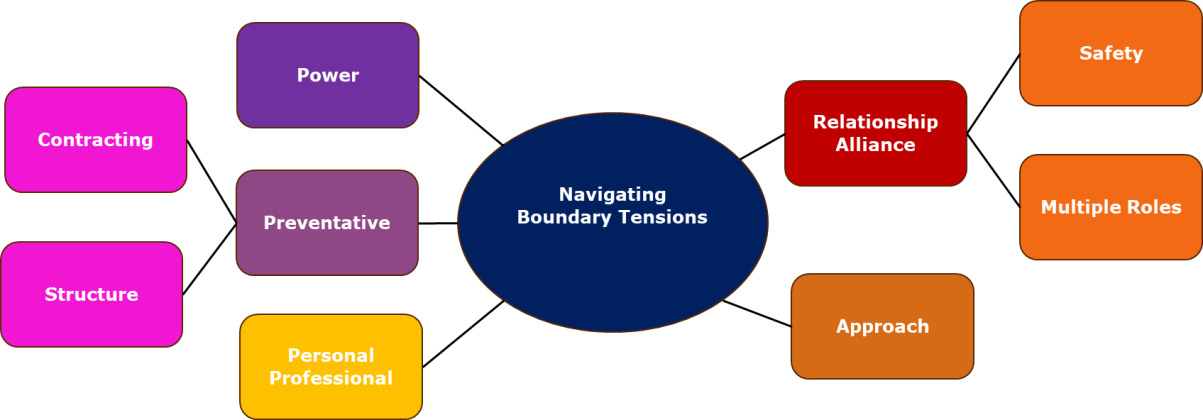
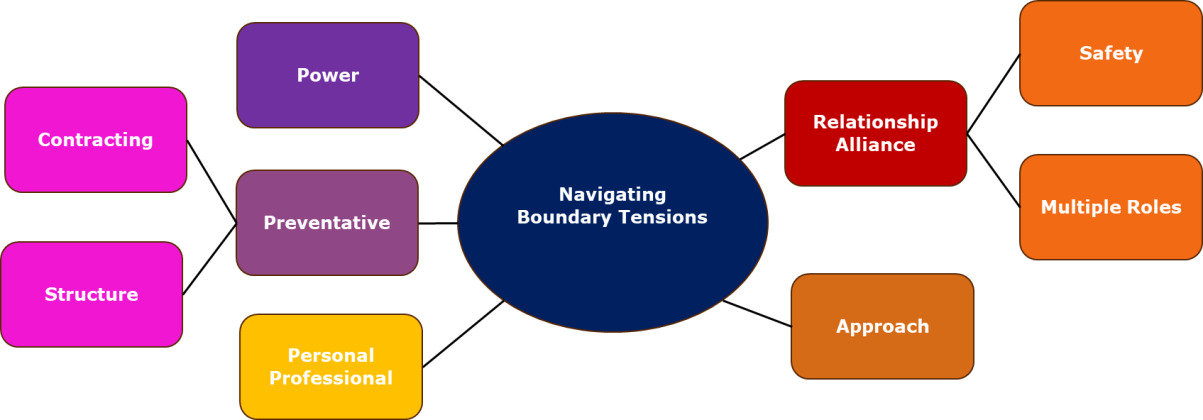
In the fifth phase, themes were defined and refined (Bager-Charleson & McBeath, 2023). Researchers drafted brief thematic summaries and developed interpretive narratives linking the coded data to the research question. Ongoing team discussions informed revisions, with the mind map updated to reflect changes in theme structure. Figure 1 presents the final thematic map.
The sixth phase involved producing the final report. We selected interview extracts to illustrate each theme and foreground participants’ meaning (Bager-Charleson & McBeath, 2023). To preserve clarity while retaining intent, we removed stutters, repeated words, fillers, and false starts from quotations.
Use of Artificial Intelligence (AI)
In addition to the established practices of thematic analysis, we also utilised the AI-powered program CoPilot (Microsoft, 2023), with model training off, to analyse de-identified transcripts for themes and common challenges in the data. The incorporation of AI into thematic analysis is contentious partly due to concerns that AI may lack the nuanced and contextual understanding necessary to interpret rich data that is central to qualitative research (Christou, 2024, 2025). However, Hitch (2023) found that AI can help identify novel patterns and insights not recognised by human researchers, prompting additional iterative reflection.
In this present research, AI analysis offered a validation tool through computational identification of patterns in the data. This process enabled the researchers to potentially identify both gaps and confirm human-identified themes. In this case, CoPilot did not produce any novel themes, but corroborated patterns observed and interpreted by the research team (Marshall & Naff, 2024).
Results
The study identified five overarching themes: power, prevention, personal–professional boundaries, relationship/alliance, and approach. Four subthemes emerged: contracting, structure, safety, and multiple roles. These practices appeared to often serve multiple functions and are discussed within the most relevant thematic contexts, with crosslinks made to highlight their interconnected roles. De-identified interview excerpts maintain participant anonymity, with tracking labels indicating a number followed by a letter denoting gender (e.g., 2F, 3M).
Power
Power dynamics were central to the discussions, encompassing role differentials, boundary management, ethical oversight, and transparency. While participants acknowledged power as inherent and necessary in supervision, they sought to minimise its potential negative impact. One participant likened supervision to family structures, emphasising a balance of boundaries, support, and encouragement:
In a family … you have to have the parents, with clear boundaries and clear lines drawn around what’s okay and what’s not okay. But still, there has to be a holding pattern of love and support and encouragement, and I see it a little bit like that (5F).
Although power provided structure and role clarity, participants favoured collaborative approaches over hierarchical dynamics. Some supervisees initially preferred authoritative guidance, which evolved into mutual learning and dialogue over time. Participants identified power-sharing practices, such as seeking feedback and empowering supervisees to influence supervision. However, selective disclosures by supervisees were sometimes linked to previous negative experiences or fear of judgement:
It’s tricky because it also is bound by people’s past experiences of supervision and how they’ve seen that power differential be managed … sometimes it’s not very overt, it’s quite covert, what’s going on in the power space between me and the other (2F).
Strategies to mitigate power issues included clear contracting, inviting feedback, and addressing concerns promptly. The function of contracting as a formal preventative measure for managing expectations and boundaries is explored in detail under the prevention theme. Transparency was noted as important but challenging, particularly in dual relationships. Participants described formative shifts in practice after witnessing power misuse, reinforcing the need to build trust and uphold ethical integrity.
Prevention
Preventative strategies were deemed essential in managing boundary tensions and fostering strong supervisory relationships. While most respondents highlighted specific preventative measures taken to ensure that their supervisees understood the boundary expectations and limits of practice within the supervisory relationship, their tact and practice varied. Participants identified two key preventative measures: contracting and structure.
Contracting
As noted in the discussion on power, contracting was not only a tool for mitigating power imbalances but was also viewed as a primary preventative measure for managing boundaries and expectations from the outset of the supervisory relationship. The majority of supervisors stated that standard formal contracting methods were employed before commencing work with new supervisees, while others described a more casual, organic process for establishing a supervisory relationship. Those who did not formally contract either relied on assumptions that contemporary supervisees had sufficient understanding of supervision expectations and/or negotiated expectations casually on a session-by-session basis, depending on the supervisees’ needs. Those opting for more formalised contracting explicitly included agreements on time, cost, preference of communication methods, ethical monitoring, and role expectations of both supervisor and supervisee. One participant suggested that contracting also provides an opportunity to normalise the occurrence of rupture and repair: “We talk about this in initial contracting … I acknowledge there will be downs … there will be times when [they] might walk out of the room, be a bit upset … or not thinking this was a good time” (2M).
Some supervisors suggested that the contracting phase also served as an opportunity to find or establish a practice fit. Prior to finalising or agreeing on the supervisory contract, these supervisors engage in an exchange of professional and practice information to ensure supervisees are well informed of the supervisor’s framework and any unnecessary and/or avoidable tensions are circumvented.
Structure
Supervisors varied in their use of formal or flexible approaches, revealing a philosophical distinction between them. Some endorsed a less structured, organic approach, favouring a person-centred and collaborative dynamic, guided by the supervisee’s emergent needs. For example: “I just go with the flow. We just go with what they bring to the table” (1M).
Others expressed the belief that the use of structure was important for ethical containment and focus, ensuring efficiency, clarity, and meaningful engagement in the supervisory tasks and process, while avoiding unpreparedness. “You should come prepared … whether that’s issues, cases, concerns, ethical … but to have an idea of what you want to unpack today” (2F).
Some supervisors noted that structure may need to be adjusted according to the supervisee’s developmental needs, with early career counsellors needing higher levels of structure and guidance, and over time, as their confidence increases, the structural scaffolding can be relaxed accordingly. This aligns with an attachment-informed approach, in which structure provides a secure base needed for exploration and containment, of which the structure will gradually be relaxed. This adaptable approach to structure also informed how supervisors navigated their various roles, a concept discussed further under the relationship and alliance theme.
Personal–Professional Boundaries
Participants navigated the tension between personal and professional boundaries in supervision. Supervisors agreed that clinical supervision should be differentiated from personal counselling and that supervisees should seek external counselling for personal issues. However, even though there was broad agreement about the distinctly different purpose of supervision, there were two distinct paradigmatic positions that emerged in relation to personal content. One participant emphasised the importance of clear and strict boundary maintenance as an ethical necessity for clinical supervision:
Well, I’m engaged as your professional supervisor, not your personal counsellor … As a supervisor, I need to model appropriate behaviour to my supervisees, in my opinion. We talk about boundaries, but if I don’t model them in our relationship, I’m sending mixed messages (1M).
The other paradigmatic position emphasised the integration of the supervisee’s self as integral to safe and competent practice. From this perspective, self-disclosure from supervisees is seen not as boundary crossings, but as essential. For these therapists, discussion of the supervisee’s reactions and personal history helps develop self-awareness, which will help reduce burnout risk and countertransference reactions.
If there’s a counsellor coming in who can talk all the bells and whistles … but they’re not aware of themselves, they’re not aware of how they are reacting to the client, how their own history shows up in the room … then I think if they don’t have that awareness, then I think there’s a higher risk of unethical practice (3F).
Many participants agreed that personal content should only be discussed if relevant to practice and should not dominate supervision. When supervisors sensed the supervision was at risk of crossing into personal therapy, the supervisors referred supervisees for personal counselling.
Supervisors varied in their beliefs about the relative role of supervisee personal self-disclosure in the supervisory process regarding relational safety and what constitutes ethical and effective practice. They appeared to agree that the purpose of supervision was primarily to ensure the counsellor would deliver ethical and competent practice for the wellbeing of clients, and that this was distinguished from the purpose of personal counselling.
Relationship and Alliance
The relationship and alliance theme emerged as a core element of supervision, with participants unanimously agreeing that a strong, supportive connection is the primary vehicle for professional and personal growth. This overarching theme, which intersects with all other aspects of the analysis, refers to the shared working bond between supervisor and supervisee. It is within this relational context that practitioners can safely explore practice challenges and address professional blind spots. One participant likened supervision to a triadic relationship, noting the client’s implicit presence in discussions: “I see it as a triad … the client is always kind of there … I feel like the client comes to join us in the room” (2F).
Participants agreed that a strong alliance fostered supervisees’ personal and professional growth. This theme was divided into two subthemes: safety and multiple roles.
Safety
Participants emphasised the need for supervisees to feel safe discussing their work without fear of judgement. This safety was believed to be important for both the supervisee’s own development, but also to safeguard client welfare: “My main goal with supervision is to provide a safe place where counsellors … can feel comfortable and secure enough to take what they’re doing apart, so to speak. Without feeling judged…” (5F).
Maintaining clear boundaries contributed to safety, ensuring supervisees understood relational expectations. Some participants noted that excessive insecurity or fear of judgement could damage the supervisory relationship, even requiring termination if the supervisee was not sufficiently transparent about their work. Others highlighted the isolating nature of counselling and the importance of supervision in safeguarding client wellbeing: “It’s important to have a safe space … work can be incredibly isolating … it’s important in service to the client for more than the counsellor’s eye to be on what’s happening” (2F).
Multiple Roles
Participants assumed multiple roles within the supervisory relationship, including mentor, teacher, ethical evaluator, peer consultant, and guide. One participant’s response appeared to capture the, at times competing, combination of efforts and accommodations, and a desire to steer clear of taking an expert role: “It’s not friendship. It’s not managerial, although it has some aspects of each. It certainly has warmth and interest … I resist falling into the trap of saying, ‘Oh yeah, I know’” (2M).
Role flexibility depended on context, supervisee developmental stage, and ethical considerations. As noted also in the subtheme of structure, some participants noted early-career supervisees required more directive supervision, in which the supervisor functioned as a teacher and guide to build a strong professional foundation, whereas experienced practitioners engaged more regularly in a peer consultant role. This developmental approach to role flexibility aligns with the broader views on structure as a key preventative and containing practice, as detailed earlier.
Approach
Supervisors’ conceptualisation of supervision influenced relational dynamics and boundary management. Some participants appeared uncomfortable with adhering to a particular modality or approach, suggesting a more eclectic or integrated supervisory practice was most preferable. Others appeared to be highly resistant to even the mention of a practice model or formal structure to supervision: “Practice model? I don’t have a practice model. I don’t have a practice model for counselling” (3M).
Some participants favoured a Rogerian, non-expert approach, describing supervision as “walking with” supervisees. Others followed structured models, such as the Seven-Eyed Supervision framework (Hawkins & Shohet, 1993), valuing its relational and systemic insights. One participant described their approach as: “The art and science of supervision … using evidence-based models while providing a focused listening and reflective space” (3F).
Overall, most supervisors aimed to foster a collaborative space rather than direct guidance. While they sought to avoid an “expert” stance, they acknowledged the necessity of some hierarchical elements for ethical oversight and professional development.
I think I see the supervision relationship as both collaborative and hierarchical. My role as a supervisor is to, I guess, come in with a lens of spotting signs of ethical issues, spotting signs of other presenting issues such as family violence, mental health, suicide risk, all of that stuff. It’s a mix of evaluation but also fostering growth (3F).
Collectively, these themes reinforce that supervisors negotiate competing professional demands. Varied approaches to contracting, structure, and boundary management highlight the nuanced ways in which these tensions are managed. The following discussion will explore the broader implications of these findings, examining how they align with and challenge existing literature and professional standards in the field.
Discussion
The findings highlight the complexities of counselling supervisory relationships, revealing differences in how supervisors identify and navigate boundary challenges and interpersonal difficulties. While the results align with contemporary literature, gaps were identified in industry standards, training, and general practice structures.
The study’s results that centred on power, prevention, boundaries, alliance, and approach can be further situated within broader conceptual frameworks that account for supervision as both a relational and socio-cultural system. The emergent themes reflect supervision’s dual function as an evaluative, developmental relationship operating across multiple lenses: the supervisee’s work with the client, the supervisor–supervisee process, and the wider institutional and professional context. Through a systemic lens, power and boundary management are not exclusively interpersonal but structurally shaped by professional hierarchies and regulatory expectations (Beinart & Clohessy, 2017; Rankine, 2019). This echoes the dialectic described in developmental models such as Stoltenberg et al.'s (2014) Integrative Developmental Model (IDM), where autonomy and guidance coexist in a shifting balance across supervisee stages. This suggests that the theme of prevention through contracting and structure can be interpreted as a practical mechanism for negotiating these developmental–systemic tensions.
Power and Ethical Oversight
Power dynamics in supervision were multifaceted, encompassing role-based differentials and ethical oversight. While power carries risks that require mitigation, it is essential for effective supervision. Participants conceptualised the supervisory dynamic similarly to a familial structure, aligning with attachment-based models such as the Circle of Security, which emphasises the supervisor’s role as a secure base (Soliman, 2023). This perspective underscores the importance of supervision beyond skill development, supporting supervisees in their professional and personal growth.
Most supervisors aimed to create a safe and supportive environment, consistent with research indicating that such relationships foster practitioner resilience and learning from errors (Egan et al., 2017). However, while participants acknowledged power differentials, some responses suggested that the ethical implications of non-directive approaches were not always fully considered. Literature warns that overly collegial approaches, characterised by informal peer-like relationships, may blur boundaries and diminish supervision’s evaluative function (Armstrong, 2025; Gu et al., 2011). Although supervision can evolve into a more collaborative relationship as supervisees develop, maintaining ethical oversight remains crucial.
Engaging critically with opposing perspectives, it should be recognised that the collaborative approach endorsed by many participants may lessen the evaluative focus of supervision. Sullivan and Agostinelli (2025) cautioned that non-directive approaches to supervision may prevent necessary gatekeeping functions. Conversely, overly hierarchical supervision may reproduce the very power asymmetries participants sought to mitigate (De Stefano et al., 2017). Therefore, ethical supervision requires what Falender et al. (2009) termed “balanced authority”: a stance integrating both empathy and accountability. The present findings contribute by illustrating how supervisors attempt to operationalise this balance through adaptive contracting and context-sensitive structure, even when explicit theoretical rationales are under-articulated.
Contracting and Preventative Strategies
Contracting was a key approach for managing boundary tensions. Literature supports that clear contracting establishes expectations, serves as a reference for conflict resolution, and orients supervisees to the supervisory process (Bernard et al., 2017; Osborn & Davis, 2025). While most supervisors used contracting to assess practice fit and revisit boundaries, few provided concrete examples of how they navigated boundary tensions in-session.
Supervisors typically referenced standard contract templates covering logistical aspects (ACA, 2024; PACFA, 2023). However, contemporary research suggests that effective contracting should involve ongoing relational negotiations, incorporating regular feedback and adaptation (Beinart & Clohessy, 2017). The apparent reliance on static contracts raises concerns about whether these documents sufficiently address dynamic relational issues in supervision. Participants may have struggled to articulate these complexities under interview conditions, reflecting broader challenges in summarising relational nuances (Bambling, 2025; Park et al., 2019).
Some supervisors assumed that supervisees were well-informed about supervision through their formal training. However, the lack of standardised supervision education means that supervisees enter with varying levels of understanding and preparedness. Ideally, as supervisees develop, their experiential learning within supervision enhances their ability to use the space effectively. Variability in supervisory practices suggests that supervisees may also have inconsistent experiences in developing these skills.
These insights hold practical implications for regulatory bodies. For PACFA and ACA, the results underscore the importance of embedding reflexive contracting, cultural responsiveness, and power-awareness within supervision standards.
Supervisory Relationships and Safety
A collaborative and collegial approach was preferred by most supervisors, aligning with literature suggesting that safe and supportive environments encourage supervisees to explore professional uncertainties (Bambling, 2025; Beinart & Clohessy, 2017). Findings also support structured, directive approaches as beneficial for early-career supervisees, while advanced practitioners thrive in consultative, collegial relationships (Barletta, 2025).
However, less directive approaches raise ethical concerns. Some supervisors who favoured a peer-like, non-hierarchical stance reported minimal ethical issues in their practice. While this approach fosters open dialogue, the risk of boundary blurring must be considered (Armstrong, 2025). The informal nature of some supervisory relationships, described as “chewing the fat”, may overlook critical ethical concerns and diminish accountability (Gu et al., 2011). A balance is needed between supportive collaboration and maintaining professional oversight.
Safety in supervision was a recurring theme. The findings reinforce that supervision is fundamentally a relational process, where interpersonal dynamics influence professional growth (Aponte & Carlsen, 2009). However, some supervisors expressed frustration when supervisees appeared unprepared, which the literature attributes to unclear contracting or the need for renegotiation (Wilson & Lizzio, 2024). Research suggests that structured preparatory exercises, such as organising and reviewing case summaries or reflection forms enhance supervisee engagement and facilitate deeper learning (Beinart & Clohessy, 2017; Falender et al., 2009). While structured approaches clarify expectations, excessive rigidity may hinder supervisees from exploring issues beyond a predetermined framework.
Personal–Professional Boundaries in Supervision
Navigating personal and professional boundaries in supervision was identified as a critical challenge. Participants varied in their views on the appropriateness of personal disclosures, reflecting broader debates on how personal content should be addressed in supervision. Literature suggests personal issues can be explored if they impact professional practice but should not dominate supervision (Armstrong, 2025; Dixon, 2025). The consensus in ethical guidelines is that supervision should not become personal therapy (ACA, 2024; Beinart & Clohessy, 2017; PACFA, 2020).
However, distinguishing between professional and personal content was not always clear. One participant argued that exploring personal factors within supervision enhances self-awareness and benefits client outcomes (3F). This view aligns with research on the use of self in counselling, which suggests that acknowledging personal influences can improve therapeutic effectiveness (Sleater & Scheiner, 2020). The challenge remains in maintaining a professional focus while recognising that personal experiences inevitably shape counselling practice.
From a conceptual standpoint, personal–professional boundary tensions can be linked to the person-of-the-therapist discourse (Aponte & Kissil, 2016), which locates supervision within a shared relational space where the selves of both supervisor and supervisee function as an instrument of attunement and co-regulation (Pelling & Agostinelli, 2025).
Participants’ divergent positions between strict boundary maintenance and integrated use of self mirror the theoretical dichotomy within contemporary supervision scholarship (Biggs et al., 2025). Integrative frameworks provide a more contextually responsive approach for Australian supervision than adhering to a single paradigm (Barletta, 2025).
Many supervisors agreed that referring supervisees for personal counselling was necessary when boundaries were crossed (Barletta, 2025). However, no clear consensus emerged on when this transition should occur, indicating uncertainty in boundary enforcement. This gap underscores the need for clearer training and professional development regarding the interface between personal and professional supervision content.
Supervisory Roles and Developmental Stages
Findings confirmed that supervisors assume multiple roles, adapting their approach based on supervisees’ developmental stage (Beddoe & Davys, 2016). Responses aligned with developmental supervision models, such as IDM (Stoltenberg et al., 2014), which describes supervisees’ evolving needs across four stages, progressing from reliance on guidance to an autonomous, integrated practice.
Although participants noted supervisee development, fewer references were made to the supervisor’s own developmental process. The literature identifies that supervisors also progress through stages, from initial anxiety and reliance on structure to greater autonomy and adaptability (Pelling & Agostinelli, 2025). The quality of supervision is influenced by the supervisor’s self-awareness, theoretical grounding, and professional development (Bambling, 2025; Beinart & Clohessy, 2017). Despite this, few participants discussed their own supervision or continuing professional development (CPD).
Current frameworks emphasise frequency and duration requirements for supervisors but provide limited guidance on relational or developmental processes (ACA, 2024; PACFA, 2024). Introducing mandatory supervisor supervision could strengthen ethical oversight. Additionally, national guidelines might benefit from articulating competencies in theoretical integration, requiring supervisors to demonstrate fluency across multiple frameworks rather than allegiance to one. Such reform would acknowledge theoretical pluralism as a characteristic of advanced supervisory identity.
Research suggests that years of experience alone do not predict therapist competence (Goldberg et al., 2016). Instead, deliberate practice and active reflection and engagement in professional development is essential for maintaining high standards (Clements-Hickman & Harris, 2024). Extending this evidence to the supervisory context, the apparent lack of focus regarding structured, ongoing supervision for supervisors in the findings suggests an area for further investigation.
In sum, situating the study’s themes within established frameworks and reflecting on researcher and participant positionalities illuminate supervision as a co-constructed ethical system. The integration of attachment, systemic, and developmental perspectives highlights supervision’s dual function: to nurture and to evaluate, within an evolving professional context marked by plural theoretical frameworks. Recognising how supervisory and researcher identities shape knowledge production enhances transparency and strengthens the contribution of this study to Australian supervision scholarship. Future policy and training initiatives by PACFA and ACA might therefore emphasise integrative competency, reflexive contracting, and the cultivation of supervisory identity as ethical competency grounded in pluralism and accountability.
Implications for Practice
The research highlights the nuanced and evolving nature of counsellor development, which often intersects with personal values and relational boundaries. Counsellor educators and supervisors should emphasise the creation of robust informed consent and contracting processes that clearly delineate roles, expectations, and professional limits. These protocols should include explicit discussions on dual relationships, confidentiality, power dynamics, and role clarity from the outset of both the counselling and supervision processes.
Ethical decision-making models related to boundary setting must be embedded throughout the counsellor education curriculum. Practical ethics instruction should go beyond theoretical frameworks to include real-life case studies, role-plays, and simulation exercises in which students critically analyse situations where boundaries may be tested.
Since the study uses narrative inquiry to reveal how personal histories influence professional identity, counsellor trainees should be encouraged to reflect on their own healthy and problematic experiences with boundaries. These reflective practices can reveal unconscious relational patterns or vulnerabilities that might lead to boundary crossings, thereby equipping trainees with self-awareness before these patterns manifest in client relationships.
Additionally, supervisors should engage in the co-construction of supervision contracts that are revisited periodically. These contracts should cover not only the logistical and ethical dimensions of supervision but also address relational boundaries, cultural values, communication expectations, and procedures for navigating discomfort or ruptures. A living supervision contract reinforces mutual accountability and provides a structure for addressing evolving challenges.
From a broader conceptual view, these findings also align with international directions toward “integrative ethical supervision” (Osborn & Davis, 2025) where reflective dialogue and systemic awareness are central to regulatory competence. Embedding this orientation within Australian accreditation could harmonise professional development pathways across associations and reduce the fragmentation evident in training standards.
Limitations and Future Directions
The potential influence of observer and social desirability bias during interviews was acknowledged, potentially limiting participants’ openness, especially when discussing practice insecurities. Most interviews were conducted online, which, although efficient, may have restricted rapport-building and observation of non-verbal cues. The lack of detailed demographic and training information from participants limited the depth of analysis, especially considering variations in supervisory training programs endorsed by ACA and PACFA.
The research also captured only the supervisors’ perspectives, omitting the voices of supervisees. Including both members of the supervisory dyad in future studies could offer a more comprehensive understanding of relational dynamics and boundary tensions. The findings suggest that significant diversity exists in supervisory practices, shaped by individual and professional differences, such as culture, experience, values, and training. This diversity challenges the applicability of standardised approaches and underscores the need for nuanced, context-sensitive supervisory practices.
The study revealed that supervisors generally favoured a collaborative, supportive approach, particularly with experienced supervisees, while early-stage practitioners benefited from more structured guidance. Contracting and setting clear expectations were key strategies for managing boundaries. However, the scope and depth of these agreements, particularly regarding relational dynamics, remained unclear.
Overall, the research highlighted a lack of consistency in boundary management and emphasised the need for further exploration into supervisory standards and relational dynamics in Australian counselling practice. Future studies should include supervisee perspectives and focus on how contracting and power dynamics influence the supervisory relationship in addition to a deeper understanding of the differences in supervision training and supervision standards in the Australian context.
Given the deeply personal and subjective nature of counsellor identity development illustrated in the study, supervision should adopt a more personalised approach. Models that allow for cultural responsiveness, emotional safety, emotional regulation, and identity affirmation (such as the IDM, Neurobiologically-Informed Reflective Supervision model, or the Racial-Cultural Identity Development Model) can better support supervisees’ personal/professional development.
Finally, supervisors also acknowledged the importance of addressing relevant personal issues without crossing into therapeutic territory. A more comprehensive understanding of counsellor personal/professional identity development, including how this connects to the counsellor’s sense of emotional safety and ability to emotionally regulate in session, could enhance supervision practice in education settings.
The study’s participant description, while providing an overview of gender and broad practice contexts, was limited by the absence of a comprehensive collection of detailed demographic variables (e.g., precise years of supervisory experience, specific breakdown of full-time/part-time roles, or a categorised list of all settings). This was partly due to the exploratory nature of the study, which prioritised in-depth narrative accounts over extensive demographic profiling. As a result, the findings cannot be considered with specific demographic attributes beyond the general descriptors provided. Future research could benefit from a more systematic and granular approach to participant demographics to enable richer comparisons and insights into how such variables might shape supervisory experiences.
Conclusion
This study highlights the complexity of counselling supervision, particularly around power dynamics, boundary management, and supervisee development in the Australian context. While most supervisors aimed to foster supportive, collaborative environments, inconsistencies in boundary setting and ethical oversight were evident. Non-directive or overly collegial approaches, though well-intentioned, risk blurring professional lines and weakening supervision’s evaluative function.
Contracting was commonly used to clarify roles and expectations, but many supervisors relied on static templates rather than adaptive, relational processes. This raises concerns about whether these tools adequately address the evolving nature of supervisory relationships. Additionally, the limited focus on supervisors’ own professional development suggests a gap in reflective practice and ongoing learning.
Supervisors acknowledged the importance of addressing personal issues when relevant to professional functioning yet struggled to define clear boundaries. Incorporating models that support identity development, emotional safety, and cultural responsiveness may strengthen supervision outcomes.
To improve practice, counselling education should embed practical ethics, boundary setting, and reflective exercises into training. Supervision contracts must be co-created, regularly revisited, and include cultural and relational considerations. Future research should include supervisee perspectives and explore how power and contracting shape supervision. Addressing these gaps can lead to more ethical, consistent, and effective supervision practices in the Australian context.