
Highlights and Implications
-
Groundedness is essential for online facilitators to create safe, supportive spaces that foster introspection, openness, and resilience.
-
A somatic (body-oriented) practice helps facilitators stay grounded by tuning into bodily sensations to process emotions and regulate themselves.
-
Technology can also serve as a grounding tool—eye movement between the main screen and chat can aid emotional regulation, while breakout rooms offer space for reflection and re-energising.
-
Research on best practices is limited, and not all somatic techniques work for everyone.
-
There is a growing need for somatic-oriented training specifically designed for online facilitation.
Introduction
In 2019, while working as an online supervisor for a national crisis organisation, I (the first author) facilitated synchronous group sessions with frontline responders across Australia via Zoom. Despite the deep connections formed in these sessions, I struggled with the unique challenges of the digital format. I often felt ungrounded and experienced a sense of self-disinhibition, where my professional boundaries seemed blurred. This experience sparked my curiosity, leading to this scoping review (SR) on how other online group supervisors manage self-disinhibition and regain a sense of groundedness.
Literature Review
Online group therapy (OGT) is now a well-established therapeutic modality that offers a safe space for remote participants to connect, reflect, explore narratives, manage emotions, develop coping strategies, and enhance their wellbeing (Varker et al., 2019). OGT can be organised into two main groups: synchronous, where participant interactions are simultaneous via a video-conferencing web-based tool; and asynchronous, which offers flexible connection times through chat/text-based platforms (Weinberg, 2020). Research demonstrates that most OGT is conducted via a synchronous format and that asynchronous group therapy has fewer positive outcomes than synchronous group therapy (Varker et al., 2019). Therefore, this SR will primarily focus on synchronous online interactions.
While the foundational literature heavily focuses on clinical OGT, the structural dynamics of synchronous online gatherings apply broadly to various group types, including supervision, education, task, and support groups. Over the years, synchronous OGT has faced scepticism and resistance from many clinicians who have doubted its usefulness and have perceived it as a poor substitute for in-person group therapy (Essig, 2010; Weinberg, 2020).
Nonetheless, several meta-analysis studies have demonstrated that internet-based cognitive behavioural group therapy, when compared with in-person delivered groups, offers similar benefits, outcomes, and professional standards (Carlbring et al., 2018). Additional studies have highlighted OGT’s effectiveness in delivering interventions for bulimia nervosa (Zerwas et al., 2017), post-traumatic stress disorder (Liu et al., 2020), and chronic pain (Mariano et al., 2019).
The widespread adoption of OGT is driven by several distinct advantages, including increased accessibility for rural or housebound participants, reduced travel costs, and the “online disinhibition effect”, which, in its benign form, can encourage faster self-disclosure and vulnerability (Suler, 2004; Varker et al., 2019). Conversely, the modality presents significant disadvantages, such as technical instabilities, heightened privacy concerns within the participant’s home environment, and the “Zoom fatigue” associated with sustained cognitive load (Riches et al., 2019; Weinberg, 2020). Most notably, the absence of a shared physical therapeutic space complicates the facilitator’s ability to maintain group boundaries and provide immediate containment for high-intensity emotional outpourings (Rolnick & Weinberg, 2019). These factors necessitate a highly grounded facilitator who can provide the psychological stability that the virtual environment inherently lacks.
Within the context of this review, it is necessary to clarify three core concepts: self-disinhibition, somatics, and grounding. While disinhibition often refers to client behaviour, self-disinhibition in facilitators involves a diminished capacity for professional self-monitoring due to the sense of invisibility associated with being online. To counter this, this review utilises a somatic framework. Somatics is the study of the soma—the body as perceived from within, where internal sensations are used as vital clinical data (Hanna, 1986). Consequently, grounding is defined as the active process of planting one’s awareness into these internal physical sensations and the immediate environment. This embodied presence serves as a psychological anchor (Geller & Porges, 2014) allowing the facilitator to remain stable and regulated despite the disembodying effects of digital communication.
Despite the documented effectiveness of these online spaces in delivering quality mental healthcare, their success hinges on a grounded online group facilitator. This requirement for groundedness extends beyond therapy; it is a universal prerequisite for running any online group ethically and effectively. In this manuscript, the term online group facilitator is used collectively to refer to online group therapists, educators, task leaders, and supervisors (Geller, 2017, 2020). An online facilitator’s groundedness is crucial for establishing a supportive and cohesive environment where participants feel a collective sense of safety (Geller, 2017). This safe environment fosters introspection, openness, belonging, acceptance, and resilience—tools for emotional and psychological healing and professional growth (Geller, 2017).
However, the phenomenon of online disinhibition effect (Suler, 2004) along with limited visual cues, shared and potentially diluted accountability, and virtual disembodiment (Pandita et al., 2024) complicate the delivery of OGT. These factors can lead to psychological changes such as feeling isolated, anxious, helpless, and/or ungrounded (Geller, 2020). Therefore, to deliver any online group effectively, Geller (2017) highlighted the importance of navigating these intricacies through groundedness.
While the literature emphasises the significance of a grounded clinician in in-person therapy, there is a lack of research that informs and guides best practice for online group facilitators across different modalities. Grounding theory offers a potential framework for addressing this gap. Developed by Lowen (2004), a pioneer of body-oriented psychotherapy, grounding is a multifaceted concept within body psychotherapy. Engelhard et al. (2021) describes grounding as having multiple layers of meaning, including a metaphor, a symbol, and the felt sense.
For this SR, groundedness is defined as feeling centred to the present moment, unshaken, and connected to one’s internal world and environment (Geller, 2017). Groundedness involves dissipating excess energy and cultivating contentment, centredness, self-trust, ease, and acceptance (Geller, 2017, 2020; Raab, 2020). Theorists agree that grounding encompasses both corporeal and emotional aspects (Engelhard et al., 2021) and is expressed through a flow of energy that moves through our nervous system from the head, through the torso, to the feet on the ground (Guest et al., 2019). Through grounding, a person can stimulate their own emotional awareness, cognitive functioning, and emotional regulation (Guest et al., 2019). Moreover, this energetic process is the place where facilitators can begin to experience immersion (being empathetically attuned while simultaneously experiencing the suffering or challenges of others), expansion (fostering a broader perspective that deepens connections), and compassion (Geller, 2013b, 2013a, 2017)—collectively known as therapeutic presence. However, therapeutic presence without groundedness results in countertransference, vicarious burnout, compassion fatigue, and a loss of self (Geller, 2013b, 2013a, 2017). Accordingly, groundedness anchors one to the present moment and mitigates burnout, fatigue, and countertransference—all of which are common byproducts of supporting others in demanding group environments.
Research demonstrates that grounded facilitators have a deeper understanding of a client’s or supervisee’s narrative than those who are not grounded (De Jong & Berg, 2013). Siegel (2017) explained how these grounded conversations impact parts of the brain that improve extrasensory communication levels, such as attunement, emotional regulation, flexibility, self-awareness, empathy, and insight. Accordingly, a grounded connection fuels an online group’s alliances with mutual understanding, regulation, compassion, and authentic support (Desmond, 2023; Goette, 2023).
Online group facilitators often attempt to replicate traditional in-person group theory and practice (Andrews et al., 2024), including grounding techniques such as mutual gaze, soft emotional expression, mindful breaths, a calming voice tone, and sitting upright (Geller, 2017). However, online practitioners quickly discover how the virtual world has unique challenges (Andrews et al., 2024) that hinder many of these grounding techniques. Rolnick and Weinberg (2019) summarised these as limited visual cues, reduced reciprocal shared embodied relationality that supports co-regulation, and a lack of intimacy and silence. Additional studies have highlighted other virtual challenges, such as limited control over the online setting and privacy, participant faces being in no specific order, facial layout being different on all screens, increased distractions, and the loss of a regulating gaze (Weinberg, 2020).
This unique set of challenges often triggers anxiety, detachment, loneliness, judgement, negative affect, diminished agency, and physical impediments such as Zoom anxiety (Riches et al., 2019), experienced by both participants and facilitators, which has been compared to stage fright. Suler’s (2004) online disinhibition further contributes to these challenges, suggesting that participants, including the facilitator, may become more disinhibited online, leading to increased self-disclosures and greater kindness and generosity (benign disinhibition). Moreover, toxic disinhibition can amplify one’s negative affect and behaviours, causing defensiveness, acting out, resistance, and domination (Suler, 2004). These obstacles are often powerful catalysts that negatively impact an online group facilitator’s psychological wellbeing, leaving them to feel uncertain, disconnected, disorientated, overwhelmed, and disinhibited—all of which impair cognitive performance (Weinberg, 2020). Accordingly, these online challenges, if not successfully managed, often trigger ungroundedness, which adversely impacts the facilitator and group participants.
The Research Question
COVID-19 has increased the need for various online groups, including therapy and professional supervision. While research on the importance of therapeutic groundedness in in-person sessions (De Jong & Berg, 2013; Geller, 2020) and OGT’s effectiveness (Liu et al., 2020; Mariano et al., 2019) is substantial, there is limited research relating to online grounding techniques (Weinberg, 2019) when facilitating these virtual spaces. This is concerning as research significantly draws attention to the countless challenges that facilitators face when conducting online groups (Riches et al., 2019; Rolnick & Weinberg, 2019; Suler, 2004; Weinberg, 2020) that can undermine their groundedness. Because the necessity of a grounded facilitator applies universally to all online formats, the research question was purposely broad in scope, bridging the gap between general online group literature and specific supervisory applications, which aligns with the main goal of a SR. Thus, the current project aimed to investigate how online group supervision facilitators return to groundedness when faced with their own self-disinhibition. The question was: What somatic grounding strategies and technological tools are identified in the literature to assist online group facilitators in managing self-disinhibition and re-establishing an embodied presence during synchronous sessions?
Method
Design
The goal of this SR was to comprehensively map the existing literature. By doing so, this SR aimed to enhance OGT’s best practice, by equipping facilitators with the known strategies that address self-disinhibition through grounding techniques. Arksey and O’Malley’s (2005) six-step framework for SRs supported this study: defining the research question, searching for relevant literature, selecting studies, charting the data, summarising and reporting on results, and consulting with primary actors to validate study findings. This SR continues with the additional aim of informing practice, training, and future research as suggested by Daudt et al. (2013).
Search Strategy
Following Tricco et al.'s (2018) suggestion, the literature eligibility criteria was guided by the PRISMA-ScR checklist and determined by the research question. To access and identify relevant published literature between 2014 and 2024, the following electronic databases were accessed: Cochrane Library, APA PsycInfo, PubMed/MEDLINE, Web of Science, Scopus, ProQuest, Taylor & Francis, Directory of Open Access Journals, Google Scholar, and EBSCO Host to minimise bias. Search terms were combined using Boolean operators and truncation to capture relevant variations, including American and British spelling. The exact search string applied across the databases was: (“counsellor*” OR “counselor*”) AND (“online group therapy” OR “online group counselling” OR “online group counseling”) AND (“grounding” OR “groundedness”) AND (“disinhibited” OR “disinhibition”) AND “scoping review”.
Inclusion criteria included: traditional in-person group therapy facilitators, and clinicians who facilitated online group counselling diploma training (since this activity involves introspection, vulnerability, and narrative sharing). Exclusion criteria included: in-person group counselling, in-person self-help groups, in-person support groups, and non-therapy online education/teaching groups.
Other modalities such as psychodrama, expressive therapies, or art therapy were also excluded. The search had no geographic limitations; however, only English-language peer-reviewed journal articles and academic dissertations/theses were selected. Other forms of grey literature (such as unpublished industry reports), alongside videos, books, book chapters, and professional associations, were excluded owing to time limitations. Due to the nascent nature of research specifically addressing online facilitator grounding and self-disinhibition, empirical studies are notably scarce. Therefore, in alignment with the fundamental purpose of a SR to comprehensively map all available evidence and identify knowledge gaps (Arksey & O’Malley, 2005), expert opinion papers and academic theses were intentionally included to ensure a holistic representation of the conceptual frameworks and clinical wisdom currently guiding emerging practice.
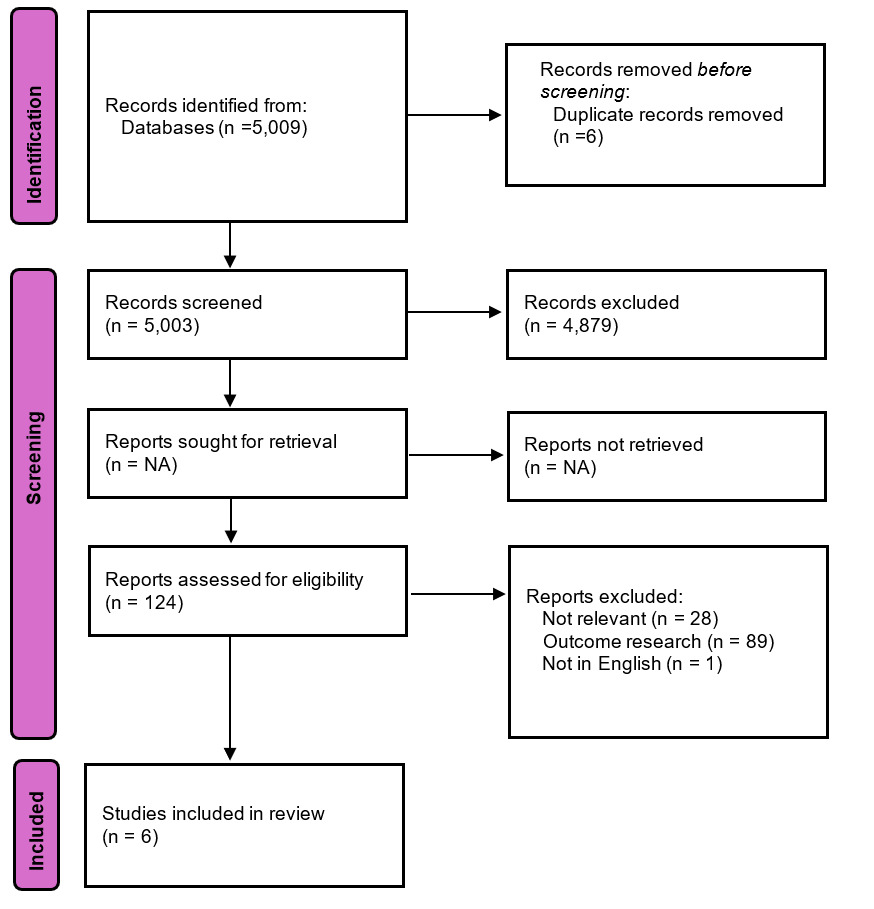
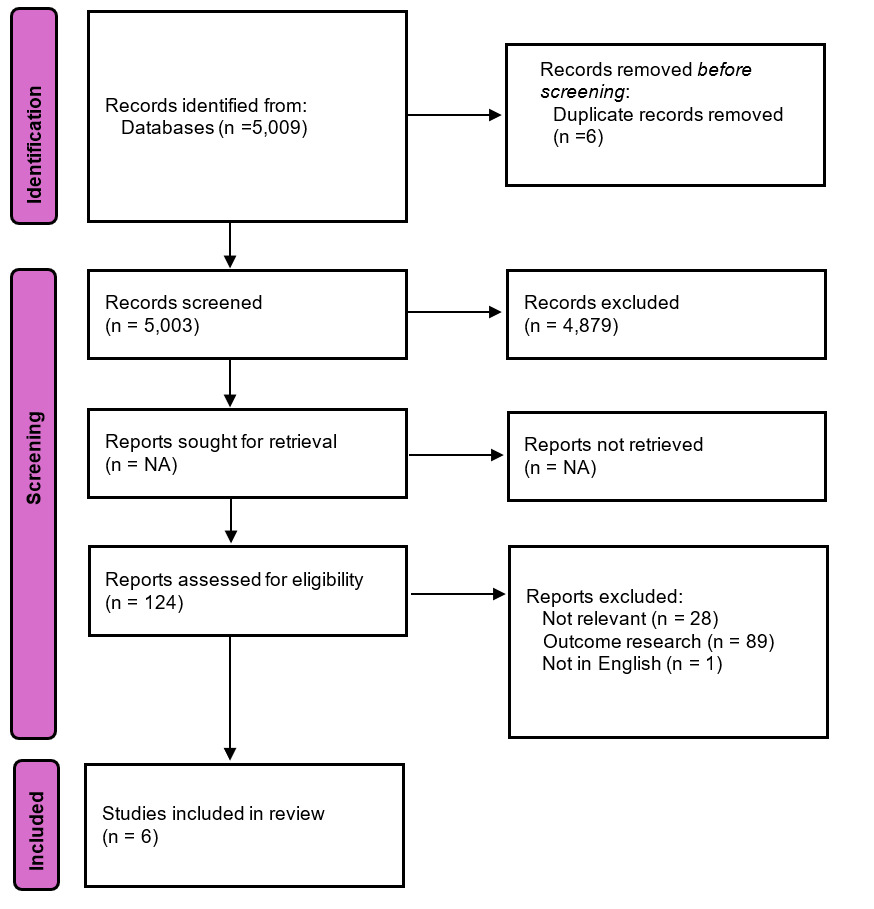
The initial search identified 5,009 papers from the databases (see Figure 1; Page et al., 2021). This large initial yield reflects a highly sensitive search strategy designed to cast a wide net across multidisciplinary databases, ensuring no relevant literature was missed. After removing six duplicates, I (the first author) screened the remaining 5,003 for title relevancy as part of a capstone research project, overseen by the second author, resulting in the exclusion of 4,879 papers, leaving 124 for abstract review. The vast majority of these excluded records focused broadly on the general efficacy of teletherapy or clinical outcomes for clients, rather than the facilitator’s internal experience. I then screened the remaining abstracts and full texts against the eligibility criteria. Any uncertainties or disagreements regarding study inclusion during this process were resolved through discussion with the other author. Of these texts, 89 were further excluded based on summarised research outcomes, one was a non-English paper and 28 were regarded as irrelevant due to limited alignment with the review focus. These studies included examinations of different therapeutic approaches such as psychodrama, as well as broader conceptual frameworks including attachment styles and polyvagal-informed group process; however, none directly addressed facilitators’ return to groundedness. Other papers have focused on challenges associated with computer-mediated communication in group settings, and professional roles operating within online environments, rather than online group counselling facilitators and the effectiveness and acceptance of online psychotherapy. While these studies contribute to understanding online therapeutic processes, they do not explicitly examine grounding strategies used by online group counselling facilitators to manage self-disinhibition. Consequently, a final list of six papers was identified for quality appraisal. This significant attrition from 5,009 to six papers powerfully highlights the specific knowledge gap this review addresses: while literature on OGT effectiveness is vast, research specifically examining a facilitator’s self-disinhibition and grounding strategies remains critically sparse.
Quality Appraisal
Joanna Briggs Institute (JBI) critical appraisal tools were adopted by two independent reviewers (the first and the second author) to assess the quality of each of the found papers. Regular meetings between the two reviewers were conducted to discuss ratings, resolve any disagreements, and ensure parity of appraisals. Based on the proportion of criteria met on the appropriate JBI critical appraisal tool, each paper was rated as either strong (+++), satisfactory (++), weak (+), or exclude (ex). Refer to Table 1 for a summary of each paper included in this SR, and its quality appraisal rating.
Data Analysis
Subsequently, a thematic synthesis guided the inductive coding and the development of descriptive and analytical themes (Thomas & Harden, 2008). While no papers were excluded from the synthesis based on their quality ratings (as all six met at least the minimum threshold), these appraisals critically informed our analysis by contextualising the strength of the existing evidence. Recognising that the current literature relies heavily on expert opinion and qualitative narratives highlighted significant methodological gaps, which directly shaped our discussion and recommendations for future empirical research. This method supported the grouping of findings into coherent themes, which promoted easier discussions. Using an inductive approach, challenges and interventions were categorised, encoded, and placed into separate columns on a spreadsheet. Subsequently, an inductive approach was applied again to iteratively group categories and identify dominant themes and sub-themes.
Reflexive Practice and Epistemological Dimension
An essential task in a SR is researcher reflexivity, including how their lived experience, values, and biases may influence the research process (Jamieson et al., 2023). Reflective practice is seen as an essential research step, as it ensures trustworthiness and credibility, and follows ethical practices (Berger, 2015). Reflexive practice for this SR was defined as an inquiry that endeavoured to understand and express the contextual factors that influenced research processes, and subsequently the knowledge produced (Lazard & McAvoy, 2020).
A three-step reflexive method, as suggested by Probst and Berenson (2014), was followed. The first step involved developing a reflexive “situating self-memo” (p. 823), in which the researcher articulated the rationale for selecting the topic and reflected on their motivation and any potential biases. Subsequently, during the data process and at the end of the research project, reflective thoughts, emotions, responses, ideas, expectations, and insights were articulated. This process promotes a hermeneutic approach that Lazard and McAvoy (2020) claimed goes beyond just simple reflection to channelling one’s thoughts towards concerns involving “the nature, scope and limitations of knowledge” (p. 167).
In relation to the epistemological dimension of this SR, it could be described as a pluri-disciplinary approach—given that a pluri-disciplinary framework requires two or more disciplines to generate ideas, methods, interventions, and techniques with the common goal to share, learn, and teach (West, n.d.). Comparably, this study aimed to acquire knowledge of interventions, methods, and techniques from different mental health disciplines such as counselling, psychology, and social work. Accordingly, a pluri-disciplinary method contributed towards the identification of data between these disciplines on how OGT facilitators find groundedness when disinhibited.
Management of Bias and Reflexivity
To ensure the rigour of this SR and mitigate potential researcher bias, a multi-layered approach was employed. First, I (the first author) maintained a reflexive journal throughout the screening and analysis phases to identify and bracket personal assumptions regarding somatic therapy. Second, the thematic synthesis followed the structured three-stage approach of Thomas and Harden (2008), which requires a transparent progression from line-by-line coding to descriptive themes, ensuring that final analytical themes remained grounded in the actual text of the six included papers. Finally, investigator triangulation was utilised; the second author (supervisor) provided a critical audit of the coding framework and thematic development. This collaborative process served as a peer debrief, challenging my interpretations and ensuring that the findings accurately reflected the breadth of the literature rather than a singular theoretical preference.
Results
Six records were deemed relevant and included in this SR through a thematic synthesis. Four major themes were determined and supported by 10 sub-themes. These themes are all defined following Table 2.
Theme 1: A Somatic (Body-Orientated) Practice
Theme 1 captured the overall essence discovered in the literature regarding how OGT is like a container that awakens each group member’s unique bodily movements, which are witnessed, experienced, understood, and relationally interwoven. Since it is through the body that individuals interact with and make sense of their physical, cognitive, and emotional world, embodied interaction plays a central role in interpersonal understanding and meaning-making. However, online environments characterised by a lack of embodied relational exchanges are frequently described as disconnected, emotionless, de-contextualised, and lacking spontaneity and authenticity. For these reasons, the literature consistently highlighted that online group facilitators need to engage in a body-orientated practice that cultivates awareness of internal bodily sensations, using these as a guide for acknowledging, processing, understanding, regulating, and grounding.
Sub-Theme 1.1: Embodied Connections
Hycner (1991, as cited in Desmond, 2024) defined embodied connections as a relational experience in which “there is no self-experience without the other, as I without a Thou—I do not exist” (p. 90). Many authors agreed that experiencing and noticing other people’s micro-movements (Goette, 2023), non-verbal cues, gestures, and expressed emotions (Desmond, 2024) online generates “the same neurobiological structure” (Desmond, 2023, p. 39) that facilitates the experiencing of another’s feelings and vice versa. This synchronicity produces a kinaesthetic resonance that deepens online group interpersonal processes, increasing relational experiences, knowledge, and understanding (Desmond, 2023) of self and others. Furthermore, it is through this bidirectional process that OGT facilitators can read group dynamics, ground themselves, and co-regulate (Desmond, 2024). Accordingly, it is through a facilitator’s embodied experience, functioning like a type of group barometer, that all group participants can experience states of groundedness.
Sub-Theme 1.2: Enhancing Connections
Desmond (2024) and Kimmell and Gockel (2018) agreed that a somatic approach fosters connections among group participants and supports immersion into trans-subjectivity, that is, an experience where group members move beyond individual perspectives and move towards a collective and embodied way of relating to one another. From this position, a relaxed environment emerges that increases interconnectedness, vulnerability sharing, empathy, curiosity, and the suspension of judgement (Kimmell & Gockel, 2018). Authors affirmed that drawing upon body-oriented interventions, such as embodied attention, mirroring gestures, and breathing rhythmically (Desmond, 2023; Geller, 2020) enhances facilitators’ self-awareness and supports the facilitation of meaningful discussions when navigating challenges, conflict (Kimmell & Gockel, 2018), and online disinhibition (Desmond, 2024). Despite the challenge of these moments, they promote deeper interpersonal connections, expand negative affect tolerance (Kimmell & Gockel, 2018), increase personal growth (Desmond, 2024), and provide opportunities for change (Desmond, 2023).
Theme 2: Techniques
This theme synthesises findings from the literature on online grounding techniques that support facilitators in returning to groundedness when faced with self-disinhibition. Five sub-themes emerged and are summarised below.
Sub-Theme 2.1: Embodied Attention
Several authors agreed that embodied attention—described as pausing and listening with the entire body—is essential for grounding (Desmond, 2023; Goette, 2023; Kimmell & Gockel, 2018). Rather than focusing on the body as an analytical object, embodied attention requires the body to recede into the background of awareness, where it is experienced indirectly through relational perception and embodied sensory engagement (Desmond, 2023). Through this process, one’s attention is redirected from thinking about the body to perceiving through the body (Desmond, 2024).
This state of awareness includes sensitivity to preverbal knowing and implicit modes of knowing, including subtle response cues from both self and others, as well as greater attunement to environmental conditions such as light, sound, noise, and taste (Desmond, 2024), while remaining aware of ongoing embodied processes (Kimmell & Gockel, 2018). From this more open way of being, a sense of curiosity emerges from within oneself, supporting new forms of knowing and the development of a collective relational space that facilitates grounding and enhances therapeutic outcomes (Desmond, 2024; Kimmell & Gockel, 2018). However, Kimmel and Gockel (2018) cautioned that even the most experienced OGT facilitators may experience self-disinhibition when navigating the fluctuating emotional regulation needs of the group participants. In addressing this challenge, Goette (2023) suggested that online group counselling facilitators re-engage embodied attention as a grounding strategy, enabling them to attune affectively to interactional dynamics and remain in tune with the group’s emotional tone.
Sub-Theme 2.2: Tracking Sensory Perceptions
Tracking is an online facilitator’s ability to pay attention to what is unfolding within themselves moment-to-moment, noticing if their emotions, sensations, and bodily movements are aligned, and then letting go of these while interacting with group members (Desmond, 2023, 2024). Online group counselling facilitators, when tracking their unfolding internal experiences (i.e., attending to their moment-to-moment sensory, emotional, and bodily awareness) report feeling less anxious and more grounded compared to when they are not tracking (attending to) these sensory experiences (Kimmell & Gockel, 2018).
Sub-Theme 2.3: Return to the Body
Authors from the included journal articles suggested that emotional regulation—encompassing the moving and expressing of emotions during online facilitation—is anchored in the facilitators’ embodied experience. Geller (2020) proposes online return to body techniques as a way to re-engage somatic awareness within screen-mediated, usually seated environments. These practices do not entail physical movement but rather require cultivating internal awareness while facilitators remain seated in screen-based interfaces (Kimmell & Gockel, 2018). Such practices include slow, deep breathing, grounding through awareness of foot placement to the ground, and gentle regulation of physiological tension often combined with mindfulness and self-compassion exercises (Desmond, 2023; Geller, 2020; Goette, 2023).
Other recommendations include exaggerating physical gestures to compensate for reduced visibility of embodied cues in online settings (Goette, 2023). Mirroring gestures and the use of mutual gaze are also suggested to support an embodied connection, while an averted gaze may provide space for reflection (Geller, 2020). However, maintaining mutual gaze for too long may trigger feelings of exposure, whereas a prolonged averted gaze may engender disconnection. To manage this, Desmond (2024) noted that OGT facilitators often cultivate embodied connection by developing a form of non-verbal communication that, alongside their verbal expression, conveys openness, flexibility, and understanding to others. This non-verbal communication includes verbal cues such as a gentle and prosodic vocal tone and intentional modulation of voice, as well as non-verbal cues such as maintaining eye contact, using soft facial features that reflect emotional attunement, adopting a relaxed and open body posture, incorporating intentional pauses, and leaning slightly forward (Desmond, 2024).
Sub-Theme 2.4: Mutual Self-Disclosure
Desmond (2024) and Kimmell and Gockel (2018) recommended that OGT facilitators reveal their ungroundedness to group participants. They explain how self-disclosure can foster embodied connections through authenticity (Geller, 2020). Two authors asserted that self-disclosure is a crucial component for effective OGT, as it enables the online facilitator to tune into group dynamics and encourages the common humanity needed for self-discovery (Geller, 2020; Kimmell & Gockel, 2018). Despite these benefits, Desmond (2024) stressed that self-discovery without reflection-in-action may lead to inappropriate self-disclosures that cross boundaries, leaving online participants and facilitators feeling ashamed and even exposed.
Sub-Theme 2.5: Guiding Group Sensory Experiences
Group sensory experiences typically require spontaneous exercises that promote embodied connection, curiosity, and sense-making without judgement (Desmond, 2024). Several authors emphasised how online facilitators require creativity when guiding group grounding exercises such as noticing one’s breath, feeling the body against the chair, shifting postures, chair-orientated yoga, pretending to play pass the ball or tennis via the screens, engaging in self-massage, and using pre-organised props such as blankets to promote emotional regulation (Desmond, 2023; Goette, 2023). This creativity links play, spontaneity, and dynamic interactive processes that enhance openness, enjoyment, genuineness, shared vulnerability, understanding, and emotional regulation (Kimmell & Gockel, 2018) for all online group members—including the facilitator.
Theme 3: Ethics
One sub-theme concerning ethical considerations specific for online facilitators returning to groundedness was identified; key points are highlighted below.
Sub-Theme 3.1: Safety
Both Desmond (2024) and Geller (2020) affirmed that groundedness through embodied calmness is a neuroceptive ability operating largely outside of one’s conscious awareness. They agreed that groundedness arouses group interpersonal synchrony and promotes co-regulation, safety, and deeper connections.
Goette (2023) recommended increasing safety and connection through epistemic trust, which refers to an individual’s capacity to experience communication from others as trustworthy, meaningful, and sufficiently safe to be received, learned from, and incorporated into existing schemas of self and relationships. This type of trust is fundamental to social learning processes and psychological flexibility, as it promotes openness to new information while reducing defensive behavioural responses such as withdrawal or defensiveness (Goette, 2023). Within this framework, Goette proposed that epistemic trust can be strengthened by remaining open to relational group knowledge and by using interpersonal signals that reflect communicative intent and relational attunement—known as ostensive cues, such as mutual gaze, mirroring, and explicit facial expressions. Desmond (2024) expanded on this, explaining how humans connect via mirror neurons, with facial expressions, vocal tone, and eye contact facilitating co-regulation, safety, and relational connection, consistent with Porges’ (2011) social engagement theory.
Theme 4: Technology
Only one author discussed using technology as a grounding tool for OGT facilitators. Theme 4 captured two key points, which are summarised below.
Sub-Theme 4.1: Chat Function
Most synchronous forms of online video conferencing have a chat function that makes it easy for all participants to message one another. Moving eyes from a screen with faces to a chat function (oscillating gaze between areas of the visual field) was identified as resembling play therapy, as moving eyes between these areas helps with emotional regulation (Wilson et al., 2019). This chat function can also offer the online facilitator a break from group intensity, a time to reflect and ground (Wilson et al., 2019).
Sub-Theme 4.2: Breakout Rooms and Breaks
Interestingly, breakout rooms were suggested as spaces for online facilitators to reflect, ground, and re-energise (Wilson et al., 2019) and are comparable to “behind the screen” practices in family therapy, which have been associated with lower levels of facilitator burnout (Street & Rivett, 1966, as cited in Wilson et al., 2019). Adding to this, Goette (2023) stressed the importance of online facilitators organising break times during OGT to support a return to groundedness.
Discussion
Post-COVID-19, many clinicians considered OGT as a “poor cousin” to in-person group therapy (Essig, 2010; Weinberg, 2020). Nevertheless, when the pandemic erupted, it forced group therapists to rapidly transition to online, with minimal preparation time or training (Weinberg, 2020). Since COVID-19, telecare rates have skyrocketed all over the world and research is now exploring OGT’s effectiveness (Mariano et al., 2019; Zerwas et al., 2017); however, there remains a paucity of studies that inform and guide best delivery practices for OGT facilitators. According to Rolnick and Weinberg (2019), online clinicians soon discovered many facilitator challenges due to limited non-verbal cues, loss of environmental control, reduced shared embodiment, and increased distractions. This, in addition to Suler’s (2004) online disinhibition effect, amplified group members’ and group facilitators’ emotions, behaviours, and cognitions—leading to disinhibition. This is a concern, as OGT’s effectiveness appears to hinge on a grounded facilitator (Geller, 2017, 2020). A common view between the authors was that integrating a somatic approach may help online facilitators to overcome these challenges and return to groundedness.
A key theoretical distinction must be made regarding the role of grounding in relation to countertransference. Grounding is not proposed here as a mechanism to avoid or suppress countertransference; rather, it is the physiological prerequisite for its ethical use. In online environments, the disembodied nature of the screen often increases facilitator self-disinhibition; as a result, unmanaged countertransference may manifest as “acting out” or blurred professional boundaries (Suler, 2004). This review adopts a relational somatic theoretical position, which posits that the facilitator’s body serves as a “resonant instrument”. By staying grounded—defined as maintaining a state within the “window of tolerance”—the facilitator can track their own somatic countertransference as vital clinical data without becoming overwhelmed or dysregulated by the group’s affective intensity (Porges, 2011). Thus, grounding provides the container that allows countertransference to be transformed from a potential liability into a therapeutic tool.
While the literature reviewed here emphasises somatic grounding as a primary intervention, it is important to acknowledge that other strategies exist for managing self-disinhibition in online groups. For example, some practitioners utilise more cognitively oriented approaches, such as the explicit setting of digital-specific group norms and boundaries during the contracting phase to mitigate toxic disinhibition. Others rely on technical interventions, such as the strategic use of the gallery view versus speaker view to manage sensory input and maintain professional focus. Recognising these diverse methods helps minimise bias by showing that while somatic groundedness is a powerful tool, it exists alongside a spectrum of behavioural and technical management strategies designed to maintain facilitator presence and ethical boundaries in cyberspace.
The literature additionally highlighted how certain somatic grounding techniques might be ineffective for some people. Consequently, although there was a shared interest in an integrated body-oriented approach, additional research is necessary to better support best practice. This SR intended to explore the existing literature on OGT for the purpose of identifying and compiling a vigorous summary of methods that might support online facilitators’ transitioning to a place of groundedness when aroused. In our opinion, this knowledge has the potential to enhance what is already known about the facilitation skills required to deliver safe and effective OGT. Moreover, it may help mental health professionals to enhance their facilitation craft and strive towards a higher level of OGT mastery.
The four themes in the SR suggest a potential benefit in integrating a somatic theoretical framework with its mind-body techniques coupled with using technology in meaningful ways. To accurately interpret these findings, it is crucial to distinguish between established empirical evidence and the theoretical extensions proposed by the reviewed literature. It is well established that OGT is an effective modality and that the virtual environment introduces unique challenges, such as the online disinhibition effect and the loss of physical cues, which can negatively impact facilitators. Furthermore, the necessity of a grounded facilitator is widely accepted in traditional, in-person settings. However, the core findings of this SR—specifically the application of somatic, body-oriented practices, and the strategic use of technology (e.g., chat functions and breakout rooms) to manage online facilitator self-disinhibition—represent theoretical extensions and clinical adaptations rather than empirically validated interventions. These proposed strategies draw heavily from gestalt therapy and mindfulness traditions and provide a conceptual framework for emerging practice, but they require future rigorous empirical testing to confirm their efficacy in the digital space.
These findings extend the work of Wilson et al. (2019) by highlighting additional grounding intervention skills that could assist in regulating the self when disinhibited. These skills might additionally support the co-regulation of others and enhance group therapeutic tasks. Therefore, this SR focused intently on the techniques that assist online facilitators in grounding themselves when disinhibited (body-oriented practice, techniques, ethics, and using technology effectively) to align with OGT best practices.
This SR highlights how OGT encounters a two-dimensional aspect that flattens relationships, making them feel less familiar, intimate, and meaningful (Andrews et al., 2024; Rolnick & Weinberg, 2019; Weinberg, 2020). Kimmell and Gockel (2018) and Desmond (2023) suggested that online facilitators attend to their internal bodily sensations to enhance therapeutic engagement, strengthen group processes, and promote interpersonal connection. A somatic approach, they felt, supported a level of groundedness that focused on the present moment, which in turn fostered connections, emotional stability, insight, and group trans-subjectivity (Desmond, 2023; Kimmell & Gockel, 2018). Subsequently, this approach increased empathetic responses and negative affect tolerance, whilst enabling online facilitators to use their bodies as a barometer to read group processes and dynamics (Desmond, 2023, 2024; Geller, 2020; Kimmell & Gockel, 2018).
This SR extends the existing literature on OGT by identifying numerous body-oriented interventions that facilitators are currently integrating into OGT. These interventions contained many elements from gestalt therapy and mindfulness—such as using embodied attention, tracking the incongruences within and then returning to the body via self-compassion and mindfulness, and exercises for emotional regulation—which deepen understanding and authenticity (Desmond, 2023; Geller, 2020; Goette, 2023; Kimmell & Gockel, 2018). Several authors followed Weinberg’s (2020) suggestion that OGT facilitators express their sense of groundedness via ostensive cues, gentle tones, mutual gaze, and mirroring gestures (Desmond, 2024; Geller, 2020; Goette, 2023). These techniques replicate many in-person group therapeutic grounding interventions that Andrews et al. (2024) posited are not always effective online. Goette (2023) provided additional ideas such as exaggerated facial expressions and physical gestures. Desmond (2024) suggested mutual self-disclosure and creative group guided sensory experiences that can support the return of group equilibrium (Kimmell & Gockel, 2018). The next sub-theme discusses how a facilitator’s return to groundedness activates the social engagement system of the group.
Online group members, like facilitators, use their own sensory experience with others to guide their sense of safety. The above-mentioned body-oriented techniques, delivered within a supportive context, help to develop the secure attachment and epistemic trust required to activate the ventral vagal complex (Flores & Porges, 2017). These findings reinforce Weinberg’s (2020) declaration that a nurtured nervous system expresses psychological safety to others. However, Kimmell and Gockel (2018) claimed that despite the efforts of online facilitators to maintain a sense of groundedness that projects into their virtual world, the lack of physical contact diminishes their sense of embodiment with others—and vice versa. In addition, excessive online stimuli causes sensory overload and ungroundedness and hinders the security and trust required to activate the social engagement proposed in polyvagal theory (Desmond, 2024). While research emphasises the significance of a grounded facilitator, further investigation is required on how to project a sense of groundedness in cyberspace.
A critical consideration in this review is whether the experience of disinhibition and the process of grounding differ between the roles of online group therapist and online group supervisor. While the professional objectives of these roles diverge—therapy focusing on psychological healing and supervision on professional development and ethical oversight—the underlying neurophysiological experience of ungroundedness appears to be universal. Both roles are subject to the same online disinhibition effect and the somatic stressors of the digital environment, such as the loss of reciprocal embodied relationality. Furthermore, research into clinical supervision in the digital age suggests that the lack of non-verbal cues impacts the supervisory alliance in ways nearly identical to the therapeutic alliance (Bayne & Thompson, 2018). Consequently, the internal sensation of being disinhibited—characterised by blurred boundaries, anxiety, or a loss of self—is a shared human response to virtual disembodiment. This suggests that the somatic grounding techniques identified in this review, which aim to regulate the facilitator’s nervous system and re-establish a “secure base”, are equally applicable and necessary for both therapists and supervisors navigating the complexities of practising in cyberspace (McBeath, 2020).
A significant theme summarised was using online technology meaningfully. Wilson et al. (2019) presented the idea that the ocular movement between main screen and chat function resembles play therapy and these motions support emotional regulation. They added that breakout rooms can also offer a grounding space from group intensity, while Goette (2023) highlighted the need for longer breaks. Finally, the facilitators’ technological expertise emerged as the “container” that holds groundedness and safety for effective and ethical OGT (Thompson-de Benoit & Kramer, 2021, as cited in Goette, 2023).
Strengths and Limitations
This SR conducted a robust search of databases to identify, collate, synthesise, and summarise current literature. Therapists, counsellors, psychologists, social workers, and clinicians were all represented under the keyword “facilitator”. Similarly, variations of the keyword “groundedness” such as “grounding”, “attune”, and “embodiment” were represented. However, this study had limitations, as key Medical Subject Headings (MeSH) and American Psychological Association (APA) terms did not appear to exist or have agreed upon terms. Furthermore, books, videos, and professional associations were excluded due to time constraints. Therefore, we recommend that for future research, common terms be agreed upon and that online group facilitators who utilise modalities apart from gestalt and mindfulness be given an opportunity to share their expertise, broaden the current knowledge base, and supplement these findings.
Conclusion
In conclusion, this study adds to the existing literature of what is currently known about online facilitators transitioning to groundedness when disinhibited. The SR provided an integrated view of body-oriented interventions, which may serve as a foundation for developing and researching future online grounding technique processes. It is important to note that all authors blended interventions from both gestalt and mindfulness theories and practices, emphasising a potential need for an online body-oriented integrated framework. Moreover, this research highlighted a possible gap for somatic-oriented training that has been researched and designed specifically for online group facilitators. Therefore, additional empirical research is recommended to support the development of OGT guidelines that could eventually inform policies and training and offer practitioners a delivery method that aligns with evidence-based best practice.
Disclosure Statement
The authors acknowledge the use of Gemini (Large Language Model) in the preparation and final editing of this manuscript.
Scope of AI Use
-
Conceptual Clarification: AI was utilised during the drafting phase to distinguish between nuanced somatic concepts, such as “embodied connection”, “trans-subjectivity”, and “embodied attention”.
-
Manuscript Editing and Refinement: During the final review phase, the tool was used to identify and remove subjective value language (e.g., “surprisingly”, “interestingly”) to maintain an objective academic tone.
-
Redundancy and Flow: AI assisted in auditing the text for repetitive phrasing and ensuring a logical transition between newly inserted reviewer-requested content and the original manuscript.
-
Formatting Check: The tool was used as a secondary check to verify that the reference list and in-text citations adhered to APA 7th edition conventions.
Human Oversight & Responsibility
I (the first author), confirm that the final product results from my own intellectual work and professional judgement. All AI-generated suggestions were critically reviewed for accuracy, and the final manuscript does not include unverified AI-generated content.