
The shadowed history of the therapist’s body has been reflected in psychotherapy literature, which has traditionally privileged mind over body (Shaw, 2003; Stone, 2006; Sultan, 2017). Likewise, the embodied dimension of psychotherapy has commonly been misconceived as a modern deviation of the traditional analytic method. Contrary to this belief, the embodied aspect of psychotherapy was acknowledged from the beginnings of psychoanalysis (Sletvold, 2014). Prior to Freud’s emphasis on the unconscious, he recognised the physiological symptoms of hysteria as somatic presentations of repressed psychological trauma (Freud, 1896/1962). In The Ego and the Id, Freud states that “the ego is first and foremost a bodily ego” (1923/1989, p. 26). Despite his early thoughts on the body and Reich’s subsequent contributions on embodied experience (1933/1980), these concepts were generally ignored by the psychoanalytic and wider psychotherapeutic community for several decades (Sletvold, 2014). Descartes’s (1641/1992) theory of dualism, in which the mind is separated from the body, has been considered a significant contributor to this oversight (Koren, 2003). Karbelnig (2022) stated that “the mind-body conundrum has been haunting philosophy since the dawn of civilisation, the dualism inherent in the name of the problem itself, ‘mind-body’ remains unsolved” (p. 349).
Historically, the available talk psychotherapy literature on this topic has predominantly focused on the client’s history and the client’s body. Therapists’ embodied experiences have at large been attributed to the client, most commonly being understood in terms of the transference-countertransference phenomenon (Shaw, 2003; Stone, 2006; Sultan, 2017). This hermeneutic literature review emerges from the primary author’s noticing of a gap in psychotherapy literature on the therapist’s bodily experiences in the therapy room. Motivated by a desire to understand her own embodied encounters in the therapist chair, the primary author embarked upon a hermeneutic journey to explore this topic. The preliminary literature search suggested a resurgence of interest in the body within the field of talk therapy and reflected a growing diversity of viewpoints on therapist embodiment (García et al., 2022; Karbelnig, 2022; Shaw, 2004; Sletvold, 2014; Stone, 2006; Vulcan, 2016). With this current review, the primary author aims to gain a deeper understanding of past and present views by exploring the following research question: How do therapists understand their embodied experiences within the therapeutic encounter?
Methodology
Choice of Method
The authors view the interpretivist paradigm of the hermeneutic methodology to be well aligned with the focus of the research question: How do therapists understand their embodied experiences within the therapeutic encounter? Hermeneutics places value on subjective experience and emphasises the inextricable link between the interpreter’s subjectivity, language, and understanding (Laverty, 2003; Smythe & Spence, 2012). With these focuses on subjectivity, interpretation, and understanding of the human experience, hermeneutics is also well suited to the field of psychotherapy. For these reasons, the authors have chosen a hermeneutic literature review as the method of this enquiry. Given that the research topic was initially motivated by the primary author’s own experiences and a desire to expand her understanding of these, a heuristic inquiry could have been another appropriate choice. Deriving from the Greek word heuriskein, meaning to “discover or to find” (Moustakas, 1990, p. 9), heuristic research involves an immersive first-person inquiry which is used to discover the nature and meaning of experience (Moustakas, 1990). While knowledge in hermeneutics derives from the interpretation of text (Smythe & Spence, 2012), in heuristics, the self is the source of knowledge (Moustakas, 1990). Though this research emerges from personal motivation of the primary author, the focus of the research is on the understanding of other therapists’ experiences. For this reason, the authors regard a hermeneutic literature review to be better suited for this inquiry.
Hermeneutics
In hermeneutics, understanding is not merely a cognitive activity of re-creating someone else’s meaning; rather, it is acquired through an embodied and immersive experience (Smythe & Spence, 2012). Rejecting the Cartesian view of reality as an “out there” experience that is separate to the individual, a hermeneutic methodology supports the ontological belief of multiple realities that are subjectively constructed and altered by the knower (Koch, 1995).
The Gadamerian framework of hermeneutics employed in this review acknowledges that understanding emerges from a dialogical, open-ended process between reader and text. In Gadamerian hermeneutics, the reader’s historicality is integral in the creation of new understanding—that is, a person’s situatedness in the world, influenced by their culture, traditions, and life experiences. According to Gadamer (1975/2013), the awareness of an individual’s biases and prejudices that arise from their own historicality positively influences the search for meaning (Smythe & Spence, 2012). This awareness encourages the consideration of other perspectives, contributing to the potential for understanding to develop and expand (Gadamer, 1975/2013). Gadamer views understanding as a “fusion of horizons” between the reader and the text. The horizon refers to the range of vision for everything that can be seen from a particular vantage point. Initially, a reader’s horizon may be narrow; however, their engagement with a text challenges and expands their initial horizon, creating potential for new horizons (Boell & Cecez-Kecmanovic, 2014).
The Primary Author’s Initial Position
The primary author’s key fore-understandings at the beginning of this research were informed by her embodied understanding as a dancer; the theoretical knowledge of the mind and body that she had acquired through her undergraduate psychology and postgraduate psychotherapy training; influences from the dominant health system; and beliefs she inherited through her wider culture. The primary author’s theoretical understandings of the therapist’s embodied experience emerged from the psychoanalytic framework that she had become familiar with through her psychotherapy training. Initially her theoretical understanding of embodied phenomena was limited to the notion of somatic countertransference, which can broadly be understood as a bodily signal given out by the client to the therapist, denoting something of deeper emotional significance (Field, 1989; Jacobs, 1973; Samuels, 1985). While this provided a framework to intellectually understand her embodied experiences, this theoretical conceptualisation and her personal experience felt disconnected. In the experiential context of dance, the primary author felt that she understood embodiment through the connection to her body, which elicited a bodily sense of knowing—an “embodied knowing” (Merleau-Ponty, 1945/2002). In the context of psychotherapy, she considered embodiment to be a nebulous concept—one that was ubiquitous in the discourse yet somehow distant. This discrepancy generated a curiosity about other therapists’ experiences and understandings of embodiment in psychotherapy. Based on the fore-understandings that emerged from her personal experience, she had a preconception that therapists who engaged in embodied movement practices would be more body conscious and aware of their embodied experiences in the room. As she gave this topic more consideration, the following questions emerged: Did all therapists have embodied experiences in the room, such as noticing bodily sensations or feelings in their own bodies that provide information on what may be occurring in the client’s mind-body? If so, did others have similar or vastly different experiences? How did they understand these experiences? Motivated by a desire to expand her limited understanding, this hermeneutic literature review began to take shape.
Method
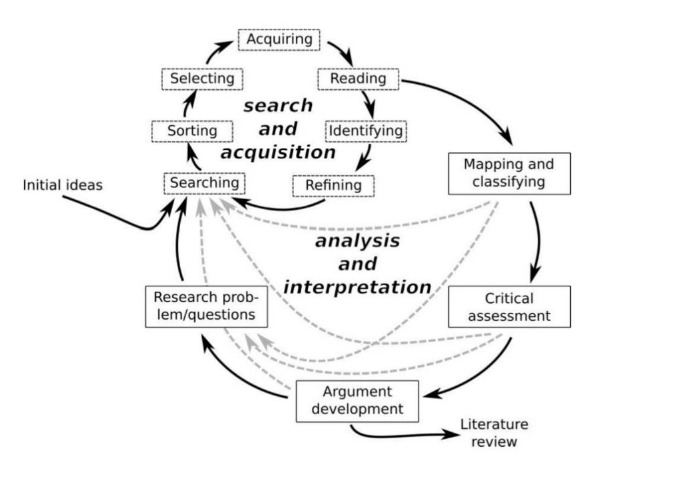
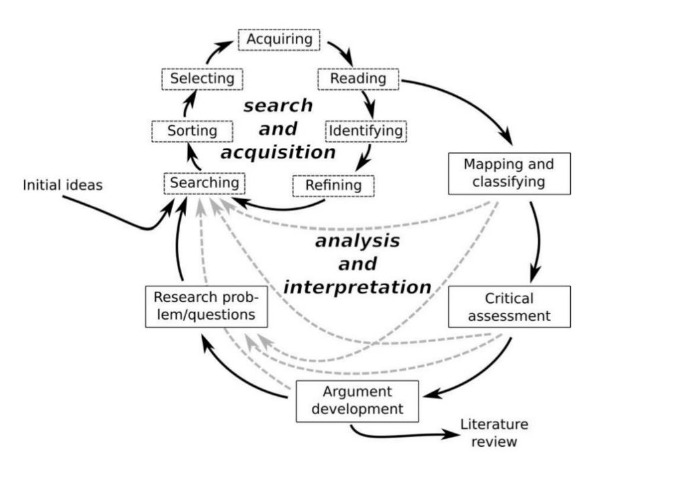
The hermeneutic framework for a literature review presents two major hermeneutic circles that are mutually intertwined (Boell & Cecez-Kecmanovic, 2014). The first circle involves searching, sorting, selecting, and acquiring literature of interest. The primary author’s fore-understandings were treated as the initial ideas to begin the literature search process. During this initial phase, she became reacquainted with a journal article she had read several months prior—“The Analyst’s Body as a Tuning Fork: Embodied Resonance in Countertransference” (Stone, 2006). Upon initial reading of this work, the primary author had felt a deep resonance for two main reasons. Firstly, it was the first psychotherapy literature she had encountered that specifically focused on the bodily experience of the therapist. Secondly, Stone’s inquiries suggested that 20 years on from the relational turn of psychoanalysis, much remained unknown about the therapist’s embodied experience.
Key terms (“psychotherapist”, “therapist”, “psychoanalyst”, “embodiment”, “experience”, and “body”) were used to search electronic databases including Psychoanalytic Electronic Publishing (PEP), PsycInfo, PsycArticles, and Google Scholar. As suggested by Boell and Cecez-Kecmanovic (2014), individual texts offered new sources of potential interest and this continued the cyclical, iterative process. The primary author began the preliminary literature review compelled by Stone’s (2006) article and influenced by her fore-understandings on the relationship between embodied movement and embodied experiences in the therapeutic encounter. Perhaps for this reason, at this early stage she was drawn to writings on therapists’ experiences of embodiment and dance movement therapy literature. Through a process of searching and reading, potential new literature sources were identified, and search strategies were refined, continuing the iterative process of the search and acquisition circle.
As seen in Figure 1, the search and acquisition circle is a part of the wider analysis and interpretation circle. The wider circle involves a deeper analysis and interpretation of the texts acquired in the smaller circle involving further reading and re-reading, mapping and classifying, critical assessment, argument development, and research question re-formulation. Through the various links of this process (as shown in Figure 1), the researcher is brought back to a further search for more relevant literature. Reading is the key activity which develops understanding and it can be seen as the main link that maintains the intimate connection between the two circles (Boell & Cecez-Kecmanovic, 2014). New understanding is produced through the harmonious intertwining of the inner and outer circles. As the primary author became engaged with the texts, she entered a liminal space between embodied phenomenology and psychotherapy theory. She found challenge in navigating the boundaries; simultaneously, there was a familiarity to this in-between position, one with resemblances to her experiences of living in between cultures.
As suggested by Boell and Cecez-Kecmanovic (2014), the elements of the wider circle helped the primary author to engage with selected articles more deeply. The primary author describes this process as a dynamic dance, traversing around and between the two circles. To support an embodied, open-minded position, the primary author engaged in an embodied freestyle dance practice throughout the research. With a focus on feeling and intuitive movement, this practice involved improvised dancing four to five times each week. This encouraged a flexible and curious engagement with the literature and helped maintain an embodied connection to the texts as well as to her own body. She found improvised dance, which focuses on intuition, feeling, and process rather than rigorous form (Kwan, 2017), to complement the hermeneutic methodology which requires reflection, space, and creativity (Schuster, 2013); it also supported and integrated her reflective stance.
Traversing the two circles, the primary author identified a variety of relevant sources, and chose 21 texts to contribute to the current review. Consistent with Schuster (2013), the primary author experienced the selection process as an embodied experience that involved noticing and reflecting on her own bodily responses to the text. With some writings, she inclined towards the text, feeling drawn in, excited, or filled with awe. With others, she noticed herself feeling sleepy, her mind wandering, or becoming bored. Smythe and Spence (2012) transpose the notion of inclining that Heidegger (1993) uses in the context of thinking, to describe the reader’s engagement with literature—viewing the text and reader as inclining towards each other in this dialogical process. Accordingly, the primary author’s response and relationship to various texts changed in subsequent readings, sometimes eliciting a deeper sense of meaning or the meaning changing to be perceived in a different light.
Due to the iterative process of discovery within a hermeneutic framework, it could be argued that the search process might be never-ending. However, the inevitable time constraints that the hermeneut faces in the context of research tends to provide a deadline (Boell & Cecez-Kecmanovic, 2014). Smythe and Spence (2012) suggested that when new understandings no longer contradict or expand the researcher’s preunderstandings, this is an appropriate time to leave the circle. Similarly, Boell and Cecez-Kecmanovic (2014) referred to a point of saturation—when new texts only make a small contribution to understanding. At the point when the primary author recognised a number of themes emerging and had acquired sufficient texts to adequately cover the scope of the research, she decided to leave the circle.
Embodied Phenomenology
In engaging with the literature through the hermeneutic method, the pertinence of Merleau-Ponty’s (1945/2002) embodied phenomenology became evident. While Gadamer (1975/2013) validated subjective interpretation, Merleau-Ponty (1945/2002) emphasised the body as being central to perception and understanding. From the perspective of embodied phenomenology, the body is the source of experience. Experiencing first and foremost manifests in the body through emotional responses and feelings. Therefore, “understanding always starts with bodily experiencing. Otherwise, there would be nothing to understand” (Schuster, 2013, p. 196). Marcel (1964/1982) asserted that to “think” feeling, inevitably reduces it. This is echoed by Rill (2010) who explored the experiences of immersive trance states in dance:
No matter how involved we may be, the very act of contemplating the experience and writing about it creates separation. We are removed from the experience itself, and left trying to figure out what it all meant “after the fact.” In this process, the immediacy of the event fades into reflection and the intense energy of the peak experience is lost in translation to text. (p. 140)
The primary author felt a deep resonance with Rill (2010) as she experienced this loss in her attempts to intellectually understand or explain the felt knowing experienced during this hermeneutic process. At times, she questioned whether this current research endeavour to understand therapists’ embodied experiences was too intellectualised an activity, fraught with dualistic reductionism. As the primary author grappled with this conflict, she found solace in Schuster (2013). Drawing on Marcel’s (1964/1982) concept of embodied existence—which emphasised the use of feelings to link the immediate pre-reflective experience (body-subject) and the reflected understanding that integrates the shared human experiences of communication and relationship (body-object)—Schuster beautifully interweaves the phenomenological perspectives of hermeneutics and embodied existence. This reading helped to deepen the primary author’s relationship with the hermeneutic process and affirmed that the hermeneutic methodology was indeed well-suited for this research.
Terms and Exclusions
Embodiment and embodied experiences are concepts grounded in the phenomenological perspective of Merleau-Ponty (1945/2002), who situated the relational body at the centre of human experience. Aposhyan (2004) described embodiment as “the moment-to-moment process by which human beings allow awareness to enhance the flow of thoughts, feelings, sensations, and energies through our bodily selves” (p. 52). This definition of embodiment aligns with the use of this term throughout this paper.
As this current study aims to gain a broad scope of therapists’ understandings of their own embodied experiences, the psychotherapy literature reviewed pertains to the topic of therapist embodiment. This included theoretical papers, clinical case material and personal reflections written by current or retired therapists, as well as empirical research that aimed to explore the experiences of therapist participants. In consideration of the varying and interchangeable use of the terms “psychotherapist” and “therapist” in different countries, we use these terms interchangeably to reference mental health practitioners who practice psychotherapy informed by psychoanalytic/psychodynamic, humanistic, or integrative approaches. This review excludes the understanding of mental health clinicians who do not practise psychotherapy. The term “therapeutic encounter” refers to the interactions that occur between the therapist and client in the therapy session.
Results
Somatic Countertransference
Embodiment as a Form of Countertransference
The early efforts of Freud (1896/1962) and Reich (1933/1980) to include the body in psychotherapy have been reconsidered in recent years through the relational body psychotherapy movement (Ben-Shahar, 2013; Sletvold, 2014). This paradigm shift from the classical blank screen approach towards an intersubjective framework that draws attention to “embodied experience and expression” (Sletvold, 2014, p. 14) has drawn more attention to the embodied element of the transference-countertransference phenomena.
Samuels (1985) first coined the term embodied countertransference and understood therapists’ embodied experiences as a connection with the presence of a bodily sensation or feeling that is of a similar nature within the patient’s psyche. He wrote:
My experience of becoming a depressed person may stem from the presence and operation of such a person in the patient’s psyche. The patient may have experienced a parent as depressed and my reaction precisely embodies the patient’s emotional experience of that significant person. And I have also become a part of the patient’s inner world. I stress “inner world” rather than the patient’s actual infancy or history to make the point that I am not attempting any kind of factual reconstruction … This entire state of affairs I have come to call embodied countertransference. (Samuels, 1985, p. 52)
Field (1989) gave this early definition more form by elaborating on three specific types of embodied responses: sleepiness, erotic and sexual arousal, and fear and trembling. He considered the possibility of a multitude of other embodied responses that likely exist, stating that there are “perhaps as many as there are psychosomatic symptoms” (p. 518) and expressed the difficulty in discerning a pattern as to when and how these embodied responses manifest.
The Therapist’s Body as a Tuning Fork
Developing the ideas introduced by Samuels (1985) and Field (1989) further, Stone (2006) drew attention to the therapist factors in embodied phenomena. Stone conceptualised the therapist’s body as a type of tuning fork that resonates with something that is happening in the session. Stone did not hastily attribute the therapist’s embodied experience exclusively to the client and, unlike his predecessors, he considered therapists’ attributes that may contribute to these embodied phenomena.
Stone (2006) referred to bodily experiences of the therapist as embodied resonances and distinguished these bodily phenomena from the more commonly discussed countertransference associated with thoughts, feelings, images, dreams, and fantasies. Much like Field (1989), Stone was motivated by his own clinical experiences of embodied resonance and considered the therapist’s characterological type or typology as a contributing factor.
Prevalence of Embodied Phenomena
In the reviewed literature it is generally agreed that physical countertransferences are far less documented than the cognitive and emotional responses to client material (Booth et al., 2010; Field, 1989; Samuels, 1985; Shaw, 2004; Sultan, 2017). Attempting to address this gap in literature using a quantitative approach, Booth et al. (2010) employed the Body-Centred Countertransference Scale developed by Egan & Carr (2005) to evaluate the various forms of body-centred countertransference experienced by a sample of 87 Irish psychologists. The results did not reveal any statistically meaningful relationships between the tested variables (which included different therapeutic orientations, therapists’ age, therapists’ experience in years, or number of children the therapists had) and therapist experiences of body-centred countertransference; however, their findings did indicate that about half of the participants, from varying therapeutic orientations, experienced bodily phenomena in the therapeutic encounter.
Margarian (2014) examined the experiences and understandings of somatic countertransference among a sample of 29 psychotherapists from China and Singapore. In this study, all participants reported experiencing some form of embodied phenomena, with experiences generally ranging between 10% to 50% of their clinical time. One participant, referred to as “T17”, reported experiencing somatic countertransference 100% of his clinical time. Upon further exploration of his response, the therapist explained that this was because he experienced body, thoughts, and feelings as one (Margarian, 2014). Other participants echoed T17’s view of mind-body as a continuum:
When asked to provide an example of somatic countertransference, many Chinese psychotherapists reported feeling states or images therefore implying that these experiences are one and the same as physical sensations … This illustrates a fusion of states not recognised in traditional western psychotherapies. (Margarian, 2014, p. 143)
Booth et al. (2010) concluded that body-centred countertransference can be measured using quantitative methods and agreed that a quantitative study can offer correlational information between measurable variables and embodied countertransference. Such methods may be employed to test for other variables (e.g., typology, therapists’ relationships with their own body, body history), which could illuminate the factors that influence therapists’ embodied experiences. However, we note that the authors seem to ignore the epistemological limitation of using a quantitative method to deeply understand the inherently subjective, complex, and interpretative nature of the therapist’s bodily experience, a reflection that Field (1989) and Margarian (2014) appear to give more thought to. We consider the findings from Margarian (2014) to reflect the importance of the deeper exploration that is required to understand the nuances and different interpretations of embodied phenomena.
Perspectives on How Therapists’ Embodied Experiences Manifest
Another notable discovery from Margarian (2014) pertains to therapists’ understandings of how somatic countertransference occurs. Therapists’ responses had a strong connection with the eastern notion of qi—the vital life force that keeps a person’s physical, emotional, mental, and spiritual health in balance (Ke, 2023). How therapists perceived the relationship between qi and somatic countertransference varied. Some focused on the ubiquitous effect of a person’s qi on another person and others provided imagery of qi flowing as a water-like substance at a deeply unconscious level. Strong parallels were also drawn with Traditional Chinese Medicine, focusing on the meanings generated from different body parts and their relevance to different feelings and concerns relating to that client. We note how the fundamental acknowledgement of the mind-body continuum in this eastern perspective shapes the understanding of somatic countertransference and embodiment in a way that the researchers regard to be very different to the following views that originate from a western paradigm.
Booth et al. (2010) and Athanasiadou and Halewood (2011) considered somatic countertransference in relation to vicarious trauma—a phenomenon that occurs when working with traumatised patients. Their findings supported earlier research on the relationship between the client’s early life trauma and countertransference responses that may be evoked in the therapist (Jacobs, 1973; McDougall, 1978). Booth et al. (2010) drew a parallel between somatic countertransference and vicarious trauma, while findings from Athanasiadou and Halewood (2011) suggested that therapists’ own trauma histories and unconscious narcissistic vulnerabilities may defend against their somatic experiences in the therapy room. Athanasiadou and Halewood (2011) examined how therapists understand their own somatic experiences. From their findings, which emerged from a grounded theory analysis, the authors conceptualised therapists’ understandings of their own somatic experiences as stages of “relating to the body” (p. 257) and differentiated six different phases of this process:
-
Defending against experience: resisting and/or disconnecting.
-
Recognising lack of somatic insight: reviewing the role of training and the role of the clinical experience.
-
Developing somatic awareness: attending to somatic sensations and physical processes.
-
Owning somatic experience: internal and external attributions—somatic transference via somatisation and somatic countertransference via identification and projective identification.
-
Reflecting intellectually: the body as empathy, intuition, expression, and intersubjective locus.
-
Working with somatic countertransference: avoiding, consulting, and interpreting. (pp. 254–255)
This stage model suggests that experience precedes intellectual understanding and corresponds with Merleau-Ponty’s (1945/2002) phenomenological view introduced earlier. We note that Booth et al. (2010) and Athanasiadou and Halewood (2011) both linked therapists’ embodied experiences to trauma. Another similarity of these two studies is that they were both conducted in western countries (Ireland and the United Kingdom) and their findings suggest a linear understanding of embodied experience. Contrastingly, Margarian (2014), who illuminated understandings of Asian therapists, did not make any reference to trauma but instead emphasised the interconnected mind-body experience of transference. We consider whether these contrasts reflect the wider difference in ontological roots of eastern and western philosophies, arousing curiosity about how cultural backgrounds may influence therapists’ understandings of embodiment.
As the primary author reflected on this first iteration of the hermeneutic circle, she noted that the questions in her initial position had been answered. In satisfying this surface layer of curiosity, she noticed her position evolving, bringing forth new questions and deeper layers of understanding. She views this process as both having impact on and being impacted by her evolving position.
The Transitional Space
The Client’s Developmental Maturity and the Transitional Space
The space between the therapist and client where transferential material flows has been described using different terms such as the mundus imaginalis, the subtle field, and the transitional space (Stone, 2006). The intensity of the transference that occurs in this space has been related to the developmental maturity of the client (McWilliams, 1999, 2004). From a psychodynamic perspective, it has been understood that clients who struggled to establish and maintain a stable differentiation from the object (breast, mother, primary carer) in the symbiotic phase often show significant difficulties in symbolisation and may strongly project into the analyst’s body (Mahler, 1971). This phenomenon has also been noted by analysts working with psychotic patients or autistic children (Lemma, 2014). According to Tustin (1994), the early stages of the psychic developmental process are less robust in those who are on the autism spectrum compared to the typically developing person. Similarly, Stone (2006) suggests that when the client is stuck in an autistic pocket or in a borderline or psychotic state as compared to a more neurotic one, they will project their embodied feelings more strongly onto the analyst. Stone considers this to be a possible reason that the analyst may experience embodied countertransference with a client only some of the time.
Bodily Boundaries
Corresponding with the above (Lemma, 2014; Stone, 2006; Tustin, 1994), strong bodily transferences were reported in a study exploring the experiences of therapists working with young clients diagnosed with autism spectrum disorder (ASD). Some of the therapist participants in this study reported experiences of blurred bodily boundaries and a sense of being “some kind of translating body” (Vulcan, 2016, p. 334). Vulcan, a dance movement therapist from Israel, wrote, “The theme of bodily boundaries that came up so forcefully in the findings deserves special consideration, due to its prominence in psychotherapeutic practice and theory” (p. 334). Several participating therapists reported on the experience of fusion and merging of bodily boundaries between self and other. There were mixed feelings among the participants regarding this bodily merging. Some therapists expressed their concerns of being “sucked into” the autistic child’s bubble and attempting to set strong boundaries against this merging. Others could be seen “leaning in” to the client’s need to merge, viewing it as an opportunity to better understand and help the client. This latter view is supported by Borgogno (2014) who asserts Ferenczi’s (1932/1988) belief that psychoanalysis should be viscerally corrective and that this can only happen when the analyst’s viscera or gut is also implicated in the process.
Therapists in the study understood their bodily experiences in varying ways; however, there was a centrality to the awareness of their own bodily presence, particularly in the absence or partial absence of verbal communication (Vulcan, 2016). One therapist reported feeling as though her physical presence itself was doing a lot of the work. Other therapists described their embodied experiences as a “first tool” or “a kind of instrument” (Vulcan, 2016, p. 331). Another therapist commented on the continuum between the felt feeling of her own body and her somatic responses to her clients, describing this as though she were “seeing with the tips of her fingers”. In these experiences, we notice that the limitation or absence of verbal language promotes experiential focusing. Describing the method in his seminal paper, Gendlin (1969) wrote:
Usually one thinks from the outside in, at oneself. In “focusing” one shifts to “from the inside out, from oneself.” Rather than trying to say or think what the trouble is, what the answer is, one must keep quiet and listen. Then the bodily felt version of what the trouble is, makes itself felt clearly enough. (p. 4)
Container-Contained
Vulcan (2016) noted that therapists who work with children diagnosed with ASD may become the container in the most literal sense, providing a mind and body for both themselves and their clients. We consider this in relation to Lemma (2014) who suggested that the therapist’s embodiment is an important part of the analytic setting—the consistent aspects of the framework in which the therapeutic process takes place (Bleger, 1967/2014, p. 228). According to Bleger, the constancies of the analytic setting create a sense of security and an ideally suited space for the client’s symbiosis. Here, Bleger (1967/2014) is referring to the symbiotic phase of early development where the infant has not yet differentiated from the primary object and is not yet able to distinguish self as a separate entity from the primary carer (Mahler, 1971). This suggests that the therapeutic encounter elicits a regressed state in the client and strong transferences between the therapist and client may occur due to the boundarylessness of this early developmental state.
Lemma (2014) and Vulcan (2016) both highlighted the symbiotic and differentiation phases of the client’s development to understand the therapists’ bodily experiences in the therapeutic encounter. Here, Bion’s (1962) container-contained theory could be viewed as a central framework that underlies Lemma’s (2014) understanding and one that also resonates with some of the participants’ experiences in Vulcan’s (2016) study. We also note the influence of Bion’s (1962) container-contained framework in other writings. In Rumble’s (2010) attempt to understand therapist embodiment from a theoretical framework that goes beyond the concept of body countertransference, he drew on the work of Ferrari (2004) who focused on the physical body in his conceptualisation of embodiment. While Rumble (2010) shared his appreciation for the experiencing, relational body (Marcel, 1964/1982; Merleau-Ponty, 1945/2002), he critiqued the lack of material presence in these phenomenological perspectives of embodiment. To address this issue, he drew attention to a view of embodiment that considered the body’s physical presence in itself as a kind of relationship (Ferrari, 2004). Building on the infant’s preconception of the breast (Klein, 1946/1997) and the container-contained framework, Ferrari (2004) emphasised that in the relationship between the infant and the breast, sensation is first and foremost felt in the body. Ferrari (2004) explicitly articulated this point, that Bion (1962) only alluded to, and asserted that the body is the “concrete original object” (Rumble, 2010, p. 136).
Movement in the Transitional Space
Gestalt psychotherapist Frank (2021) also noted the significance of the relationship between infant and breast. Frank suggested that early relational themes between primary carer and infant can be witnessed through movement. She proposed a theory of six primordial types of movement that are co-created between carer and infant. In the Six Fundamental Movements theory, Frank (2021) illustrated the different stages of somatic contacting that occur between the infant and the breast. She describes a connected, overlapping movement between the stages of the sequential tactile-kinetic-kinesthetic relationship as being “like overlapping waves in the ocean as one crests onto the beach and pulls back into the sea and then becomes the ground for the next breaking wave” (p. 21). Though Frank (2021) did not explicitly relate this to her understanding of the therapist’s embodied experience, her emphasis on fluid connectivity between two people suggests that she viewed therapists’ somatic experiences as a mutually connective action and re-action to the relationship between therapist and client.
In this iteration, infant research and object-relations perspectives can be seen to deepen therapists’ understandings of their embodied experiences. This developing understanding considers the client’s developmental maturity and how this influences the embodied communications made from client to therapist in the transitional space (Lemma, 2014; Vulcan, 2016). While these views maintain a transferential underpinning, they reflect the reparative/developmentally needed relationship (Clarkson, 2003) that is central to traditional object-relations theories. Frank’s (2021) view deviated from traditional object-relations perspectives in her focus on movement that emphasised the two bodies in communication; thereby acknowledging two subjective beings contributing to the embodied experiences of each other. This illuminates the “intercorporeal matrix from which relationship emerges” (p. 29). Here the primary author noticed her position expanding to acknowledge the mutuality of relationship that is involved in therapists’ embodied experiences.
The Embodied Perspective
The Therapist’s Active Participation
Kalita (2019) asserted that the therapist’s embodied experience is not attributed to the therapist or client individually but is considered a part of the co-created therapeutic encounter. In his exploration of non-verbal communication in the therapeutic encounter, Kalita (2019) emphasised the therapist’s active role in making sense of non-verbal communication through deep listening. That is, to listen in every possible way to everything that is possible to hear. Coined by music composer Oliveros (2005), deep listening focuses on the active nature of listening. The aim is to achieve the “highest possible awareness of one’s individual way of listening to the sounds of other people, daily life, of nature, of one’s thoughts, as well as musical sounds” (Kalita, 2019, p. 283). One of the hallmarks of deep listening is the mutuality in the process. Kalita (2019) emphasised the collaboration between the sound itself, the performer, and the listener. We note the resonance this has with Heidegger’s notion of “inclining towards” (Smythe & Spence, 2012) and the intersubjective position in psychotherapy. Kalita (2019) suggested that deep listening may be thought of as a way of “putting the body in the mind’s horizon” (p. 286), drawing attention to the embodied nature of understanding.
Active listening is emphasised in other recent psychotherapy literature with similar ideas of embodied listening (Stange Bernhardt et al., 2020) and embodied attunement (Markman, 2020) highlighted as important elements of the therapeutic encounter. The changing terminology in these contemporary writings reflects the shift of attention from the transferential relationship of the psychoanalytic tradition, which focuses on the unconscious fears and desires being projected into the relationship (Clarkson, 2003), to an interdependent embodied relationship between two subjective mind-bodies where non-verbal communication occurs through rhythm, tone, and movement (Markman, 2020). These findings suggest that embodied experiences are no longer viewed as isolated episodes or as responses to specific aspects of the client’s character—instead becoming widely considered a part of an interdependent, co-created dyadic process that occurs between therapist and client (Stange Bernhardt et al., 2020). Earlier perspectives relating to therapist and client specific attributes can be seen to be a part of this understanding; however, the most notable contribution of these recent findings is the emphasis on the full participation of the therapist’s body.
The importance of the therapist’s capacity for bodily and non-verbal presence is discussed by Stange Bernhardt et al. (2020). The therapist participant in this dyadic case study reflects on the therapeutic benefit of being deeply connected to his own inner self and regards his own body history and personal experience as an important contribution to his character, as well as his work. Here the therapeutic orientation, personal character, and history of the therapist are all considered to influence the therapist’s openness to embodied experiences and the active use of their embodied experiences in the therapeutic work. Similarly, in Markman’s (2020) reflective case studies, which illustrate his understanding and appreciation of the embodied therapeutic encounter, he considered embodied receptivity as a vital component of the embodied relationship. Stange Bernhardt et al. (2020) asserted that embodied receptivity requires the therapist to have a capacity and willingness to bring his or her subjectivity into the room.
Reflecting on some of the earlier literature on the mutual therapeutic approach, Borgogno (2014) discussed two of Ferenczi’s ideas—“coming from afar” and “temporarily becoming the patient without knowing it”. Coming from afar suggests that, like our clients, therapists also come from elsewhere into the therapeutic space. In doing so, we bring with us our own subjective pasts including our own dreams, pains, and life experiences. Closely related to this idea is Ferenczi’s belief that “psychoanalytical knowledge is not intellectual but visceral, seeing that if analysts are to truly understand their patients, they must first take on their suffering in such a way as to become the patient” (Borgogno, 2014, p. 302). This illuminates the relationship between the previously repudiated notion of mutual analysis (Kahn, 1996) and the current iteration of relational psychotherapy in which the embodied relationship is situated.
Contributions from the Sciences
In the reviewed body of literature, several authors cited Damasio’s (1999) theory of consciousness (Brothers & Sletvold, 2022a; Markman, 2020; Rumble, 2010; Sletvold, 2014) and others drew from cognitive research (García et al., 2022; Lyons-Ruth, 1998) to support their understanding of embodiment. Damasio (1999) positioned embodiment within the broader notion of consciousness and distinguished three different aspects of the self. His topographical model begins with the proto-self, a series of neural mappings that unconsciously process sensory body states. These sensory feelings then rise up into the core-self, where they can be understood in relation to the outside world. Then, through memory and language, these conscious feelings are understood temporally in the autobiographical self, which relates to the perception of body image, a person’s subjective perception, conception, and emotional attitude towards their own body (Gallagher & Zahavi, 2012). Damasio’s (1999) theory offers a holistic framework to understand the neurobiological link between emotions, bodily states, and human experience.
In a similar vein, theories of cognition illuminate the biological processes relating to embodied understanding. The notion of implicit relational knowing has had particular relevance for intersubjectivity in relational psychotherapy, providing scientific evidence to validate a subjective experience that is difficult to express through the syntax of language. Implicit relational knowing is a type of procedural knowing that concerns understanding “how to do things” (Lyons-Ruth, 1998, p. 284), specifically concerning the knowledge of doing things with others. Building on findings from cognitive psychology, Lyons-Ruth and her colleagues at the Boston Change Process Study Group asserted that processes of implicit relational knowing are generated “long before the availability of language and they continue to operate implicitly throughout life” (p. 285). These are rule-based processes that are not always conscious and may never become symbolically coded. In other words, language can be used to service this type of knowing. However, as these interpersonal interactions are not based on symbolic language, they do not necessarily translate into semantic form (Lyons-Ruth, 1998).
These theories from science offer insight into the bodily processes involved in psychotherapy, embodied understanding, and non-verbal communication. Sletvold (2014) highlighted the uncanny resemblances between Damasio’s (1999) theory of consciousness and Freud’s (1923/1989) understanding of the unconscious. Similarly, we note the parallels between embodied knowing (Merleau-Ponty, 1945/2002) and implicit relational knowing (Lyons-Ruth, 1998). Reflecting on Rumble’s (2010) critique of phenomenological perspectives on embodiment for lacking a material body, these scientific findings may be able to provide this more tangible aspect to the psychoanalytic and phenomenological theories that preceded them.
Therapist Embodiment in the Online Space
The emergence of online therapy adds a new layer of complexity regarding embodiment in psychotherapy. Garcia et al. (2022) emphasised the role of body image and combined this relational understanding of the body with enactive theory to understand the embodied experiences of therapists and clients transitioning from in-person to online therapy. Rooted in cognitive science, the enactive approach emphasises the role of sensorimotor systems and the importance of their active engagement with the environment. Here the primary author was curious as to whether these authors had also noticed the absence of a material bodily presence in the notion of body image, thus seeking the contribution of another mode to support a fuller understanding of embodiment.
The therapists participating in Garcia et al.'s (2022) study reflected on seeing their self-image on the screen during online therapy sessions. One relational psychoanalyst responded, “It’s the strangest sensation, because you stop sensing yourself to look at yourself” (p. 200). A gestalt therapist noticed that if the self-image is there, her relational attention shifts away from the client to look at herself. Another relational psychoanalyst reported using the self-image to check that his physical self-image corresponded with the image he was attempting to portray to the client.
Drawing from the therapists’ experiences reported, Garcia et al. (2022) found that when a view of the self-image is visible to the therapist, their embodied experience is altered as this interrupts the flow of embodied body-schematic processes. This emphasises the differences of embodied experiences in face-to-face versus online modes of therapy, an area of inquiry that the primary author had not considered from her initial vantage point. Questions about how the increasing use of technology impacts therapist embodiment have raised considerations about therapist presence and therapeutic frame for therapists who are working online. Here, the primary author noticed her understanding of embodiment had broadened to include contributions from science, technology, the arts, and the wisdom of psychotherapy theorists of various orientations. This interdisciplinary approach has not only contributed to the breadth of knowledge but also to the integration of therapists’ understandings of their embodied experiences.
Semantic Change and Embodied Language
Brothers and Sletvold (2022b) critiqued the conceptual language traditionally used in psychotherapy as perpetuating the distancing of the embodied nature of human psychology. This reflects our own experiences of feeling distant towards traditional psychoanalytic interpretations of therapist embodiment. To address this issue, Brothers and Sletvold (2022b) suggested that replacing concept-based language, such as “the self” or “the ego”, “object relations”, or “the third” with body-based language such as “I,” “you”, and “we” could bring a closer connection between language and bodily feeling. Other contemporary therapists have proposed the use of musical language to express their embodied experiences in the room by acknowledging the communications that extend beyond spoken or written words including rhythms of cadence, tone, intensity, and movements (Kalita, 2019; Markman, 2020). The non-lexical nature of music and its independence from cultural context may be well suited for communicating on a sensory level (Kalita, 2019).
Discussion
In the body of literature, the primary author observed a progressive evolution of therapists’ understandings of their embodied experiences. The first iteration revealed a burgeoning interest in the therapist’s body, which at this time is interpreted as a somatic form of countertransference (Athanasiadou & Halewood, 2011; Field, 1989; Margarian, 2014; Samuels, 1985; Stone, 2006). Perhaps due to the terminology, the primary author observed an overall association with unwanted or undesirable bodily sensations. She attempted to better understand these somatic countertransferences by considering therapist attributes (Stone, 2006) and cultural differences (Margarian, 2014), employing quantitative research methods (Booth et al., 2010), and proposing stage theories of how therapists “relate to the body” (Athanasiadou & Halewood, 2011).
In the next iteration, the primary author entered a deeper layer of understanding where therapists recognise the client’s developmental maturity as a significant contributor to their somatic countertransference. Themes of bodily boundaries (Vulcan, 2016), containment (Lemma, 2014; Rumble, 2010), and movement (Frank, 2021) in the transitional space emerged. The next “fusion of horizons” (Gadamer, 1975/2013) expands the notion of somatic countertransference into a broader understanding of embodied experiences as non-verbal elements of the intersubjective therapeutic process (Brothers & Sletvold, 2022b; Lyons-Ruth, 1998; Markman, 2020; Stange Bernhardt et al., 2020). Although this manuscript initially adopted distinctions such as somatic versus cognitive processes, a phenomenological perspective challenges these separations. From this view, perception, affect, and understanding are not discrete domains but intertwined aspects of embodied meaning-making. Brothers and Sletvold (2022b) suggested that replacing conceptual language with body-based language may be a way of bridging the gap between language and feeling. The limitation of linguistic language is further acknowledged, and the use of music and musical language (Kalita, 2019; Markman, 2020) is used by some therapists to share their understandings of their embodied experiences. Threads of earlier perspectives (e.g., Ferenczi, 1932/1988; Freud, 1923; Gendlin, 1969) are recognisable in these new perspectives; however, these are combined with interdisciplinary understandings from phenomenology and the sciences. Together, they have evolved into a fuller understanding of the therapist’s embodied experiences, and the contemporary understandings bring exciting new potential for the future of embodied psychotherapy.
The primary author regards the findings of this review to reflect the “fusion of horizons” (Gadamer, 1975/2013) that have developed between her personal subjectivities and those of the therapists in the reviewed literature. She views her movement practice as a link between her body and the literature. Reading and dancing guided her through the hermeneutic process and supported her to engage with other therapists’ subjective understandings of embodiment. Through this process, she noticed a gradual shift from a fragmented two-dimensional understanding of therapist embodiment that oscillated between the poles of mind and body, towards an integrated position where she came to understand the wide array of influences that contribute to therapists’ understandings of their embodied experiences. Through the fusion of horizons, she has come to better understand how therapists’ understandings of their own embodied experiences emerge from a complex relationship between their own fore-understandings, the pedagogy of psychotherapy, and bodily systems involved in understanding (Damasio, 1999; Gallagher & Zahavi, 2012; Lyons-Ruth, 1998). In consideration of the various understandings that have emerged, the authors concur with Brothers and Sletvold (2022a) who state, “The variety of the authors’ takes on embodiment reflect how difficult it is to pin down exactly what makes the concept so important for our thinking and our work. It may well be that all the approaches are needed” (p. 227).
Conclusion
The deeply embedded western assumptions that have contributed to the separation of mind and body in psychotherapy is widely acknowledged in the literature (Brothers & Sletvold, 2022a; Karbelnig, 2022; Koren, 2003; Shaw, 2004; Sletvold, 2014), illustrated in frameworks to make sense of therapists’ understandings of embodiment (Athanasiadou & Halewood, 2011), and reflected in the “negative” perception of bodily experiences by therapists (Lemma, 2014; Vulcan, 2016). Cultural differences in the understanding of embodiment have been further emphasised by therapists whose cultures are rooted in eastern philosophies (Margarian, 2014). Considering the mind-body split that has been noted in psychotherapy, we regard the interdisciplinary understandings presented in this review to support the reconciliation of mind-body. This echoes Brothers and Sletvold (2022b) who suggested that the development of theory and advancements of science and technology have made significant contributions to the current understanding of the human experience, which is fundamentally situated in the body.
The findings of this review may support therapists to better understand clients whose beliefs about mind and body emerge from a worldview that is different from their own. Additionally, the interdisciplinary understandings of embodiment illuminated in this review could be used to support a blueprint for a culturally inclusive framework in psychotherapy that does not inherently privilege those with worldviews aligning with Cartesian assumptions. Further research into the application of body-based language (Brothers & Sletvold, 2022b) and deep listening (Kalita, 2019) in psychotherapy practice has potential to widen cultural applicability of psychotherapy and help minimise misattunements in psychotherapeutic treatment that arise from conceptual thinking based on western perspectives.
The integrative nature of the embodied perspective can be seen to align well with Indigenous philosophies of health, such as hauora in the Māori philosophy of health and qi in Chinese philosophy. This brings forth the potential to overcome the ontological conflicts that have traditionally existed between Indigenous and western models of health (Jeong, 2014). A closer examination of the embodied perspective in the context of culturally responsive practice may illuminate new potentials in cross-cultural psychotherapy. Future research in this area may be used to contribute to a more culturally responsive practice of psychotherapy, resulting in more equitable treatment outcomes for diverse communities.