
Throughout history there have been stories of people having profound or mystical experiences while dead or unconscious before returning to health and telling their tale. It was not until Moody (1975) coined the term near-death experience (NDE) in his seminal work Life After Life that the experience became more clearly defined and commonplace terminology. Advances in modern medicine see increasing numbers of people revived following a cardiac arrest or other life-threatening events. Hence, it could be reasonably expected that the sheer number of people experiencing NDEs would be increasing.
Our intention was to research literature on the impact of NDEs on those who have reported them, and how such a powerful experience may be integrated into one’s life moving forward, with a specific focus on changes to meaning in life and attitude to life.
Identifying the Research Questions
A brief literature review was undertaken to develop the research questions that the present study sought to clarify:
-
What are the new directions in life that are taken after an NDE?
-
What changes in attitude to life and perceived meaning in life occur after an NDE?
-
How does the experience differ in outcomes from other comparable experiences such as life-changing experiences, psychedelics, and religious or mystical experiences?
What Defines a Near-Death Experience?
Long (2022, p. 2) defined NDEs as “lucid, organised experiences occurring at the time of a life-threatening event so severe that there is unconsciousness or clinically apparent death with an absent heartbeat”. This “medical impossibility” of experiencing vivid and lucid consciousness while unconscious or clinically dead and without a heartbeat is not rare, with research suggesting 4% to 18% of those who have had a cardiac arrest experience this (Sleutjes et al., 2014).
The phenomenon appears to defy logic, since the lucid experiences frequently co-occur after cardiac arrest and with no blood flowing to the brain. After roughly 20 seconds, there is no meaningful measurement of brain electrical activity, despite the intense consciousness described by the experiencer, where 78% cited being more conscious or alert than normal during this time (Long, 2022).
Long (2022) also detailed 12 frequent components of the lucid experience for individuals across the world, that have been compiled on a database:
-
an out-of-body experience (OBE)
-
heightened senses
-
intense and generally positive emotions or feelings
-
passing into or through a tunnel
-
encountering a mystical or brilliant light
-
encountering deceased relatives, friends, or mystical beings
-
a sense of alteration in time or space
-
a life review
-
encountering otherworldly (heavenly) realms
-
encountering or learning special knowledge
-
encountering a boundary or barrier
-
a voluntary or involuntary return to the body
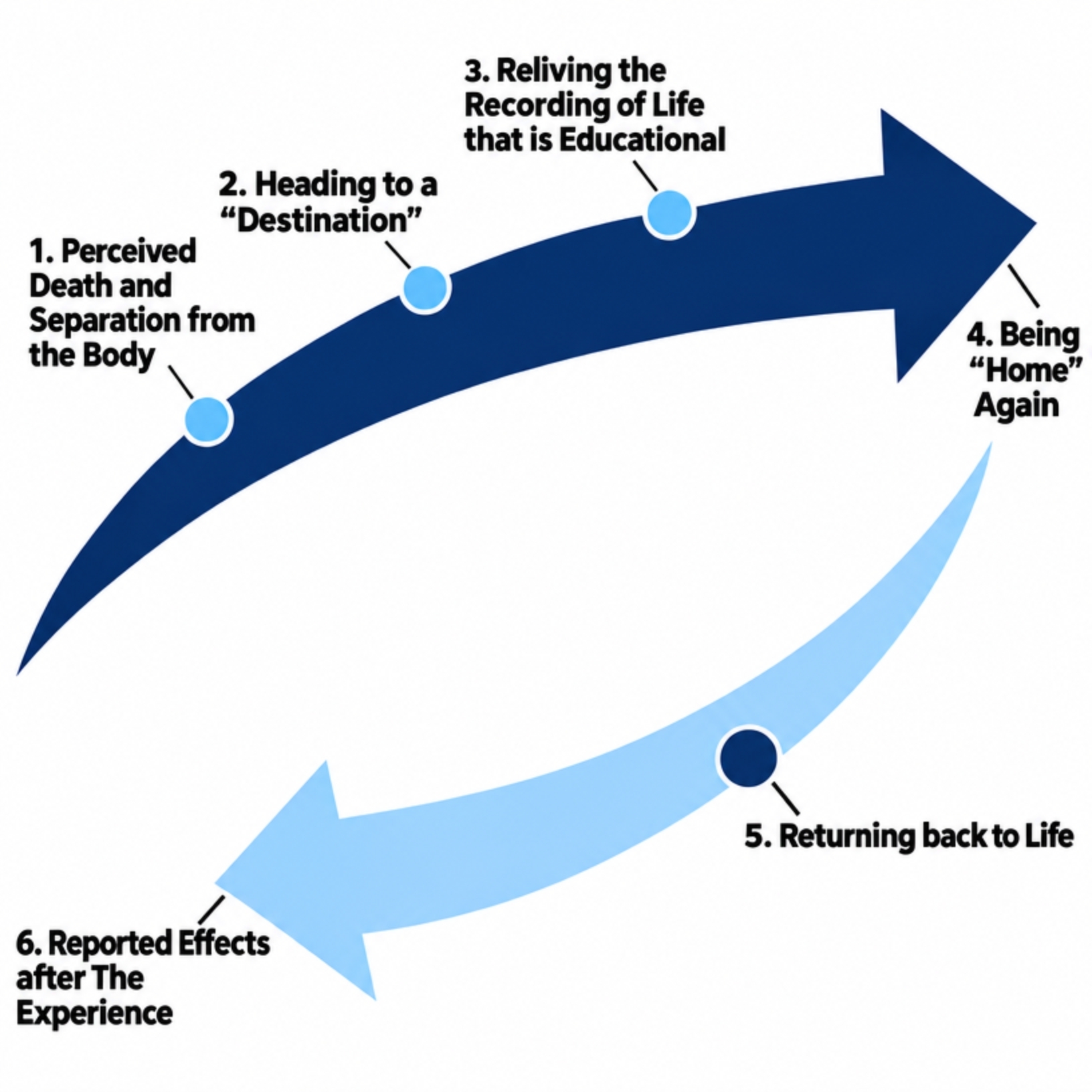
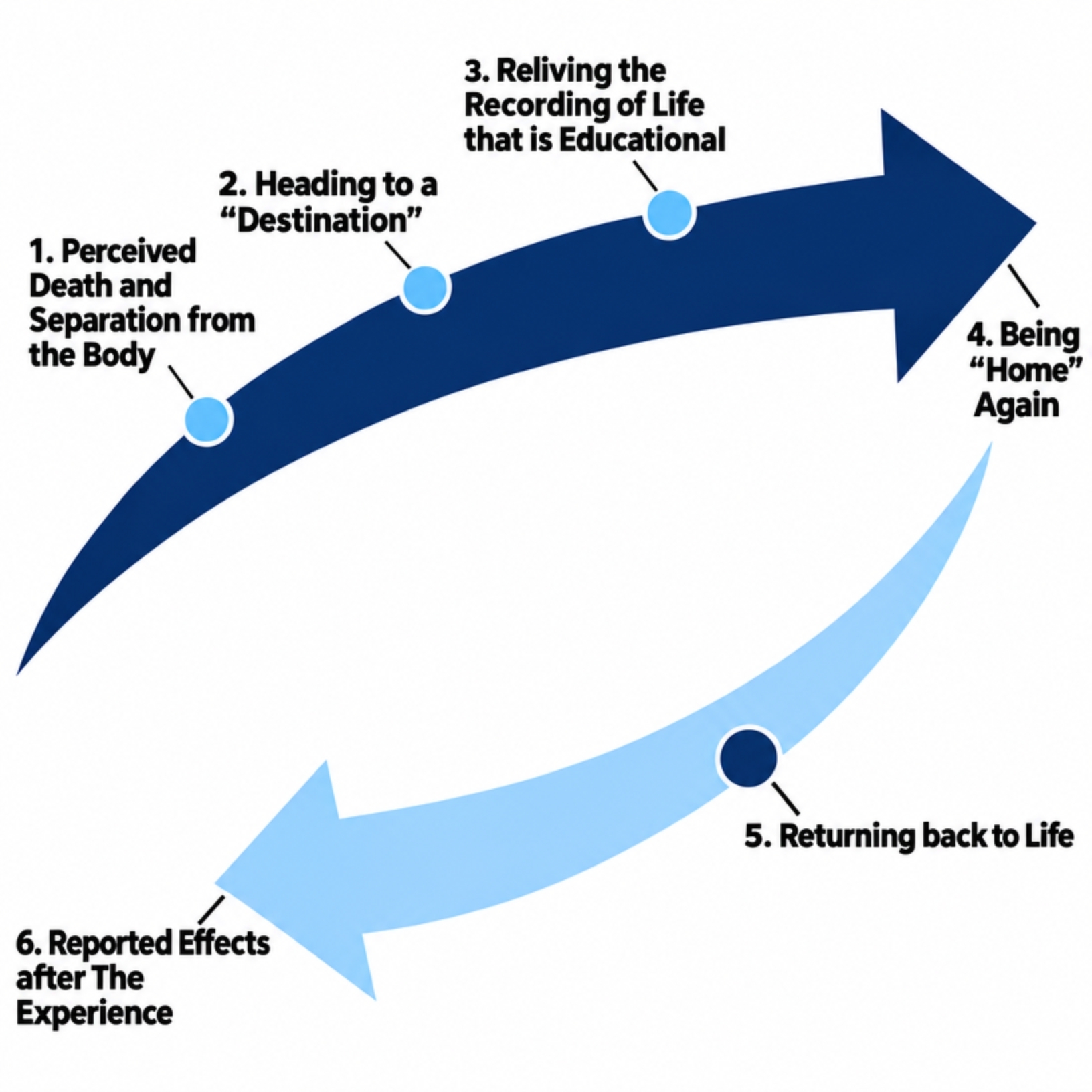
Parnia et al. (2022) condensed this list to visually depict six main themes that are typically experienced when recalling an experience of near-death. These are illustrated in Figure 1.
A review of the literature by Sleutjes et al. (2014) suggested some evidence for a transcultural “core of common experiences” across NDEs, although more research is needed as the studies have primarily been conducted in the United States. Cross-cultural comparisons will be discussed further in the Results section. Sleutjes et al. (2014) also proposed that NDEs can help us understand the possibility that mind and consciousness may not be exclusively linked to brain activity but to a non-local mind mediated by the brain. This has been suggested across research, including studies into the experience of consciousness of people in a coma. Martial, Cassol, et al. (2020) suggested that consciousness disappearing while a patient is comatose is an oversimplification, and posited a case for what they term disconnected consciousness, citing the internal awareness of classical NDEs in unresponsive conditions.
Attempts to quantify and measure NDEs are long-standing although still evolving. Parnia et al. (2022) argued that other related phenomena, sometimes grouped into NDEs, would have different underlying physiological processes and should be studied and understood separately. They proposed a 51-point scale using the term Recalled Experience of Death (RED) to more clearly define the term: “RED is defined as a specific cognitive and emotional experience that occurs during a period of LOC [loss of consciousness] in relation to a life-threatening event, including cardiac arrest” (p. 4). Parnia et al. (2022) suggested NDEs be differentiated from other experiences of altered consciousness. This scoping review has explored both the Long (2022) and Parnia et al. (2022) definitions for an NDE.
What is Meaning?
Although the philosophical question of meaning could be answered in a range of ways, this scoping review applies a lens compatible with logotherapy, the therapy of meaning, founded by Austrian psychiatrist and survivor of four concentration camps, Viktor Frankl. The core premise of the therapy is that a person’s primary motivation is their “will to search for meaning” (Indinger, 2010, p. 28). Frankl (1959) posited that meaning in life is objective, always there, yet changeable. It can be actualised through:
-
works or deeds,
-
experiencing someone or encountering something, or
-
the attitude we take to the unchangeable.
Frankl saw that each person’s task was to respond to the questions life asked. He wrote, “It did not really matter what we expected from life, but rather what life expected from us” (p. 85) and referenced Nietzsche: “He who has a Why to live for can bear with almost any How” (p. 84).
Method
Inclusion Criteria
The research papers selected for this review examined the experiences of anyone, worldwide, who has had an NDE. Some of the articles also included participants who have had comparable experiences, such as OBEs, or who have taken psychedelics, to provide a basis of comparison with NDEs. The focus of the research remained faithful to documenting the impact of an NDE, how that compares to some other experiences, and how meaning in life changes for those individuals.
Identifying Relevant Studies
PubMed databases were interrogated first using a Medical Subject Heading (MeSH) to identify published research relevant to change in meaning in life following an NDE. MeSH does not feature the heading “near-death experience”, so three concepts were created to provide alternative search terms, as identified in several articles that had formed the foundation for this study.
As no MeSH heading for “meaning” existed, “spirituality” was used. The Australian Psychological Society (2015) denotes spirituality as one of the six domains of wellness and defines spiritual wellness as a “guiding sense of meaning or value in life”. The terms “psychotherapy” or “logotherapy” were searched to focus the results more psychologically than medically. This initial search yielded 1,159 results.
A fourth concept was added using “after-effect”, “following”, “impact”, or “effect on” as keywords to focus on the responses to an NDE and reduced the results to 271. Similar searches were conducted across various databases. Table 1 below summarises the four concepts used in the searches.
Selecting Studies and Charting the Data
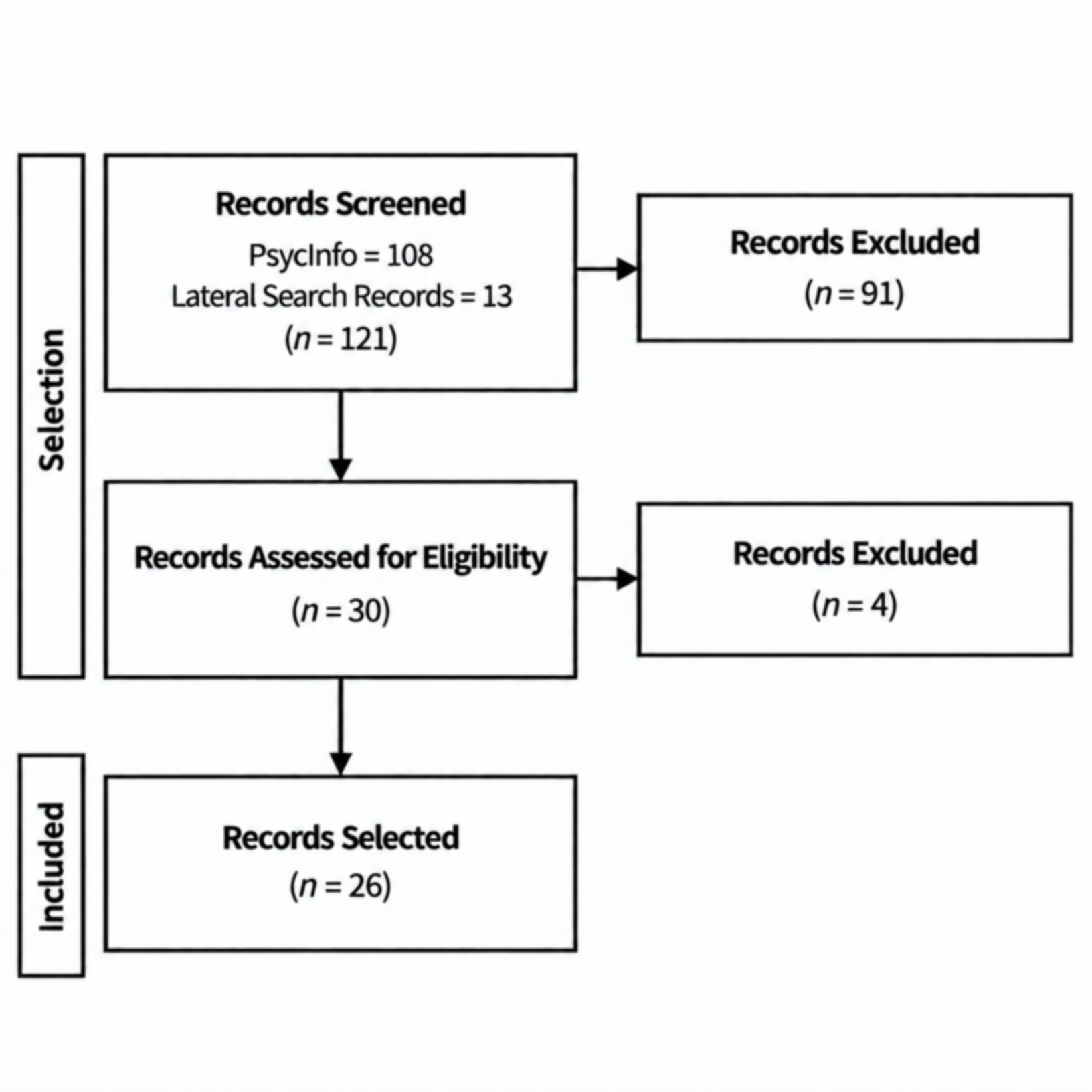
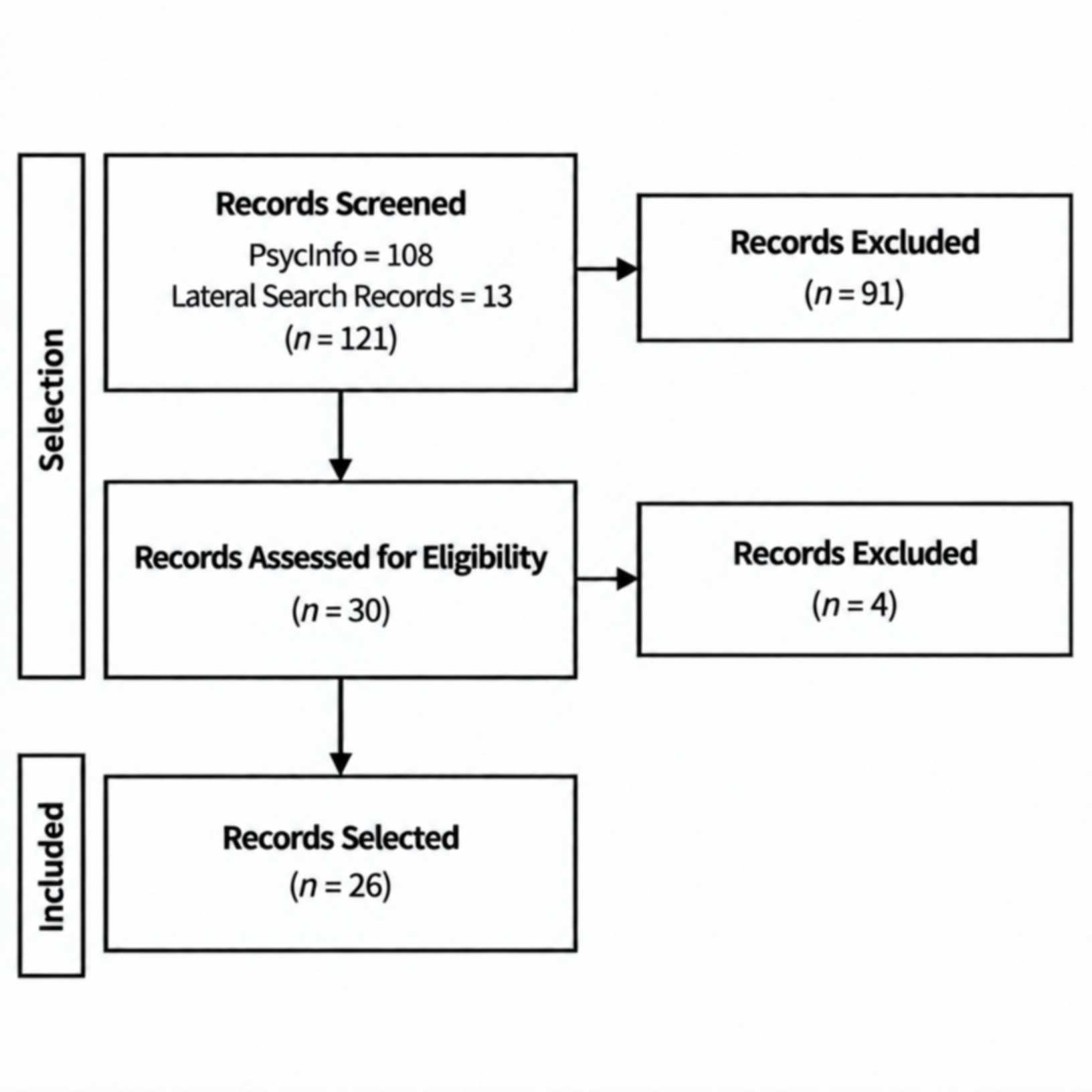
The PsycInfo database was determined as the most relevant for a project of this size and subject matter due to its psychological focus (Lefebvre et al., 2024, p. 7). Each of the 108 articles from the PsycInfo database search results were assessed manually. Articles were excluded using the following criteria:
-
research was not on NDEs
-
research only mentioned NDEs and did not focus on this phenomenon
-
text was not in English
-
full text was not available through the database itself or the University of Southern Queensland library or via Google Scholar
-
research had a medical rather than psychological or meaning-centred focus
-
format was a book review, response, letter to the editor, or it simply recounted a personal experience of an NDE
-
meaning was defined purely by behavioural changes and not also by looking at inner changes
-
research was published prior to the year 2000 (excepting a few key texts)
Of the 108 results from the PsycInfo database search, 17 were selected for detailed comment for this scoping review. In addition to peer-reviewed journals, we realised that NDEs are a topic of discussion in non-academic circles. To aid further research we identified 13 other studies through a lateral search. Some were from a newspaper article, others from an initial scanning of Google Scholar, some retrieved from the reference list of another article, and some were supplied directly from another person aware of the topic being researched. Figure 2 summarises the results of all searches.
Results
How Does Meaning Change After a Near-Death Experience?
When compared with others who went into cardiac arrest but did not experience an NDE, people who have an NDE measure significantly stronger changes in attitude to life following the event, reporting increased concern with questions of social justice, appreciation of nature, tolerance for others, understanding of themselves, and a sense of some inner meaning to life (Klemenc-Ketis, 2011). Cardiac arrest survivors express no extensive life changes, but when coupled with an NDE, which usually only comprises a few minutes of someone’s life, deep and enduring changes frequently occur (Klemenc-Ketis, 2011).
One major area of change following an NDE is the experience of marriage. A study by Christian and Holden (2012) compared 26 couples in which one partner had experienced an NDE to 26 couples in which one partner had experienced a life-changing event (LCE) but not an NDE. Examples of an LCE are death of a family member, major illness or injury, being laid off, a career change, becoming sober, or serving in the military. The results showed significant reductions in marital meaning in the NDE group, along with decreased stability and adjustment. The study found that 65% of the participating couples divorced after an NDE, compared with 35% of those following an LCE.
Christian and Holden (2012) found that a significant other may want to continue on with the marriage as normal and may struggle to adapt to their partner’s new values, attitudes, and interests: “He kept telling me he wanted me to go back to the way I was” and “He would not accept that I had almost died, nor would he accept my feelings” (p. 224). The extent to which a spouse can honour and accept what the NDE experiencer has been through is a predictor of the longevity of the marriage. The other party may feel abandoned, confused, and distressed by the radical changes in their spouse: “He blamed me for the divorce because I changed! I just wanted to grow up and be an adult!” (p. 222) and “I unconsciously began to love everything and everybody. My wife was expecting my love to play the old role and be just for her” (p. 223).
Bianco et al. (2017) found that interpersonal challenges occur following an NDE as meaning is negotiated in a social context, and integration of such an experience requires interpersonal sense-making processes. Difficulties often arise when the experiencer finds it hard to describe what happened or closes off for fear of feeling judged or stigmatised, even questioning their own sanity. Many experiencers also report receiving sceptical reactions that disregard their experience from family and health professionals. Not feeling able to share their experience with others can lead to broken relationships, years of feeling isolated and depressed, as well as difficulties integrating the extraordinary experience they have had.
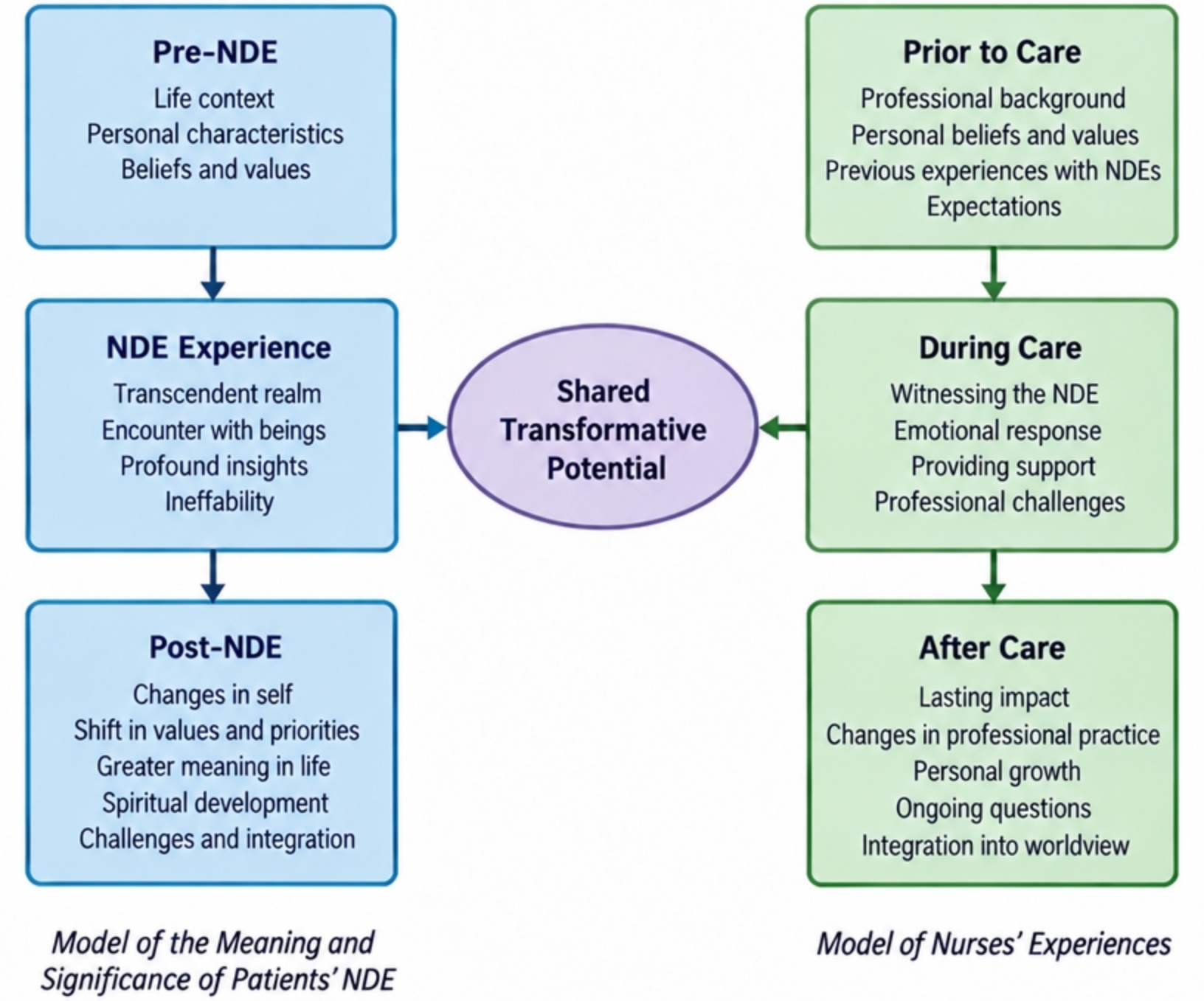
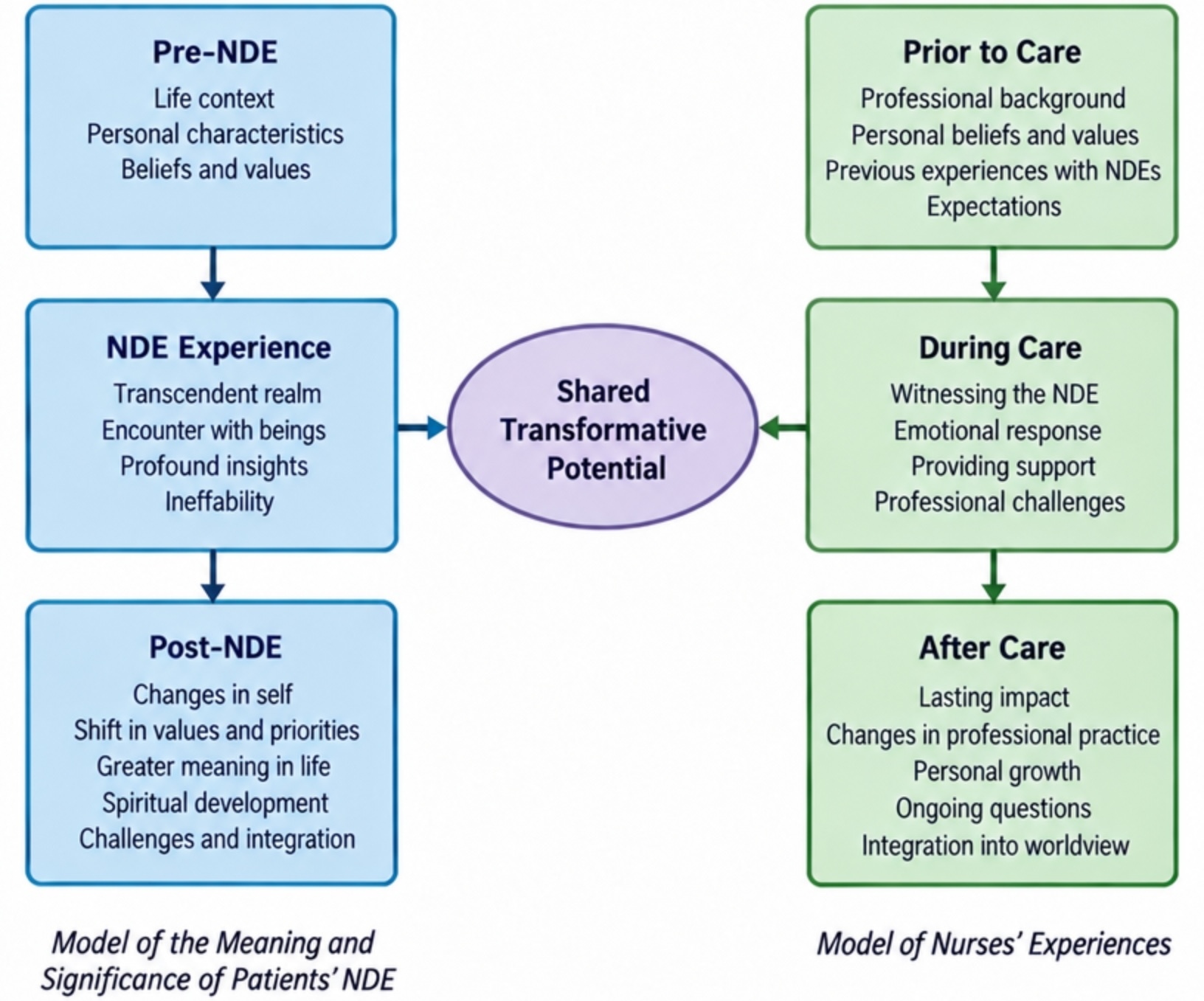
Although negative reactions to patients telling medical staff about their experience appear commonplace, Morris and Knafl (2003) looked at the nature and meaning of the NDE for both patients and critical care nurses. They found that many nursing staff witnessed mystical phenomena. At times they had heard both stories of profound experiences and corroborating evidence for what someone told them they heard or saw while unconscious. The staff found it difficult to share their experiences due to their clinical training and possible stigma and felt frustration in not being able to integrate their own experiences or adequately support their patients. An NDE appears to have the potential to be life-changing for the witness, along with the experiencer. Morris and Knafl (2003) created two flowchart models showing the changes caused by an NDE for both experiencers and nurses (see Figure 3).
A number of experiencers had a change in life purpose (although this was not always immediately clear). For instance: “I realized what I would probably have wanted from my life, and what I should probably have done to change my life. And that is what I did as a result” (Bianco et al., 2017, p. 566); “I feel like I should be doing something better … I got a tremendous present and how am I supposed to use it? … I’m uncomfortable not knowing” (Morris & Knafl, 2003, p. 151); and “It gave me the strength to end a relationship that would have killed my soul had it continued much longer. It freed me to become who I really am and explore the Universe” (Christian & Holden, 2012, p. 222). The emergence of a “true self” following the experience as well as career retraining and new directions and life priorities are described consistently.
The loss of fear of death has been a widely reported and long-standing outcome of an NDE (Tassell-Matamua & Lindsay, 2016). Potential reasons for this are cited as having already been dead (so no longer afraid), new or strengthened belief in an afterlife from what was witnessed during the NDE, or the theory of disconnected consciousness described in Martial, Cassol, et al. (2020). This was acknowledged many years earlier by Ring (1984, as cited in Tassell-Matamua & Lindsay, 2016, p. 72) who wrote, “When an individual knows with a sense of unshakeable certitude that he can exist outside of his own body, he intuitively understands that physical death is not an end …” Tassell-Matamua and Lindsay (2016) reported that because people who have an OBE also report the loss of fear of death and greater belief in an afterlife, this may be primarily due to the disembodiment and associated positive affect that is analogous to both groups.
Both OBEs and NDEs have been analysed using Interpretive Phenomenological Analysis (IPA) and are grouped under the label “anomalous experiences” (D. J. Wilde & Murray, 2009; D. Wilde & Murray, 2010). Within the IPA framework, anomalous experiences are understood and accessed qualitatively by the meaning one ascribes to the experiences. IPA is principally phenomenological as it does not seek an objective truth but honours a person’s experiences, accounts, perceptions, and understandings.
The case studies analysed under IPA revealed three major themes across the two groups:
-
the strong desire to share their experience but difficulty in doing so due to others’ dismissiveness,
-
the transformative impact on one’s sense of self, identity, general life directions, and views towards relationships, and
-
embodiment (variation in levels of control of the experiences, with greater levels of control seen in subsequent experiences and amongst skilled meditators; D. Wilde & Murray, 2010).
In three case studies analysing NDEs specifically, Wilde and Murray (2010) also focused on three main areas:
-
the experience of dying:“I just knew I’d heard this … this chant hundreds of times before … this is the sound that happens when you die” (p. 228);
-
new knowledge or realisations from the experience: “Certainly the girl who climbed onto that table [operating table] was not the same person who got up off it” (p. 232), and;
-
life post-NDE: “Sometimes the conversation [with God] comes back and I think, ahh, I’ve done this … I do a lot of work in India … we feed 500 people a day, and so now that’s where my path is” (p. 234).
Wilde and Murray (2009; D. Wilde & Murray, 2010) highlighted the importance of this in-depth, qualitative research being crucial in considering how the experience fits within the biographical context of an individual’s life, rather than examining the event in isolation. Their research found that rather than having an overall influence on their lives, their participants chose elements of the NDE that were most meaningful to them as having the greatest influence on their personal and spiritual growth.
Most NDEs are profound mystical experiences of peace, joy, bliss, and a sense of cosmic unity, although between 11% and 22% are reported to be frightening, traumatising experiences known as “distressing NDEs” (Greyson, 2023). Attempting to stay in control of whether one lived or died was a predictor of a more distressing NDE, and the lack of ego control was identified as the frightening aspect. A number of avoidant, reductionistic responses were outlined, such as dismissing the experience as drug-induced or to reduce it to a meaningless accident, but at the peril of missing the self-examination and having to live the long-term struggle with the existential implications of the experience. The distressing NDEs appear to have fewer permanent after-effects than pleasant NDEs, perhaps due to reluctance to sit with such a terrifying and disturbing life event.
Apart from reductionism, Bush (2002, p. 104) described two other responses to distressing NDEs including “The Turnaround: ‘I needed that.’” She described this as the healthiest and most transformative response of the three, where the experiencer engages with the original meaning of “repent”: the Greek metanoia, meaning “to turn around”. As one person described, “I was being shown that I had to shape up or ship out, one or the other. In other words, ‘Get your act together’, and I did just that” (p. 105).
A second perspective on integrating the harrowing experience Bush (2002) calls “The Long Haul: ‘What did I do?’” This group finds no acceptable or meaningful understanding of the encounter over decades. For these individuals, even after a long search, meaning remains elusive: “I had an experience which has remained with me for 29 years … Over the years I read various books on life after death and everyone seemed to have good experiences … It has left a horror in my mind, and I have never spoken about it until now” (p. 108).
The dominant opinion in the field of NDE research is that suicide following an NDE is highly unlikely due to the transformational nature of the experiences and positive, anti-suicidal attitudes that follow. King (2024) strongly refuted this assumption and has presented four case studies of suicide post-NDE. Information about the four people, their NDEs, and subsequent suicides was publicly available through search engines. One of the subjects was quoted as saying, eight years after his NDE, “I’m trying to find out what I have to do ‘here’ before I can enter the light again” (King, 2024, p. 350). Given that the subject ended his life a year after that comment, a contributing reason for his suicide could potentially have been a struggle to find clear direction and purpose after the NDE. King (2024) called for research into passive suicidal ideation following an NDE, for instance, a client saying, “I just want to sleep forever,” which is a predictor of suicide ranking equally with active ideation, as well as other risk factors such as substance misuse, financial problems, and social, psychological, and physiological challenges. With clients who have experienced an NDE, therapists would need to screen for active or passive suicidal ideation as well as other risk factors, such as prior attempts.
Sometimes suicidality precedes the NDE. Pipp (2024) researched people who had an NDE as a result of their suicide attempt. While they may experience a greater sense of purpose and feelings of self-worth in the aftermath, they may also live with increased depression and loneliness. Pipp (2024) analysed eight case studies using Jungian symbology from the experiencer’s own written accounts uploaded onto a worldwide NDE database. The 11 central themes she found were:
-
experiencing a deeply depressed state pre-NDE
-
travelling towards a light/tunnel
-
encountering a guide, being, or religious figure
-
feeling intense love and acceptance
-
a new sense of purpose for staying alive
-
developing a deeper sense of connection to plants, animals, and other humans post-NDE
-
extrasensory capabilities, including telepathic communication during the NDE
-
being in a heavenly or ethereal place
-
symbols of unity or dualism
-
revisiting past trauma
-
feeling the power of God or a powerful presence
Pipp (2024) found that the outcomes derived from the NDE for the experiencers included understanding the nature of divinity, experiencing interconnectedness, confronting personal experiences, and the integration of opposites leading to higher consciousness (being suicidal and transforming that view within moments). Although more research into suicide and suicidal ideation after an NDE is needed, including screening for passive ideation, most existing research has indicated a decrease in suicidality as well as enhanced abilities to cope with stress post-NDE.
Olathe (2006) looked at people who had an NDE and asked them to rate changes in attitude over several life domains since their NDE, including ability to cope with day-to-day stress, fear of death, self-esteem, and sense of life purpose. She also asked the same of a control group who had not experienced an NDE, but who had heard multiple accounts of NDEs, as part of the study. In the experimental group, one participant reported having thoughts of suicide due to a medical condition and chronic pain prior to her NDE, but she could not imagine taking her own life post-NDE due to an increased sense of life purpose. Although 100% of those who had an NDE said they had an increased sense of life purpose and 84% of the control group also answered in the affirmative, one person reported a decreased sense of life purpose from hearing about NDEs. Olathe (2006) suggested that just exposure to what an NDE is and the impact it had on other people may be enough to bring about changes in attitude to life and direction in life.
Although most domains measured were overwhelmingly positive in the responses for both groups, the one that decreased significantly for both groups was a sense of being in control over one’s life. NDEs and exposure to recalled NDEs can increase the sense that much of life is predestined or determined by factors external to oneself, reducing a sense of personal control (Olathe, 2006).
Other research by Lee et al. (2014) investigated grief among those who have experienced an NDE by applying Park’s (2005, as cited in Lee et al., 2014) meaning-making model. This postulates that grief can be alleviated by the meaning that grievers ascribe to their loss. From several questionnaires, the researchers found that NDEs do have a positive impact on grief, with no confounding impact recorded when screening for time since loss, life satisfaction, or neuroticism. The strongest variable measured was the time since the loss, suggesting that existential realisation and understanding may deepen over time since the NDE, after undergoing a protracted mental struggle that often spans several years (Lee et al., 2014). Different results may be yielded for those experiencers who have not yet opened up about their experience, or have found their experience incompatible with their religious views, or are uncertain if they actually experienced an NDE.
Inspired by the changes in attitude to life, increased spirituality, and post-traumatic growth following an NDE in the research literature, Cozzolino et al. (2004) tested students on their levels of greed and their extrinsic value orientation (EVO). Testing took place after a manipulation called mortality salience, in which awareness of mortality is generated in participants. Examples of EVO include a desire for money, fame, and beauty. Prior research in Terror Management Theory has found greed increases when people are faced with their own death (Kasser & Sheldon, 2000, as cited in Cozzolino et al., 2004). The researchers replicated previous findings around increased greed in individuals that scored high in EVO. However, the death reflection exercise was associated with subsequent decreased greed among those with a high EVO score, compared with the control group. The death reflection exercise was designed to replicate aspects of NDEs including:
-
an actual death,
-
a life review, and
-
the opportunity to take the perspective of others.
To create a sense of death reflection, the participants read a death scenario and were then asked to answer the following four questions (Cozzolino et al., 2004, p. 281):
-
Please describe in detail the thoughts and emotions you felt while imagining the scenario.
-
If you did experience this event, how do you think you would handle the final moments?
-
Again imagining it did happen to you, describe the life you led up to that point.
-
How do you feel your family would react if it did happen to you?
Alongside the decrease in greed after the death reflection for those with a high EVO score, Cozzolino et al. (2004) also found participants with a low EVO scored higher for spirituality, another known after-effect of NDEs. While none of the participants in this study were known to have had an actual NDE, there are clear applications for the usefulness of replicating NDE-like conditions, in this case increasing spirituality and decreasing greed.
Discussion
Applications in Therapy
Research has been conducted into some psychotherapeutic applications after an NDE. Moores and Ammen (2013) looked at adults who had a childhood NDE and the difference between those who did and did not engage in psychotherapy as adults to integrate the experience. Statistically significant correlations were found for those who had participated in psychotherapy for integration of the NDEs. They evidenced more positive feelings with fewer negative feelings. The strongest predictor for successful psychotherapy was exploring the meaning of the NDE, followed by resolving guilt over the NDE, expressing feelings and thoughts about the NDE, validating the NDE as real for themselves, and the therapist accepting the NDE as real. By implication, providing therapists with more understanding of how meaning in life changes after an NDE and how to explore these changes with their clients could potentially be the most helpful application of this research.
How Do These Changes Compare With Other Experiences?
Similar experiences have been listed in this review including cardiac arrest survivors, out-of-body experiences, consciousness while comatose, couples who have lived through a life-changing event, as well as medical staff witnessing NDEs. To understand the impact of NDEs, it is necessary to look at comparable experiences and what may make an NDE distinct in its origins as well as the meaning found afterwards.
King (2025) has gathered some preliminary research based on 15 case studies of people having what he terms an Alternative Life Experience (ALE). In an ALE, the experiencer is aware of themselves and perceives themselves as living another life which feels real, but without the disembodiment of an NDE. The subjective experience is that of living a normal life (but not their current life), interacting with others but neither leaving the body nor being taken to a celestial realm like in an NDE. For King (2025), ALEs do not appear to be transcendental. They also typically occur in similar life-threatening conditions, including while in a coma. King (2024) postulated that they may instead be psychologically dissociative or absorptive, as symptoms of derealisation and confusion over which life is real are a common after-effect. Keeping the brain active, as though living, may be a survival mechanism enacted by the brain. Alternatively, a spiritual explanation could point towards accessing past or concurrent lives and may have overlap with hypnosis and past life regression analysis (King, 2024).
Some recent studies have shown similarities between the subjective experiences induced by taking psychedelics and NDEs, with ketamine most closely resembling an NDE, followed by salvia divinorum and serotonergic psychedelics, such as DMT or psilocybin (Fritz et al., 2024). Both Greyson’s NDE scale and the NDE-C (Near-Death Experience Content scale; Martial, Simon, et al., 2020) were administered to people who had had drug-induced experiences with psychedelics. Researchers observed much overlap between the experiences, such as entering an alternative reality, encountering and communicating with otherworldly presences or entities, and transcending the physical body (Fritz et al., 2024). The researchers proposed the possibility that during a critical incident, an endogenous ketamine-like substance could be released, underlying the NDE phenomenology, although this has not been tested.
Comparing the after-effects of the experiences, about 90% of participants in both groups reported a decreased fear of death and more positive attitudes towards death (Sweeney et al., 2022). However, members of the NDE group (non drug-induced) reported their experience as the most meaningful, challenging, insightful, and spiritually significant event of their lives compared to the drug-induced group members who did not indicate this.
While there are medical (purely physiological and biological), psychological, and metaphysical ideas and interpretations pertaining to the nature and meaning of NDEs, it is important to delineate between psychopathology and a spiritual encounter. Psychopathology includes reactions such as delusions, hallucinations, and dissociation, whether medically caused or psychological. These are not spiritual encounters. A proportion of the many thousands worldwide who have experienced an NDE may have pre-existing mental health challenges or may have experienced hallucinations from medication as part of their medical treatment. Hence, not all experiences will be clearly demarcated into a particular group and the nature and origin of an NDE may remain unclear for some.
In a dissertation on the relationship between dissociative identity disorder (DID), a condition diagnosed following severe psychological trauma, and NDEs, shared features were described as depersonalisation and derealisation from viewing oneself from outside of the physical body (Harrison, 2009). The researcher cited the profound attitudinal changes for those who have experienced an NDE, along with a sense of mastery and omnipotence from surviving physical death and compared this with the dysphoria and loss of control in the dissociated trauma survivor. However, the differences between the experience of those groups are not uniform. Distressing NDEs may feel more closely aligned with the DID description of dysphoria and loss of control, whether the experiencer has any symptoms of DID or not. Even the most profound NDEs can lead to years of confusion and changes that do not necessarily improve happiness, quality of life, or functionality, although may make it more aligned and authentic (Lee et al., 2014).
Johnson and Friedman (2008) discussed the importance of differentiating whether a client is experiencing enlightenment (transformative spiritual experience) or delusion (psychological disturbance). The DSM-5 TR (American Psychiatric Association, 2022) differentiates between religious and spiritual phenomena, like visions or meditative states, and psychotic hallucinations and delusions, by emphasising cultural context and the individual’s insight into the experience and the degree of functional impairment. It also stresses that religious, spiritual, or supernatural beliefs should not be automatically considered psychotic.
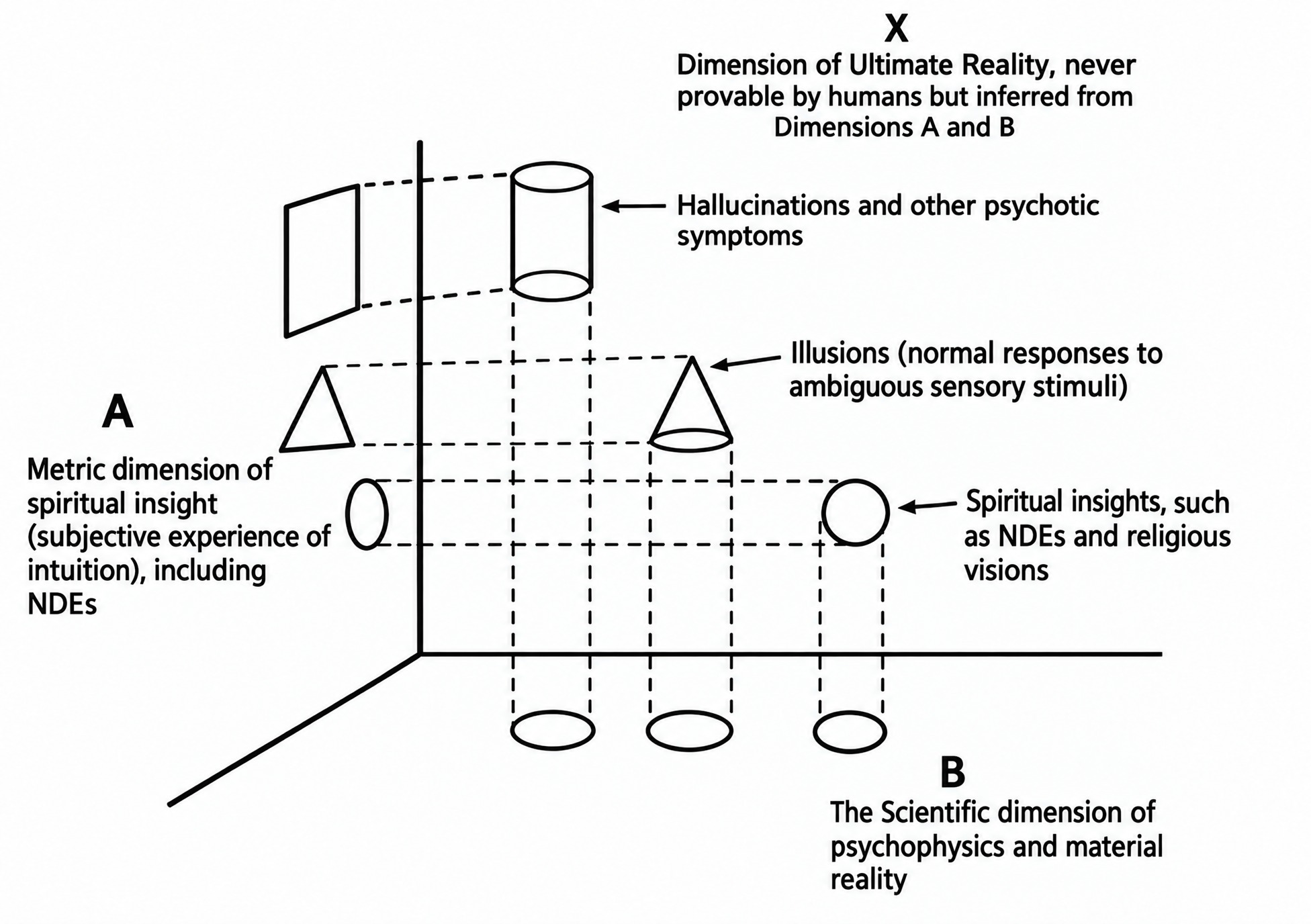
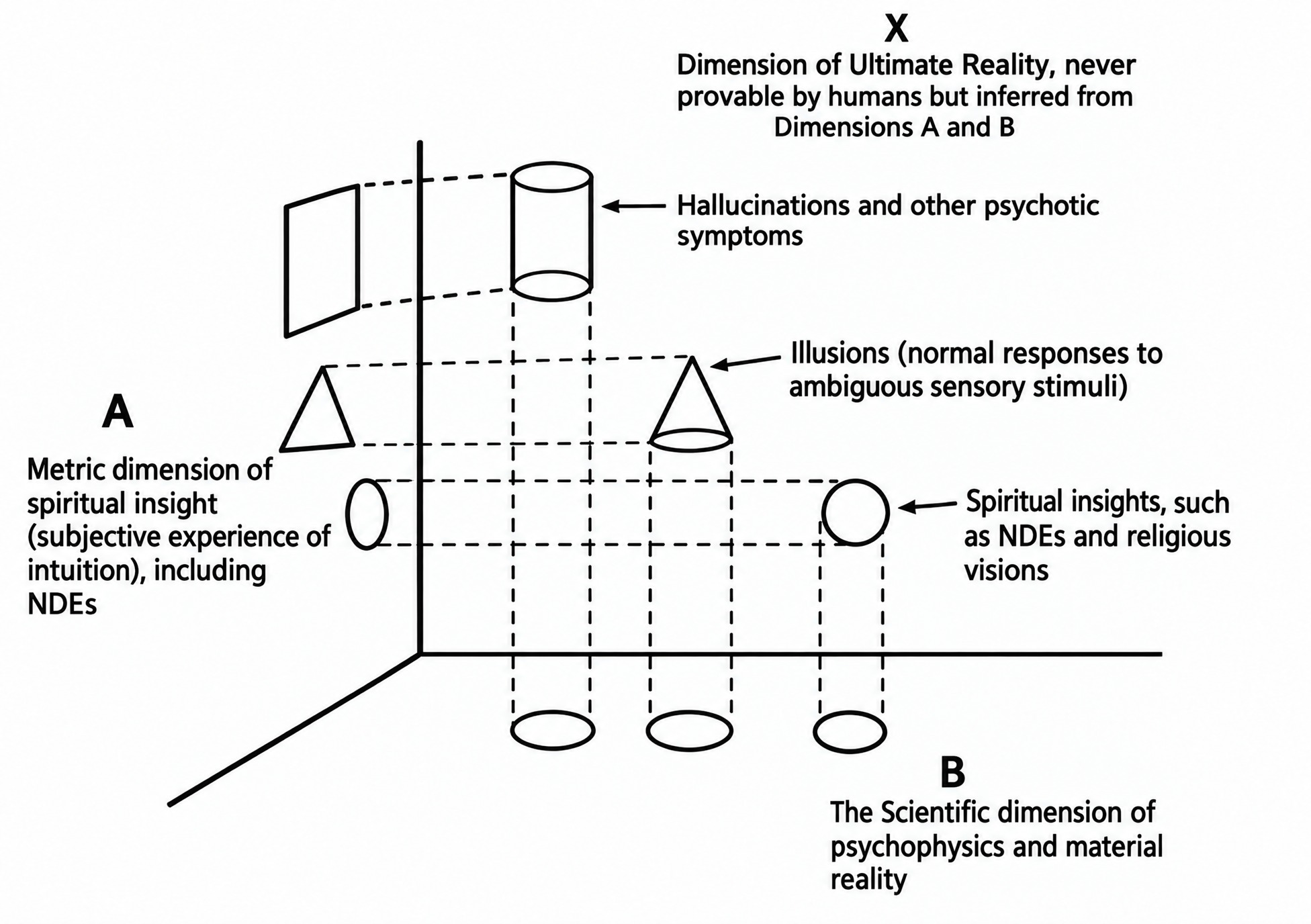
Crumbaugh (1997) addressed seemingly irreconcilable views on NDEs via logotherapy. Frankl’s Second Law of Dimensional Ontology states that the same phenomenon can be viewed differently from a material dimension or a spiritual dimension. Figure 4 depicts how NDEs may be seen as hallucinations from Dimension B (three circles), the material dimension of physical science, but seen as a direct, soul-level experience from the spiritual Dimension A (square, triangle, circle). There may also be instances where religious, spiritual, and transpersonal encounters could co-exist with psychopathology, highlighting the importance of Johnson and Friedman’s (2008) proposed recommendations, which include assessing adaptive functioning preceding and following what might be classified as a religious, spiritual, and transpersonal experience.
Another experience that has been compared to NDEs is hypnosis. Hypnosis is an altered state of consciousness. Facco (2012) suggests it can include experiences such as changing time perception, performing a life review, imagining seeing oneself from the outside, and recalling old and non-easily accessible memories. He suggested that hypnotically inducing NDE-like experiences, while keeping the client grounded in the body to avoid elevated heart rate and other medically undesirable fallout, could be a path forward in unearthing both physiological and psychological aspects of NDEs and understanding their nature and meaning. Facco (2012) outlined some published case studies of hypnosis that have done exactly this.
Deliberately inducing aspects of NDE under hypnosis could, Facco (2012) suggested, be utilised for transformative purposes:
This may help to increase the capability to think about life, death, self and the relationship between self and the external world from a wider and more philosophical perspective, including the very meaning of life [emphasis added] and the limited, relative value of social conventions and relationships. (p. 293)
Of the literature selected, 17 articles examined changes to meaning in life following an NDE, seven compared NDEs to other experiences, five focused on the nature and characteristics of what constitutes an NDE, one defined meaning logotherapeutically, and one looked at the integration of an NDE. Several articles were classified in more than one way which is why the total is more than 26.
Many of the research papers reported on some primary research and experimental data, some used data from analysis of already published cases, and 10 did not use participants in their research but reviewed existing research only. Findings by Sleutjes et al. (2014) found that the vast majority of the NDE research has focused on reviews of the literature with only a small minority engaging in primary research using participants under experimental conditions.
There was often little demographic information reported about participants or case studies analysed from already published or publicly available records. NDEs themselves appear to occur indiscriminately across all demographics, and can occur at any time within the lifespan and with no known link being reported for any group or pre-existing vulnerability or personality trait that makes anyone more likely to experience one (D. Wilde & Murray, 2010). However, for OBEs, people who have paranormal beliefs, fantasy proneness, a tendency to become psychologically absorbed, and score higher on measures of dissociation (especially somatoform dissociation) have been shown to be more susceptible to this occurrence (D. Wilde & Murray, 2010). Additionally, a lack of reporting demographic information in the research literature, as well as the homogeneity of many of the participants studied, suggest the possibility of patterns and predictors of NDE that have been missed in the research thus far.
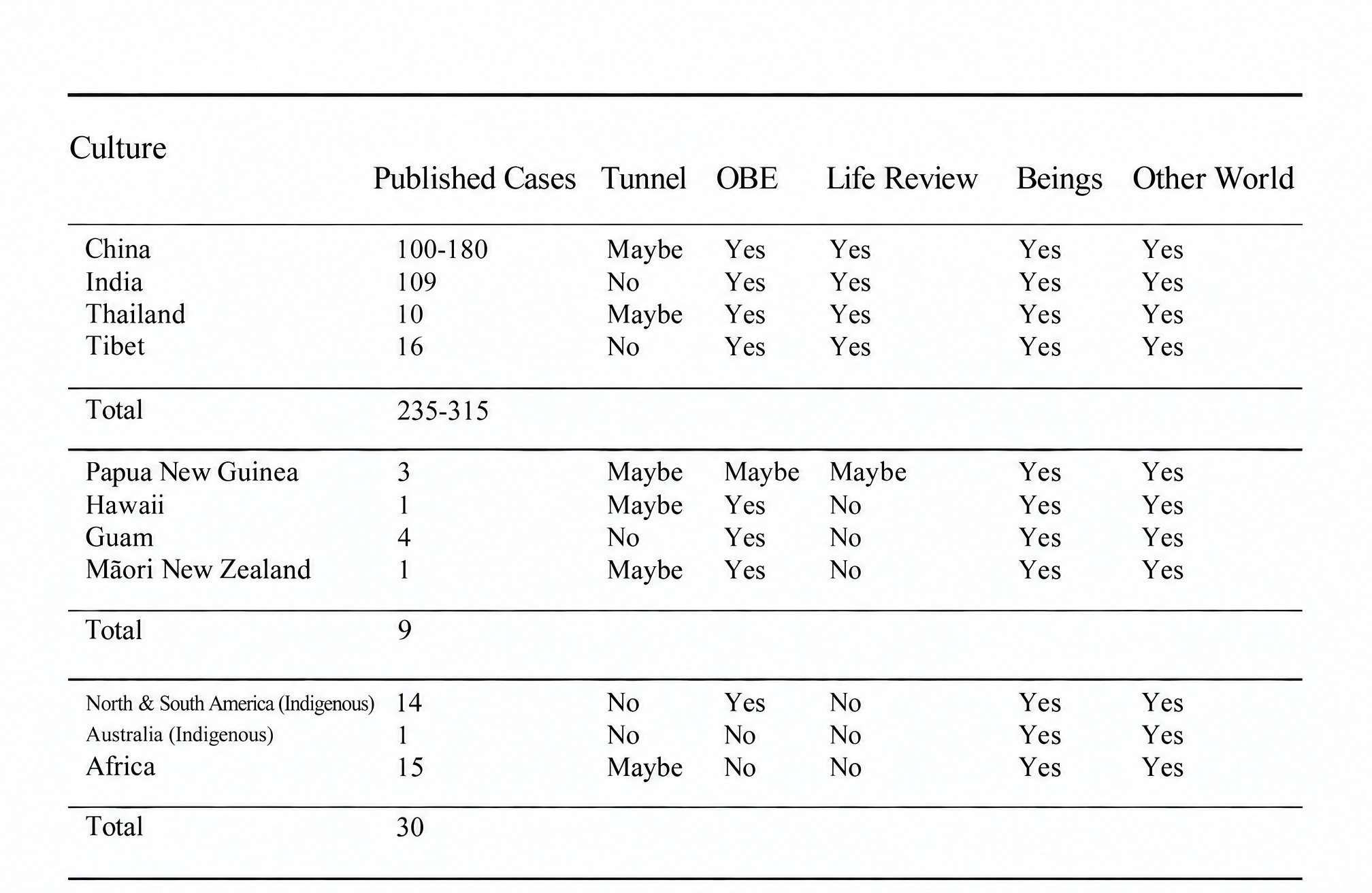
Sleutjes et al. (2014) found that the overwhelming majority of NDE research has been carried out in the United States, with the United Kingdom and Canada at a distant second and third place. While a general uniformity or “core” NDE experience has been observed by Lange et al. (2004), Pipp (2024) investigated already published cases of NDEs across cultures and found some variation in the NDE experience according to location and type of society. This is depicted in Table 2.
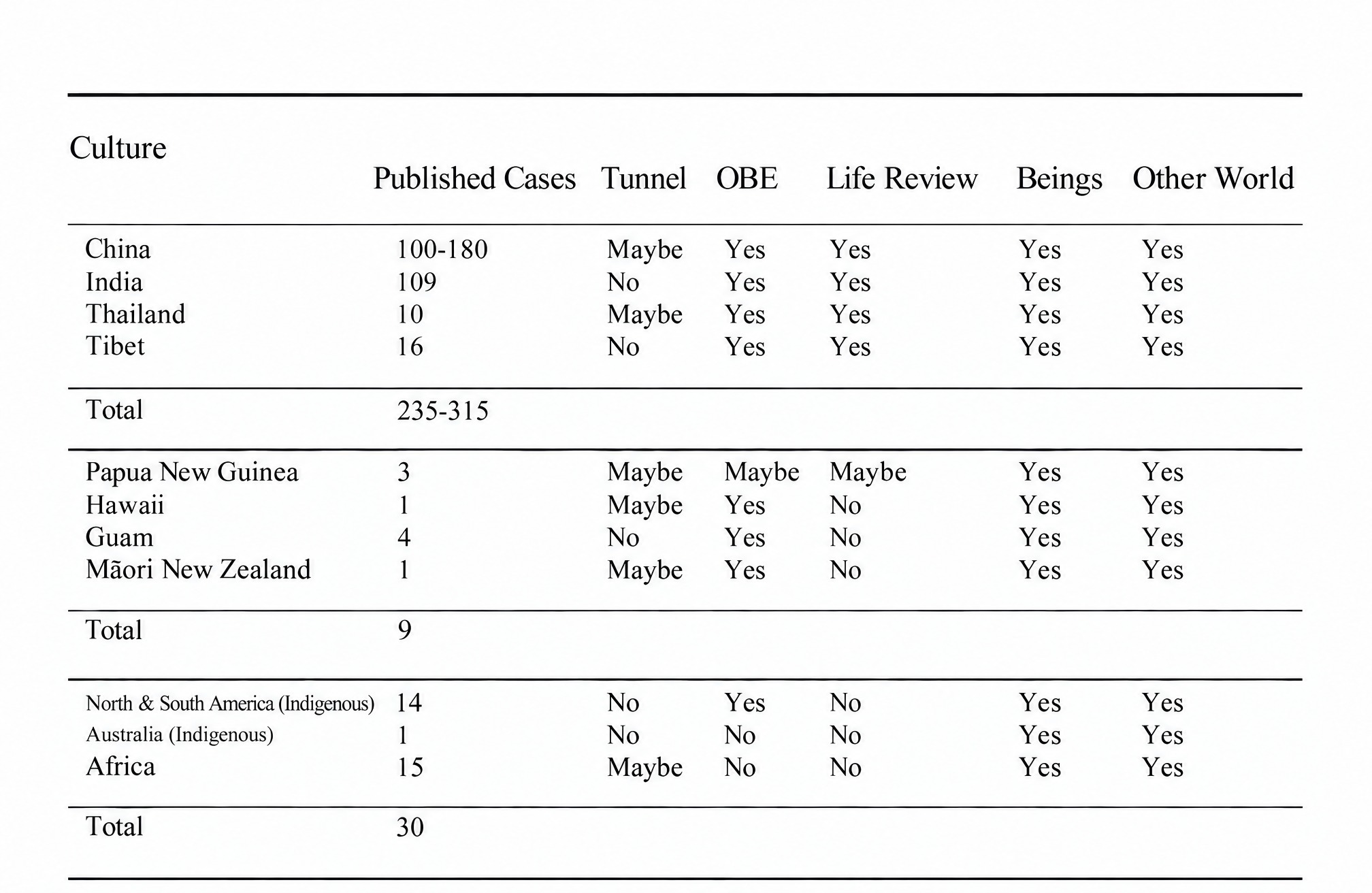
As seen in Table 2, other-world experiences seem uniform in NDEs across cultures. A life review does not appear to be a concept outside of the Asian countries listed although is a common feature of Western NDEs (Long, 2022).
It is possible that NDEs reflect the experiencer’s worldview. Thus, people from traditional foraging societies might not have a life review. Within the cultural context of these populations, it may not make sense to look at alternative choices and life trajectories from a traditional past that has gone. On the other hand, more time-bound cultures that reflect on personal “sliding doors” moments may experience profound insights from going back and understanding the implications of life occurrences or personal choices and actions. A deeper understanding of the cross-cultural differences in NDEs that Pipp (2024) has reported requires more research into cultural understanding, conceptualisation, and symbolism to avoid misinterpretation.
Conclusion
This scoping review has looked at existing published research that focuses on changes to meaning in life following an NDE. The review began by acknowledging historical narratives of NDE experiences that were then more formally defined and researched by Moody’s (1975) groundbreaking work, and included the 50 years of research that have followed his contributions.
Although any research into furthering our understanding of NDEs, and how meaning in life changes as a result of such a short but profound experience, is needed, more direct work with participants is required, especially cross-culturally. Some intriguing potential directions for future research could include:
-
Discovering more about NDEs amongst Aboriginal and Torres Strait Islander peoples in Australia. Known accounts from 1937 (Pipp, 2024) include Barnumbi and the Dead, also known as Yawalngura Dies Twice. These are accounts of a man’s death and coming back to life, as well as the NDE he described, including travelling to another world and being met by spirit beings who told him it was not his time to die. However, there is no description of how the event changed him as a person and what it meant to him. Studying NDEs amongst remote Aboriginal and Torres Strait Islander populations in Australia, along with how meaning is interpreted afterwards in these cultural contexts, could yield important insights culturally as well as psychologically, especially when compared with more urban or regional Aboriginal and Torres Strait Islander populations and a random sample of the broader Australian population. Cultural and linguistic consultations and adaptations would be needed as the standard questionnaire and interview approach may not be culturally appropriate or yield accurate or fruitful results.
-
Diving deeper into Lee et al.'s (2014, p. 882) description of life post-NDE as “a protracted, mental struggle that often spans several years”, particularly in light of their findings that the time that had elapsed since the NDE was the most influential factor tied to a healthy integration of grief. This could indicate that the changes in perspective and meaning after an NDE increase over time. This could be studied retrospectively with participants who had their NDE some time ago being compared with those who have had a more recent NDE. Longitudinal studies could also be engaged to track the evolution of their existential understanding over time. It would also be interesting to examine whether a spiritual or kundalini awakening has also been experienced, and comparisons made with other experiences that cause such long-term and profound changes.
-
Exploring therapeutic benefits from the integration of an NDE and taking some of the benefits out to the broader, non-NDE population. As Moores and Ammen (2013) found, the biggest predictor in successful psychotherapy for adults who had an NDE in childhood was exploring the meaning of the NDE. Comparison of meaning-centred psychotherapy post-NDE with other approaches and no therapy would contribute to a better understanding of the integration of the NDE. However, only 27% of those who had psychotherapy found this to be helpful or very helpful in fully integrating the NDE into their daily life (Moores & Ammen, 2013). This result poses questions about the effectiveness of counselling and psychotherapy in holding and integrating profound spiritual experience and the deep inner changes that unfold. Asking NDE experiencers how they integrated their experience and what helpful and unhelpful roles counselling played in this would be necessary research to support practitioners. However, as the participants in this sample had NDEs as children and psychotherapy as adults, the importance of finding psychological support much sooner could be explored. Studying group counselling for those who have experienced an NDE would also be a worthwhile research project to see if normalising and the sense of shared experience with peers aid integration, insight, and acceptance in those who have experienced an NDE.
Facco (2012) suggested replicating aspects of NDEs in a more controlled way under hypnosis to gain some of the insights and new perspectives that typically accompany an NDE. Cozzolino et al.'s (2004) mortality reflection manipulation, which tried to replicate some aspects of NDEs, shifted values even of those with high extrinsic value orientation who are more prone to selfishness. This could be helpful if applied to partners or those close to the NDE experiencer to help bring them closer to understanding the radical shift in life perspective. These attempts at cultivating in the broader population some of the changes in attitude to life that come from NDEs could have far-reaching sociological implications.
The research outlined in this article clearly shows deep and enduring changes to how one views and experiences life following an NDE, which often affects career, relationships, spirituality, altruism, empathy, generosity, how grief is processed, and many other aspects of life. Indeed, none of the other experiences studied in this review appears to come close to the changes in meaning of life that follow an NDE. One can conclude that examining the after-effects of NDEs is instrumental to the universal search for meaning (see Frankl, 1959).